For men, relaxed jeans, oversized shirts, sneakers and simple layering were everywhere.
And if some of that sounds familiar, there’s a reason.
The 1990s have experienced a substantial revival.
2005: The Era Many People Thought Would Never Return
Fashion from the early 2000s spent years being mocked.
Then younger generations rediscovered it.
Low-rise jeans.
Tiny bags.
Layered tops.
Cargo pants.
Tracksuits.
Statement belts.
Graphic shirts.
Denim everywhere.
Suddenly, pieces many people had donated years earlier began appearing again as nostalgic fashion.
The early 2000s are a perfect demonstration of how the fashion cycle works.
When a trend disappears, people often become convinced it will never return.
Give it enough time and someone will rediscover it.
Then it receives a new name, new styling and a new audience.
2015: Cleaner Lines and the Rise of Social-Media Style
By the mid-2010s, fashion had become increasingly influenced by social media, online shopping, celebrities and rapidly changing micro-trends.
Slimmer silhouettes were common in men’s fashion.
Minimalist looks became widespread.
Athleisure grew enormously.
Sneakers moved comfortably between athletic and everyday fashion.
Denim remained essential but appeared in countless fits and washes.
Women’s clothing reflected a similarly broad mixture of influences.
Perhaps more importantly, the idea that everyone should follow one dominant style was weakening.
The internet gave people access to virtually every aesthetic imaginable.
Instead of waiting for a small number of magazines or retailers to dictate what was fashionable, consumers could find communities built around highly specific styles.
That helped change fashion itself.
And Then Fashion Became Harder to Define
Today, describing an entire period with one outfit is increasingly difficult.
Someone might wear a 1990s-inspired outfit on Monday.
A 1970s silhouette on Tuesday.
Minimalist basics on Wednesday.
Vintage clothing on Thursday.
And athletic wear all weekend.
Online culture has made previous decades instantly accessible.
People can discover an outfit from 1945, search for something similar and build a modern version without ever leaving home.
Vintage and resale culture have added another dimension.
Old clothing isn’t necessarily considered outdated.
Sometimes being old is exactly what makes it desirable.
Women’s Fashion Shows One of the Biggest Social Changes
One of the most remarkable differences across the century is simply the range of clothing choices now available to women.
Pants are ordinary.
Jeans are ordinary.
Sneakers are ordinary.
Business suits, dresses, athletic wear and countless combinations can coexist in the same wardrobe.
That flexibility would have looked dramatically different in many earlier periods.
Fashion history therefore isn’t just about whether skirts became shorter or jeans became wider.
It also reflects changing expectations about how people are permitted—or expected—to present themselves.
Men’s Fashion Changed Dramatically Too
Men’s clothing experienced its own transformation.
Compare the formality of the 1910s with modern everyday clothing.
A man can now move between suits, streetwear, athletic clothing, denim, vintage styles and highly experimental fashion.
Even workplace dress codes have changed significantly in many industries.
The suit remains.
But it no longer dominates every setting in the way formal menswear once did.
Casualization may be one of the biggest fashion stories of the last century.
The Most Interesting Part? Almost Everything Comes Back
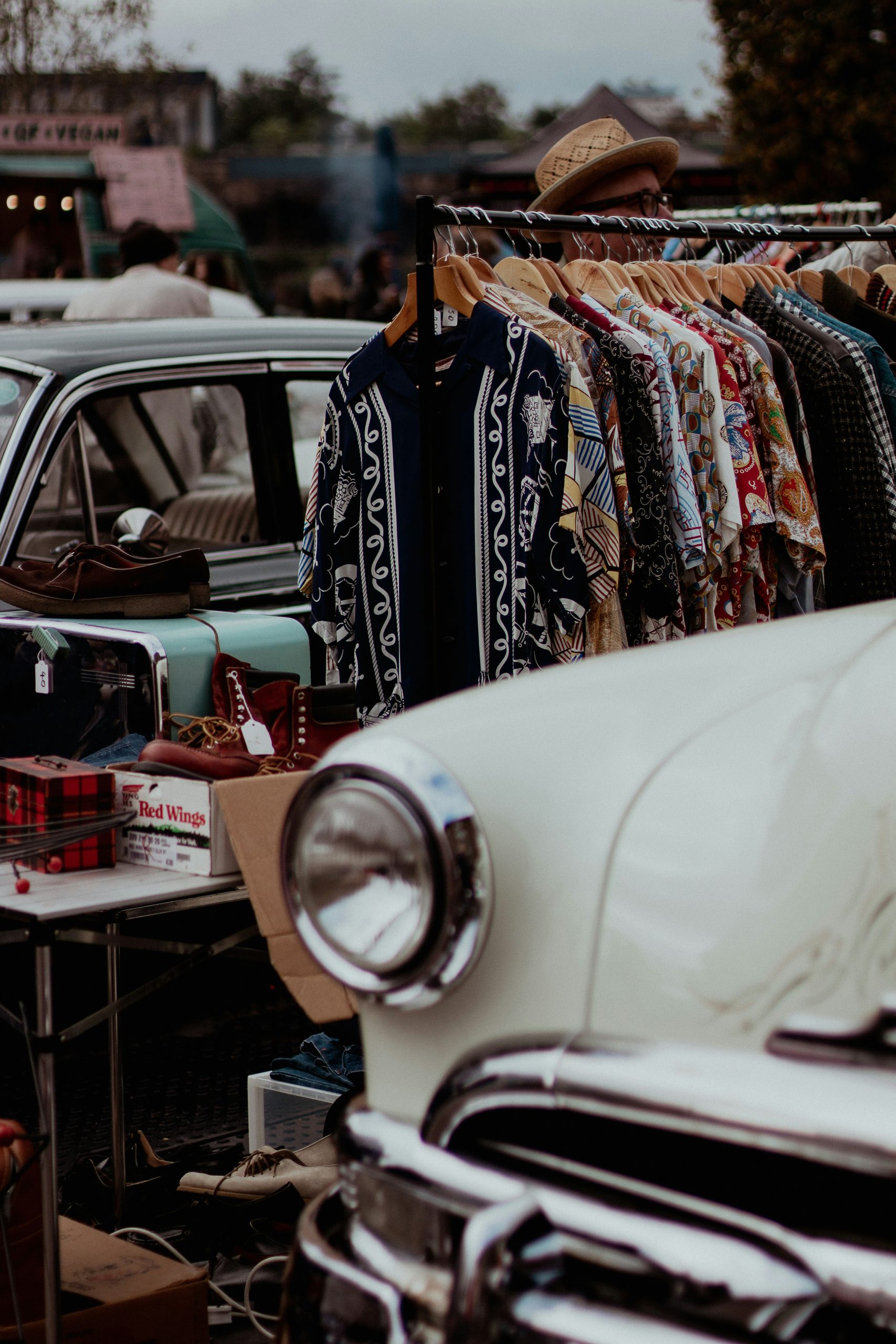
Leather jackets survived.
Denim survived.
Sneakers survived.
Wide-leg pants returned.
Flared pants returned.
High-waisted clothing returned.
Cargo pants returned.
Oversized jackets returned.
Styles disappear, become unfashionable, and then return when enough time has passed for them to feel new again.
The details change.
Materials improve.
Cuts are modified.
People combine pieces differently.
But the underlying inspiration often comes directly from the past.
So Which Decade Actually Had the Best Fashion?
There probably isn’t an objective winner.
If you prefer elegant tailoring, you may choose the 1930s or 1940s.
Love leather jackets and classic denim?
The 1950s may be difficult to beat.
Prefer bold experimentation?
Try the 1960s or 1970s.
Want maximalism?
The 1980s are waiting.
Prefer grunge and relaxed clothing?
The 1990s have you covered.
And if your closet contains pieces inspired by several of those periods, you’re essentially participating in what fashion has always done:
Taking something old and making it feel new.
Looking across a century of clothing also makes those embarrassing old photographs easier to appreciate.
The outfit you laugh at today may be exactly what stores are selling again 20 years from now.
So perhaps don’t throw everything away just yet.
If you could bring back the complete fashion style of only one decade—1910s, ’20s, ’30s, ’40s, ’50s, ’60s, ’70s, ’80s, ’90s or 2000s—which would you choose?
