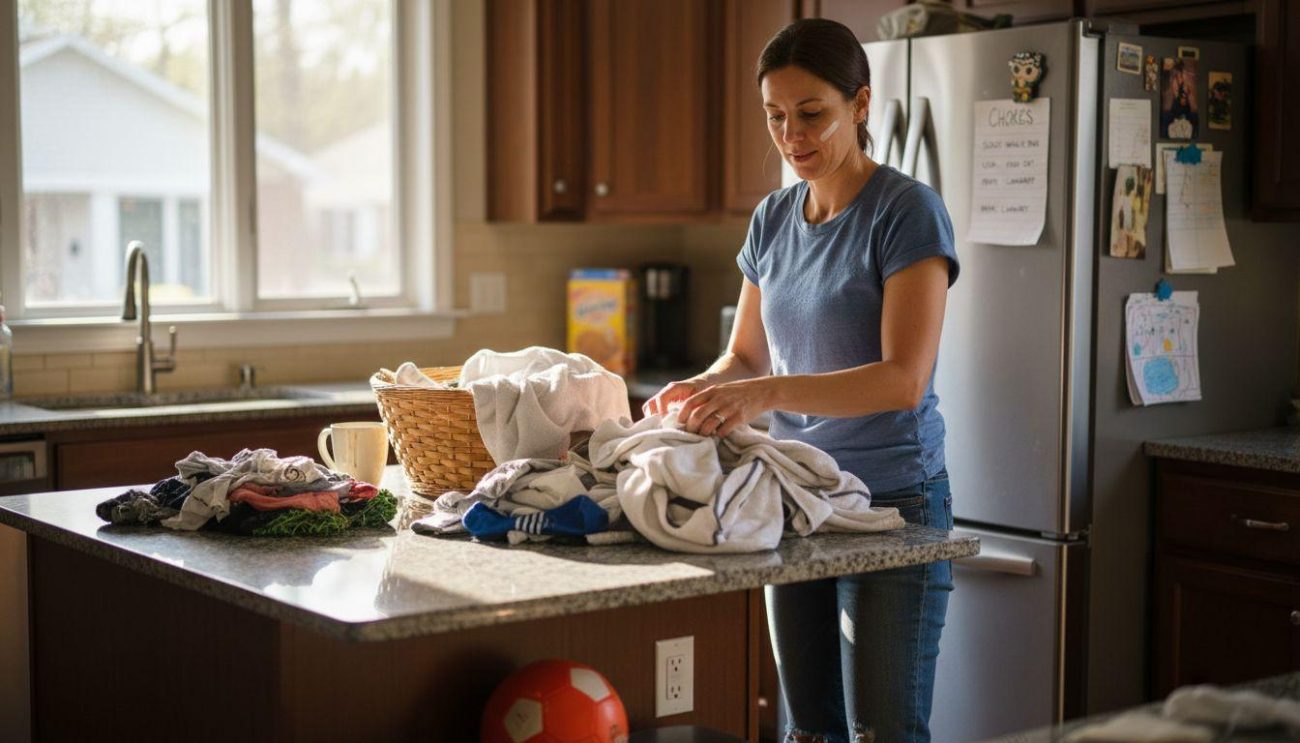
My mother was one of the most patient women I’ve ever known.
She could cook dinner while answering three children’s questions, fold a mountain of laundry before bedtime, and somehow remember exactly where everyone had left their shoes.
She rarely complained.
But one evening, she walked into the living room, looked directly at my father, and announced:
“I’m not washing another cloth diaper. Not one.”
Dad lowered his newspaper.
“What?”
“You heard me.”
He blinked.
“What’s the baby supposed to wear?”
Mom folded her arms.
“Disposable diapers. Or you can wash the cloth ones yourself.”
My older brother started laughing.
I remember thinking Mom must be joking.
She wasn’t.
And by the time she finished explaining what washing those diapers actually involved, my father looked as though someone had just informed him he’d been volunteered for a second full-time job.
That was the night a simple household chore became a family legend.
It was also the night my mother taught us something none of us fully appreciated until we were older.
The House That Never Seemed to Get Quiet
I grew up in a house where something was always happening.
There were children running through the hallway, dishes stacked beside the sink, shoes abandoned near the front door, and laundry waiting to be folded.
My father worked long hours.
He left early most mornings and usually returned tired, hungry, and ready to sit down.
He wasn’t a lazy man.
He took his job seriously, paid the bills, repaired things around the house, and made sure we had what we needed.
But he had one enormous blind spot.
He believed that because Mom stayed home with the children, her days were somehow less demanding than his.
He never said it quite that directly.
Instead, it appeared in little comments.
“Couldn’t that wait until tomorrow?”
“Why are you so tired?”
“You’ve been home all day.”
Mom usually ignored him.
She’d continue stirring dinner or folding clothes while he talked.
Looking back, I realize she probably ignored those comments because she was too exhausted to argue.
Her work began before Dad left for his job and continued long after he came home.
And unlike his workday, hers didn’t have a definite ending.
A Baby Changes Everything
When our youngest sibling was born, the house became even busier.
Mom already had children to feed, dress, supervise, and keep out of trouble.
Now there was a baby who needed constant attention.
The baby cried during dinner.
The baby woke up at night.
The baby needed feeding, changing, bathing, and comforting.
And the laundry seemed to multiply overnight.
In those days, cloth diapers were a normal part of life in many households.
Disposable diapers existed, but they cost more than reusable cloth.
My parents were careful with money.
Dad believed there was no reason to spend extra on something that would be thrown away after one use.
“Cloth diapers worked for generations,” he’d say.
Mom would nod without answering.
What Dad didn’t fully understand was that cloth diapers didn’t simply disappear into a washing machine after the baby used them.
Someone had to deal with them first.
And that someone was always Mom.
The Chore Nobody Wanted to Think About
Washing cloth diapers was not like washing an ordinary load of clothes.
There were wet diapers.
There were heavily soiled diapers.
There were diapers that needed rinsing before they could be washed.
Depending on the mess, Mom had to remove the waste, rinse the fabric, and deal with the unpleasant water.
Then came soaking, washing, drying, and folding.
And when she finally finished, there were more diapers waiting.
