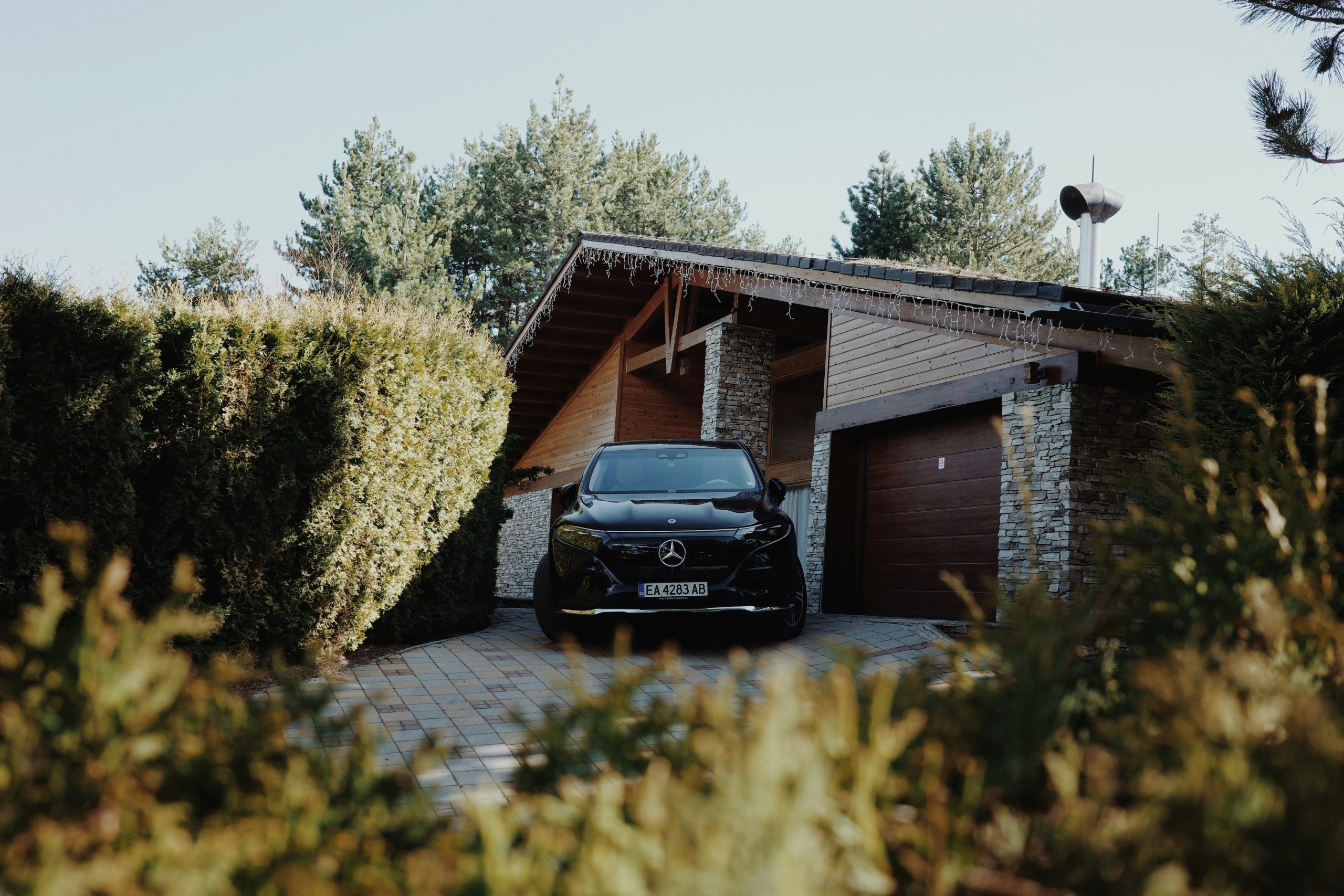
But for the first time, they acknowledged something obvious.
Both had repeatedly chosen escalation when simpler options still existed.
The Grass Grew Back
Months later, the lawn looked almost exactly as it had before the argument.
The tire tracks disappeared.
New grass filled the damaged areas.
Robert’s porch was repaired.
Richard eventually replaced the damaged Mercedes.
The concrete barriers were removed.
A small line of landscaping stones now marked the property boundary instead.
It wasn’t dramatic.
It wasn’t revenge.
It worked.
Richard never parked on Robert’s lawn again.
The Most Expensive Part Wasn’t the Damage
The dispute began with something that could have been solved through basic respect.
Don’t park on property you’ve been asked not to use.
And if someone violates your boundary, respond through proportionate, lawful measures rather than trying to teach them an increasingly dangerous lesson.
Instead, both men became obsessed with winning.
Robert wanted Richard to understand that the lawn belonged to him.
Richard wanted Robert to understand that concrete couldn’t stop him.
By the time they finished proving their points, neither cared about the original problem.
That’s what escalation does.
It changes the question.
The question was no longer:
“Where should Richard park?”
It became:
“Who can force the other man to back down?”
And once that happened, common sense disappeared.
Sometimes “Karma” Is Just Consequences
People hearing the story might say karma finally stepped in.
But there was nothing mysterious about what happened.
A parking dispute became retaliation.
Retaliation became a dangerous recovery attempt.
And a dangerous recovery attempt caused expensive damage.
Every step made the next one more likely.
That’s why neither neighbor truly won.
Robert got his lawn back but damaged his home in the process.
Richard got his Mercedes off the property but badly damaged the vehicle.
And both were left dealing with insurance, potential legal disputes and repair bills over a conflict that had begun with a few tire tracks in the grass.
Sometimes the smartest way to win a neighborhood dispute is to stop trying to defeat your neighbor.
Because once proving a point becomes more important than solving the problem, the final bill can be far larger than the thing you were fighting over.
Who do you think was more responsible for letting this dispute get out of control—Robert for trapping the Mercedes, or Richard for repeatedly parking on someone else’s property and attempting the risky crane lift?
