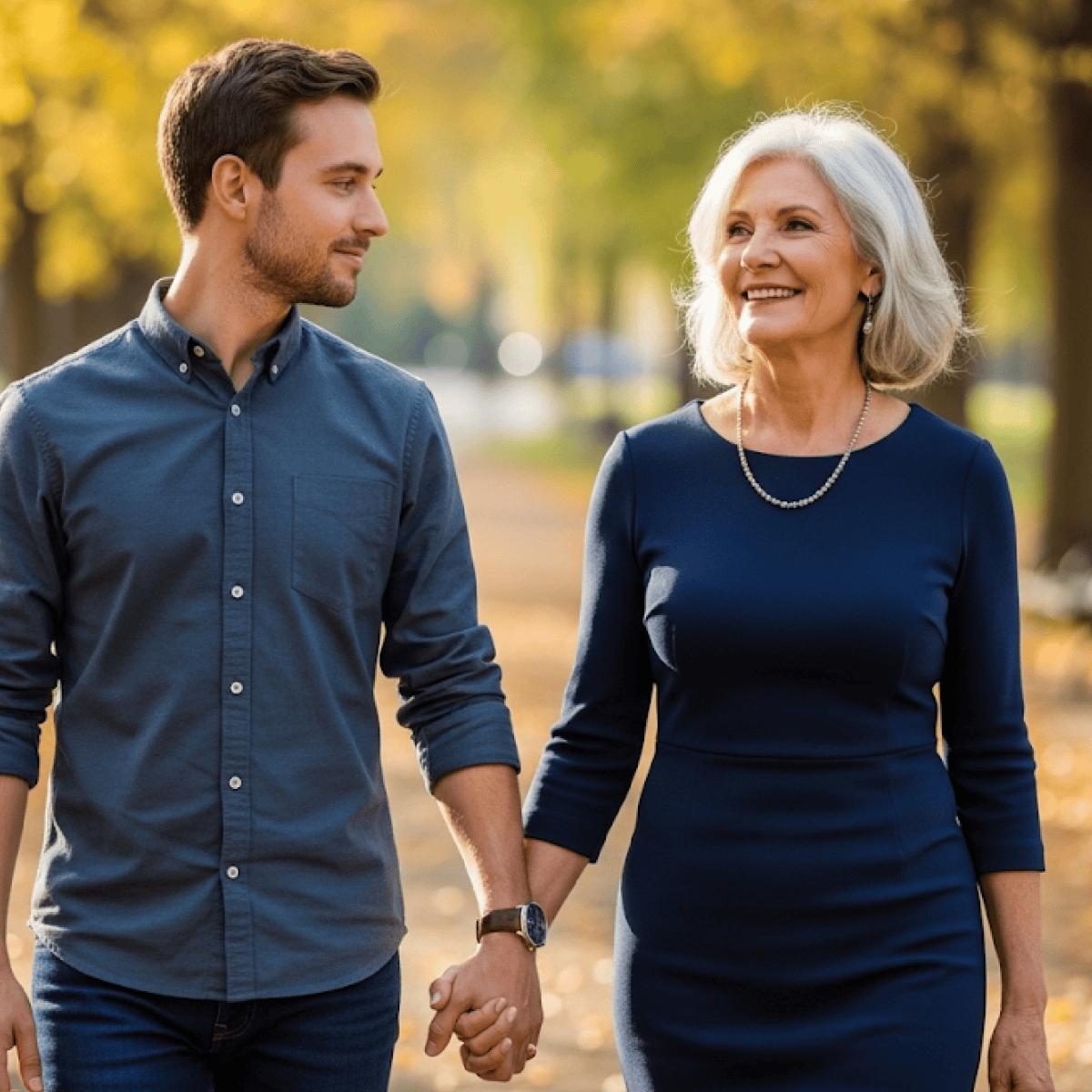
Margaret made one thing clear.
“I don’t want you to feel that you owe me your life because I helped your father.”
Daniel nodded.
“I know.”
“And I don’t want our marriage to be based on gratitude.”
“It isn’t,” he said.
He looked into her eyes.
“I was grateful before I knew you. But I fell in love with the woman who made me laugh, listened to me, and made me feel that I belonged somewhere.”
Margaret smiled through her tears.
“That,” she whispered, “is the man I married.”
They embraced.
The secret had been painful to discover.
But speaking openly about it helped them understand each other more deeply.
The Daughter Who Had Questions
Several weeks later, Margaret’s daughter returned from overseas.
She had initially been surprised by her mother’s marriage.
The age difference concerned her.
She also worried that Margaret might be vulnerable to someone interested in her financial security.
Margaret understood those concerns.
She invited her daughter to dinner and asked Daniel to explain his past.
He told her about his father, the hospital, and the letter.
Margaret also explained that she and Daniel had discussed the secrecy and were working to build trust.
Her daughter listened carefully.
She asked questions.
And by the end of the evening, she seemed more comfortable with their relationship.
Before leaving, she hugged her mother.
“I’m glad you’re happy.”
Then she turned to Daniel.
“Just take good care of each other.”
Daniel smiled.
“We will.”
Turning an Old Act of Kindness Into Something New
As the months passed, Margaret and Daniel began discussing ways to help families facing unexpected medical emergencies.
They remembered how difficult the hospital experience had been for Daniel’s father.
They also understood that a single generous gesture could not solve every financial problem.
But they wanted to make a difference where they could.
Together, they established a small charitable fund in his memory.
They called it The Second Chance Fund.
The fund was intended to assist families struggling with certain emergency medical expenses.
Margaret contributed business resources.
Daniel helped organize fundraising efforts and community support.
They wanted the project to reflect the values Daniel’s father had taught him.
Help when you can.
Treat people with dignity.
And never assume that an act of kindness is too small to matter.
“Do You Ever Regret Marrying Me?”
One afternoon, Margaret and Daniel sat together in their garden.
The weather was warm, and the flowers along the fence had begun to bloom.
Margaret looked at her husband.
“Can I ask you something?”
“Anything.”
“Do you ever regret marrying a woman thirty-two years older than you?”
Daniel smiled.
“Do you ever regret marrying a man who still leaves his shoes in the hallway?”
Margaret laughed.
“Every morning.”
He laughed too.
Then he took her hand.
“People can say whatever they want about us.”
She nodded.
“But I know why I married you.”
“Why?”
“Because you make me happy. Because I trust you. And because when life gets difficult, you’re the person I want beside me.”
Margaret leaned against his shoulder.
For the first time in a long while, she stopped worrying about what the town might think.
The Lesson Margaret Never Forgot
When Margaret first married Daniel, people focused on everything that made them different.
Their ages.
Their incomes.
Their backgrounds.
Their expectations for the future.
Almost nobody asked whether they treated each other with kindness and respect.
Ten days after the wedding, Margaret discovered a secret that connected their lives long before their first conversation over coffee.
She learned that a gesture she barely remembered had stayed with Daniel’s family for twelve years.
But she also learned that love requires more than gratitude.
It requires trust.
It requires honesty.
And it requires the willingness to face uncomfortable conversations together.
Margaret had once helped a frightened teenager and his injured father without expecting anything in return.
Years later, that teenager became the man she married.
Sometimes, an act of kindness changes someone’s life in ways we may never see. And sometimes, the people we help remember us long after we’ve forgotten what we did.
