Now imagine seeing the same photograph beneath a caption suggesting that someone is secretly embracing the woman.
Suddenly, you’re looking for evidence of another person.
Your attention moves toward her waist.
You begin examining the dark shapes.
And you may interpret them in a way that supports the suggestion you’ve just read.
This is an example of how expectations can influence visual perception.
The photograph hasn’t changed.
But the story surrounding it has changed what you’re looking for.
Was There Really Another Man in the Picture?
Some versions of the story surrounding the photograph suggest a possible romantic betrayal.
The unusual shape is presented as though it reveals another person standing close to the woman.
But the information provided does not establish that claim.
There is no reliable confirmation that another man was present.
There is also no verified evidence supporting the reported marital confrontation associated with the image.
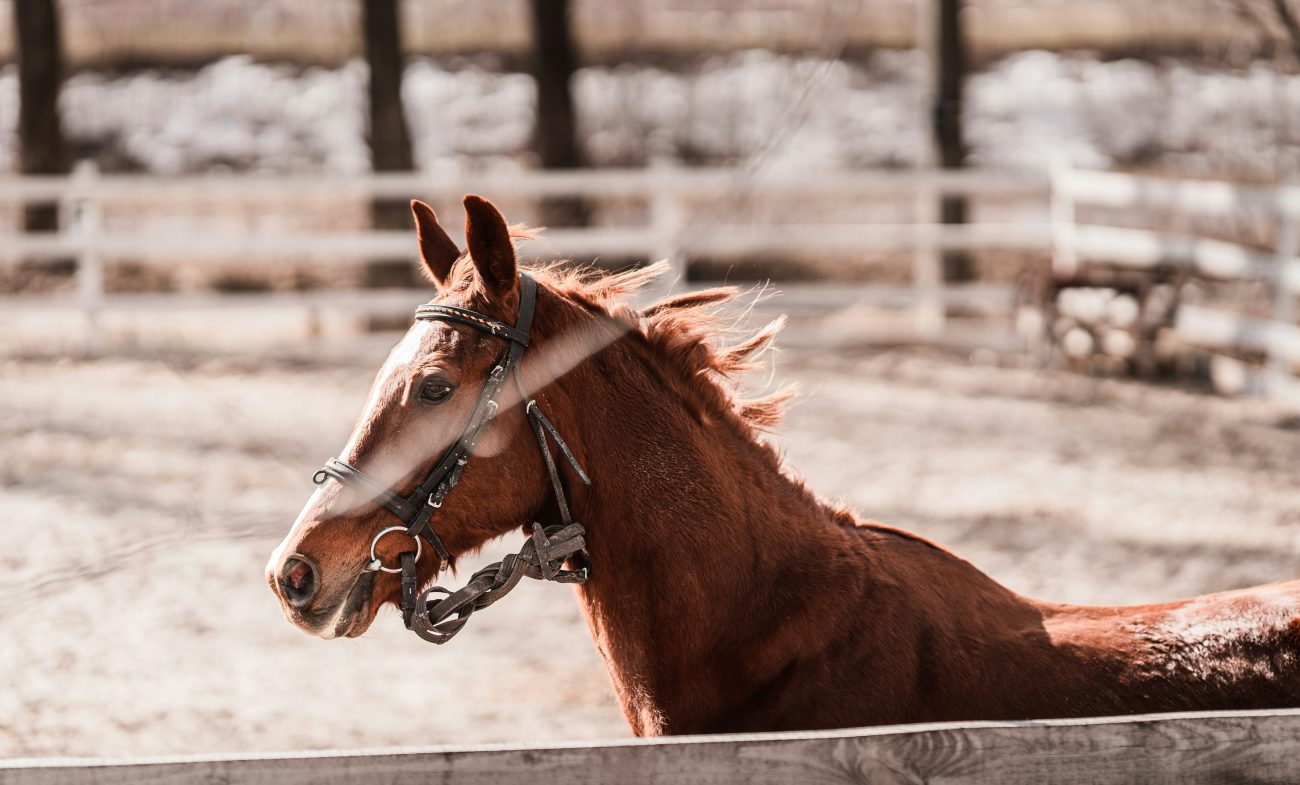
The available explanation points instead to the horse’s overlapping outline and shadow.
That distinction matters.
A photograph can be confusing without revealing a secret.
And a dramatic caption can attract attention without accurately describing what happened.
How to Examine the Illusion
The easiest way to approach this type of photograph is to ignore the dramatic caption for a moment.
Start by looking at the horse.
Follow the outline of its head, neck, and body.
Notice where its dark coloring overlaps with the woman’s clothing or silhouette.
Then look at the areas of shadow.
Ask yourself whether you can identify the clear outline of another person’s head, shoulders, torso, or hands.
A genuine second figure should generally have distinguishable visual features.
An ambiguous dark shape alone isn’t enough to establish that someone is standing there.
According to the explanation accompanying this particular image, the apparent arms are part of the visual confusion created by the horse and the lighting.
The supposed hidden embrace isn’t supported by the available evidence.
Why Optical Illusions Become So Popular Online
Images like this spread quickly because they create an immediate question.
What am I missing?
People naturally want to solve visual puzzles.
And when a photograph appears to contain a hidden detail, viewers often look again and again.
Some see the suggested shape immediately.
Others can’t see it at all.
That difference encourages discussion.
Friends compare interpretations.
Family members point out different parts of the picture.
And people return to the image to check whether their first impression was correct.
The most engaging optical illusions often work because they can support more than one initial interpretation.
But there’s an important difference between an illusion and a factual discovery.
Seeing the outline of an apparent person doesn’t prove that person was actually present.
The Real Lesson Behind the Horse Photograph
The image is a reminder that our eyes don’t always tell us the whole story.
What we see is influenced by lighting, perspective, overlapping objects, and the expectations we bring to an image.
Sometimes, our first interpretation is correct.
Other times, a second look reveals something much simpler.
In this case, the supplied explanation indicates that the unusual shape around the woman’s waist comes from the horse and its shadow rather than another person’s arms.
The dramatic story of a hidden embrace remains unverified.
And perhaps that’s what makes the photograph worth examining.
It doesn’t just challenge your eyesight.
It challenges how quickly you’re willing to believe the explanation attached to what you see.
So take one more look at the picture. Do you see someone standing behind the woman, or can you trace the shape back to the horse?
The answer may reveal as much about how your brain interprets images as it does about the photograph itself.
