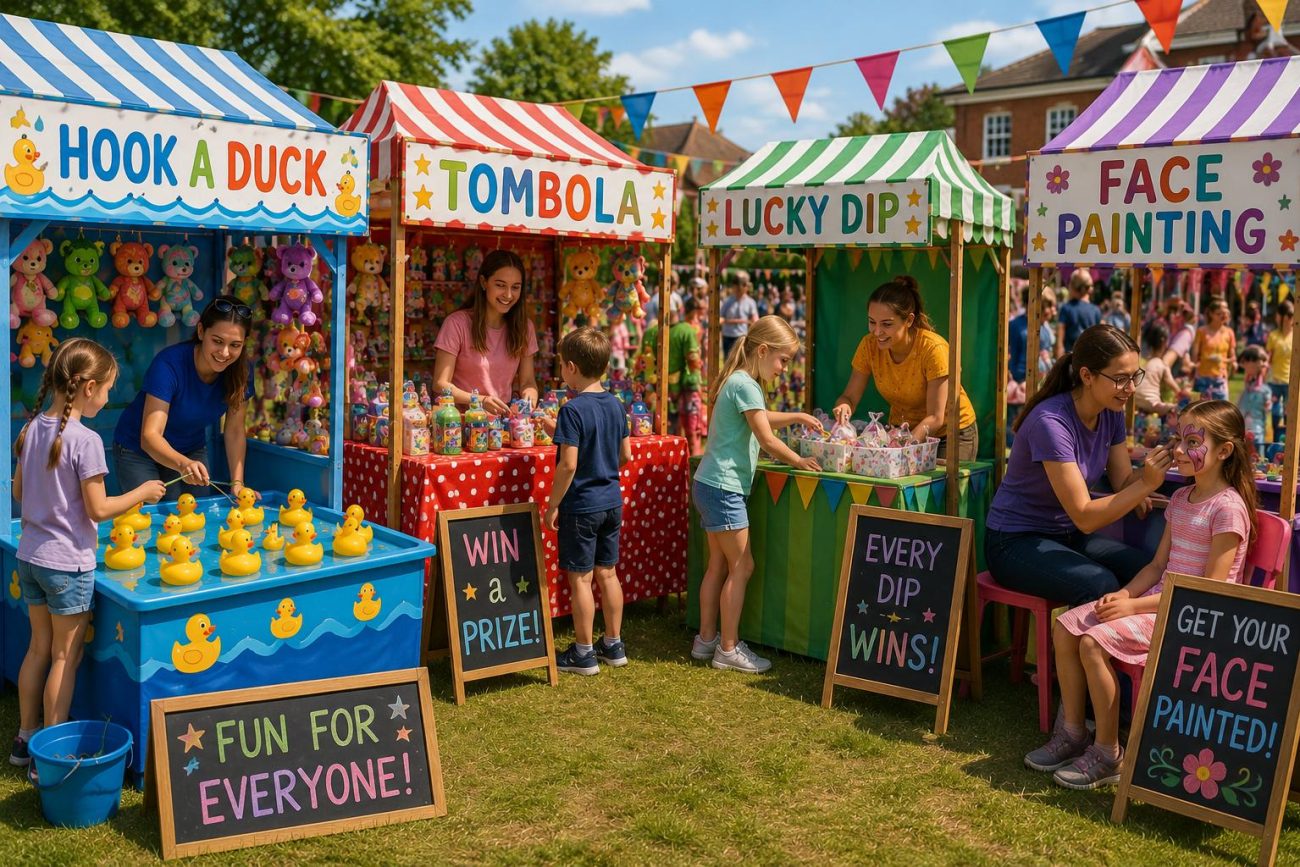
He’d wanted to try the obstacle course.
And he hadn’t gotten to do those things.
“Was it hard to give up your money?” I asked.
He considered that.
“A little.”
Then he added, “But the kids were really happy.”
I nodded.
“That matters.”
He took a sip of water.
“Can we go to another fair sometime?”
I smiled.
“Maybe we can.”
He didn’t ask for anything more.
But by the time we got home, I’d already made a plan.
That Weekend, I Took Him to the County Fair
The following Saturday, I told Morgan to put on comfortable shoes.
He looked suspicious.
“Why?”
“We’re going somewhere.”
“Where?”
“You’ll see.”
He asked questions the entire drive.
When we pulled into the parking lot at the county fair, he sat up straight.
“Wait. Are we going in?”
“We are.”
“Really?”
“Really.”
He looked toward the rides and game booths.
“Can I do the basketball game?”
“Absolutely.”
His grin was so wide that I started laughing.
We spent the afternoon walking between attractions.
He tried the basketball challenge.
He ate fair food.
He went through an obstacle course and came out breathless, insisting he could do it faster the second time.
I watched him enjoy the kind of afternoon I’d wanted to give him at the school fair.
This time, he didn’t have to choose between helping someone else and having fun himself.
He finally got his turn.
At one point, we sat on a bench with a snack between us.
He looked over at me.
“Mom?”
“Yeah?”
“Thanks for bringing me.”
I put my arm around his shoulders.
“You’re welcome.”
Then he said, “The school fair was still really good, though.”
I smiled.
“I know it was.”
The Lesson My Son Taught Me Without Trying
Before that day, I’d thought of the fifty dollars as a gift.
A small way to give Morgan something I hadn’t always been able to afford.
I wanted him to have fun.
I wanted him to feel included.
And maybe, if I’m being truthful, I wanted to make up for some of the things he’d missed when he was younger.
But Morgan saw the money differently.
He saw an opportunity.
He could spend it on games for himself.
Or he could make sure eleven other children weren’t left sitting in the library while everyone else enjoyed the fair.
He chose the second option.
Not because someone told him to.
Not because he expected a reward.
But because he remembered what exclusion felt like.
That memory could have made him bitter.
Instead, it made him compassionate.
And I think that’s what moved me most.
Kindness Doesn’t Mean Children Should Always Sacrifice
I’ve thought a lot about what happened since that afternoon.
I’m proud that Morgan chose to help those children.
But I also don’t want him to grow up believing he must always give up his own happiness to make other people comfortable.
He’s still a child.
He deserves to play games, eat cookies, and enjoy the things that make childhood special.
Helping others should come from compassion, not from the belief that his own needs don’t matter.
That’s part of why I took him to the county fair.
I wanted him to know that his kindness mattered.
But I also wanted him to know that he mattered.
He didn’t have to earn a fun afternoon by doing something generous first.
He deserved one simply because he was my son.
And the children at his school deserved opportunities to participate without having to depend on another child’s savings.
I hope the adults involved can find a better way to make future school events accessible to every student.
