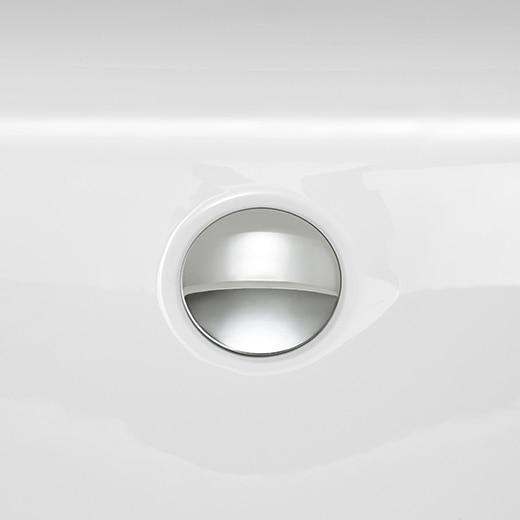
It’s the opening at the bottom where water disappears after a bath or shower.
But many bathtubs also have an overflow opening higher up the wall of the tub.
Its purpose is to provide an additional route for water when the level rises.
Depending on the bathtub’s design, the overflow connects to the drainage system.
Because the opening is less visible and often covered by a plate, it’s easy to overlook during routine cleaning.
Debris and residue can accumulate in plumbing components over time.
However, an unusual mass protruding from an overflow opening shouldn’t automatically be treated as a normal or harmless condition.
If the cause is unclear, the drainage system may need inspection.
And if the bathtub drains slowly, produces unpleasant odors, or shows signs of leaking, a plumbing professional may be needed.
What I Did Next
Once I was reasonably confident that the material was a hair-like buildup, I stopped treating it as a mysterious creature.
I put on protective gloves.
I avoided touching it with my bare hands.
Then I carefully removed the accessible material without forcing anything deeper into the pipe.
The clump was unpleasant.
It was damp, tangled, and coated with residue.
I disposed of it and cleaned the surrounding area.
I also checked the bathtub for obvious drainage problems.
The experience reminded me that removing visible debris doesn’t necessarily mean an entire drain system is clear.
If more material appeared or the water stopped draining properly, I would need to investigate further rather than simply ignoring it.
But that afternoon, the most frightening part of the problem was already over.
I finally knew what I had been looking at.
Why Drain Buildup Can Look So Disturbing
Hair clogs don’t always resemble the loose strands we remove from a hairbrush.
When hair becomes tangled with soap residue, oils, and other debris, the result can look surprisingly different.
The material may appear dark.
It can become dense and matted.
Sometimes it develops an irregular, rubbery texture.
Moisture and grime can also change its appearance.
Under poor lighting, an unfamiliar clump can easily resemble something else.
That’s especially true when it appears in an unexpected location.
My mind had interpreted the shape before I had identified the material.
And once I imagined something frightening, every detail seemed to support that interpretation.
The more I looked without understanding, the more threatening it appeared.
A Few Bathroom Maintenance Lessons I Won’t Forget
After that experience, I began paying more attention to parts of the bathroom I had previously ignored.
I learned that simple habits can help reduce some common drain problems.
- Remove visible hair from the bathtub or shower after use.
- Use an appropriate drain strainer where practical.
- Clean accessible drain components according to the manufacturer’s instructions.
- Watch for slow drainage, recurring odors, or unusual buildup.
- Avoid mixing chemical drain cleaners, which can create dangerous reactions.
- Contact a plumber if the obstruction is inaccessible, keeps returning, or appears to involve a damaged pipe.
I also realized that a bathtub’s overflow opening deserves attention during routine inspections.
That doesn’t mean taking apart unfamiliar plumbing without knowing how it works.
It simply means noticing changes before they become larger problems.
The Bathroom Looked Completely Normal Again
By evening, the bathroom looked exactly as it had before my vacation.
The tub was clean.
The strange object was gone.
The lights were on.
And there was nothing hanging from the overflow opening.
I stood in the doorway for a moment.
It was difficult to believe how much anxiety that small discovery had caused.
Earlier, I had imagined snakes, animals, and mysterious growths inside my plumbing.
