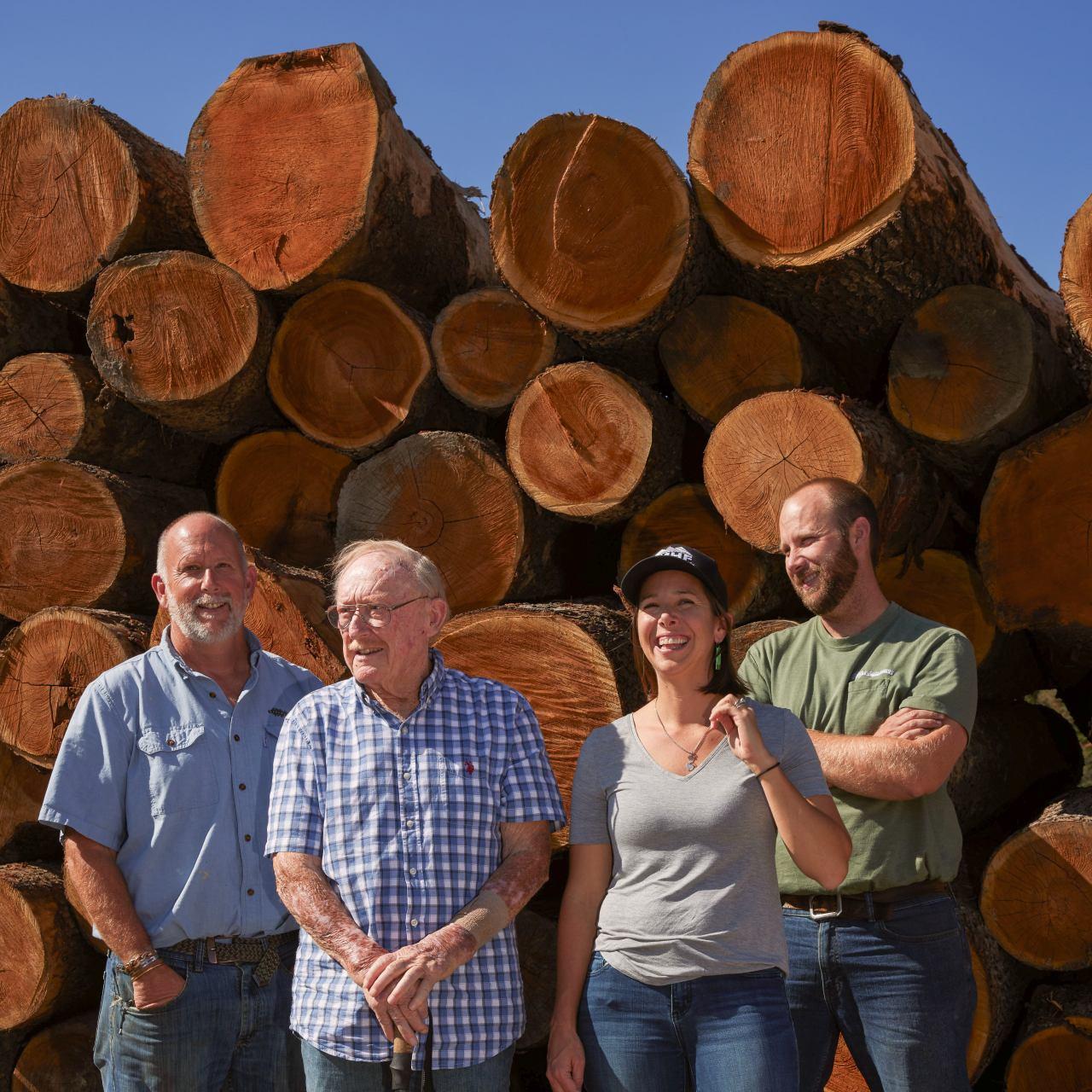
Levi explained that standing timber, raw logs, and processed lumber weren’t the same products.
Harvesting, hauling, sawing, and sorting added work and cost.
But the finished boards had revealed the wood’s quality.
Then Levi made another suggestion.
He wanted Dad to keep seven especially beautiful boards from the largest cherry log.
The one his father had planted.
Levi offered to dry those boards in his kiln without charging for the service.
He would purchase the remaining lumber for $9,400.
Dad agreed.
Before leaving, he asked Levi why someone would deliberately grade good wood so poorly.
Levi answered carefully.
“Sometimes people let financial trouble influence their judgment.”
Then he looked toward the finished boards.
“But once the wood is opened, you can see what’s really there.”
Dad nodded.
That afternoon, Levi paid him $9,400.
And for the first time in weeks, my father looked relaxed.
My Cousin Finally Told the Truth
Two weeks before Christmas, Lyle came to the farm.
Snow was falling when his truck pulled into the driveway.
He stood near the barn for several minutes before approaching Dad.
He had heard about the sale at Levi’s sawmill.
And he’d come to explain himself.
His business was in serious financial trouble.
He had borrowed heavily to purchase new equipment.
Now the bank was preparing to take possession of the mill.
Then he admitted something that made my stomach tighten.
He had deliberately graded logs too low so he could purchase them cheaply and resell the processed lumber at a higher price.
He knew Dad’s cherry logs were valuable.
He’d inspected the trees months earlier.
But financial pressure had led him to make a dishonest decision.
Dad listened without interrupting.
When Lyle finished, my father reached into his coat pocket.
He removed the original $600 check.
He had kept it all that time.
Then he handed it back.
“Lyle, your father built that sawmill on trust.”
My cousin lowered his eyes.
Dad continued.
“Equipment can be replaced. Money can be earned again. But once people stop trusting you, you’ve lost something much harder to recover.”
Lyle began crying.
He apologized.
Dad didn’t pretend the apology erased what had happened.
Instead, he told him to contact everyone he’d treated unfairly.
“Make things right while you still can.”
Then he added:
“If the mill has to close, at least leave with your honesty intact.”
Eleven Farmers Received an Apology
Lyle followed Dad’s advice.
He contacted eleven farmers and timber owners who had received unfair evaluations during the previous months.
He visited their homes.
He admitted what he’d done.
And he apologized.
Some people were angry.
Others listened.
Lyle sold personal belongings, including his pickup truck and a hunting property, to help repay the money he owed.
For the remaining amounts, he arranged installment payments.
Despite those efforts, the bank eventually took possession of the sawmill.
The equipment was sold.
The family business Walt had established in 1961 came to an end.
But Lyle didn’t leave the logging industry.
The following April, he visited Levi’s sawmill.
He explained his circumstances and asked whether there might be work available.
He wasn’t looking for a management position.
He was willing to move logs, carry boards, and clean the yard.
Levi considered his request.
Then he offered him a job.
Lyle began working three days a week as a laborer.
He also started learning to grade timber more carefully.
Later, he told me that the work had taught him more about honesty than running the family mill ever had.
The Gift Dad Made From His Father’s Tree
While Lyle was rebuilding his life, Dad was working on something special.
