I started laughing.
She wasn’t amused.
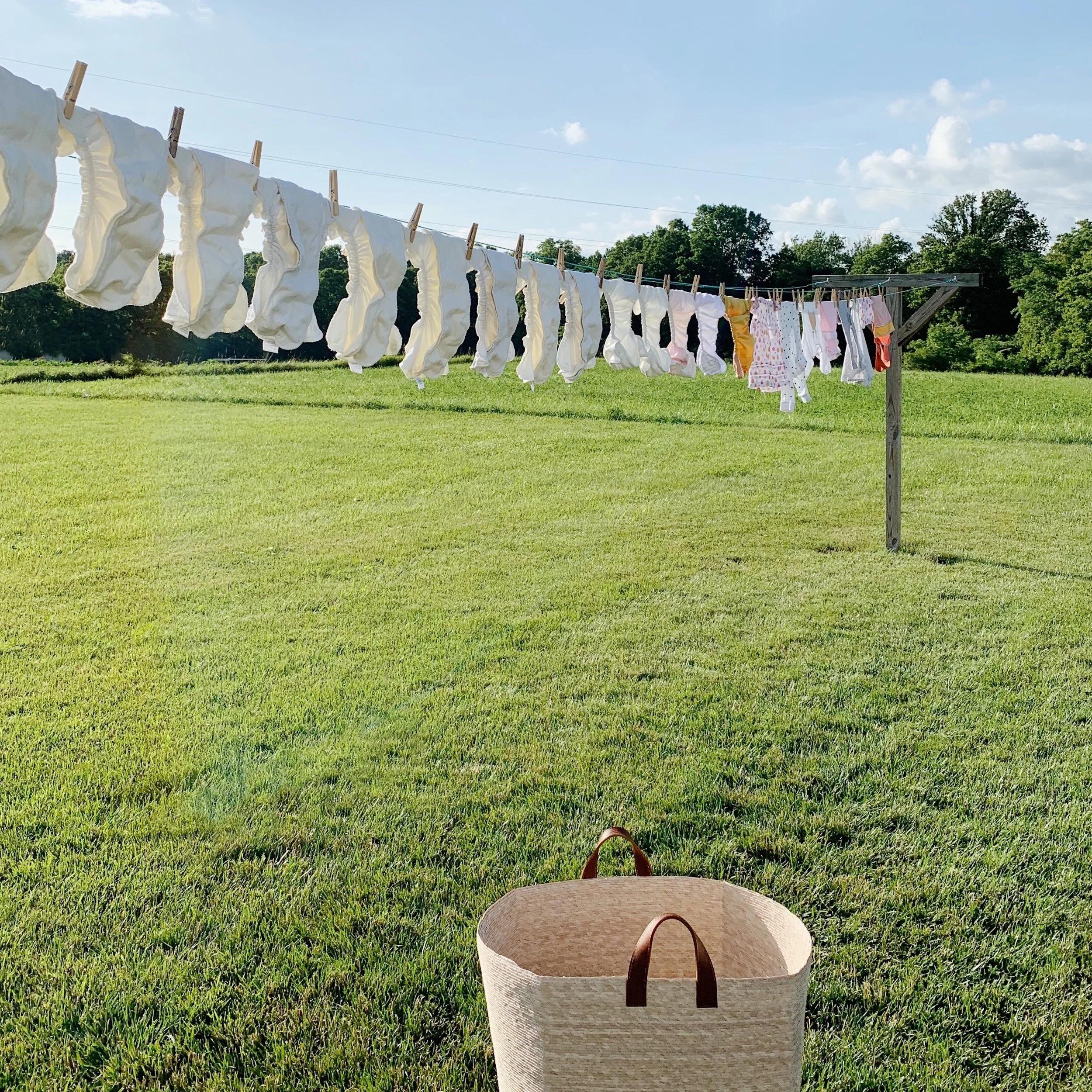
She had discovered that using cloth diapers involved more than choosing cute patterns and putting clean diapers on her baby.
There was the mess.
The washing.
The constant need to stay ahead of the laundry.
And the realization that the process repeated itself every single day.
She sounded exhausted.
I could practically hear my mother’s voice from years earlier.
Sara continued describing the experience, and I laughed along with her.
But after we hung up, I found myself thinking about something that wasn’t funny.
Mom had done this for years.
Not two weeks.
Years.
The Work We Never Thought About
When we were children, we noticed the dramatic moments.
We remembered the diaper pail.
We remembered Mom’s ultimatum.
We remembered Dad’s immediate surrender.
But we didn’t remember the hundreds of ordinary days that came before those moments.
We didn’t think about how often Mom had to stop what she was doing to deal with another mess.
We didn’t consider the time spent washing and folding.
And we rarely asked whether she needed help.
The chores had become part of the background of our childhood.
They were always done.
So we assumed they would always get done.
It took adulthood to understand that someone had been making that possible.
Why So Much Household Work Goes Unnoticed
Many families have their own version of the diaper pail.
It might be a sink that never stays empty.
A basket of laundry that seems to refill overnight.
Meals prepared every day.
School clothes washed and organized.
Appointments remembered.
Or countless small tasks that keep everyone comfortable.
Often, the person performing those tasks receives the least attention precisely because the work is done so reliably.
When the kitchen is clean, nobody thinks about who cleaned it.
When the laundry is folded, nobody thinks about the time it required.
And when a baby has fresh diapers, nobody thinks about the unpleasant work that came before.
The result is visible.
The effort often isn’t.
The Mothers Who Did It Without Complaining
Of course, not every family used cloth diapers.
And not every household divided the work the same way.
Some fathers were deeply involved in washing, feeding, and caring for their children.
Some families shared responsibilities.
Others relied on grandparents or additional relatives.
But many mothers from earlier generations carried a particularly heavy share of domestic labor.
Their work wasn’t always described as work.
It was simply considered part of motherhood.
They were expected to manage it alongside everything else.
Looking back, I wonder how many women reached the end of an exhausting day without anyone asking how they were feeling.
How many quietly continued doing the same chores.
And how many, like my mother, eventually decided that something had to change.
The Funny Story That Became Something More
After Sara’s phone call, I began hearing our old family story differently.
Mom’s announcement still made me laugh.
Dad’s reaction was still hilarious.
And my brother’s encounter with the diaper pail remained one of our most memorable childhood moments.
But I also felt a new appreciation for my mother.
Her decision to stop washing cloth diapers wasn’t merely a dramatic household episode.
It was a boundary.
She had decided that one particular responsibility had become too much.
And she expected the family to respect that decision.
Dad’s quick agreement might have been funny.
But it also meant that, at least in that moment, he listened.
And the household adapted.
What I Wish I’d Said to Mom Sooner
There are things we don’t think to say when we’re young.
Thank you for making dinner.
