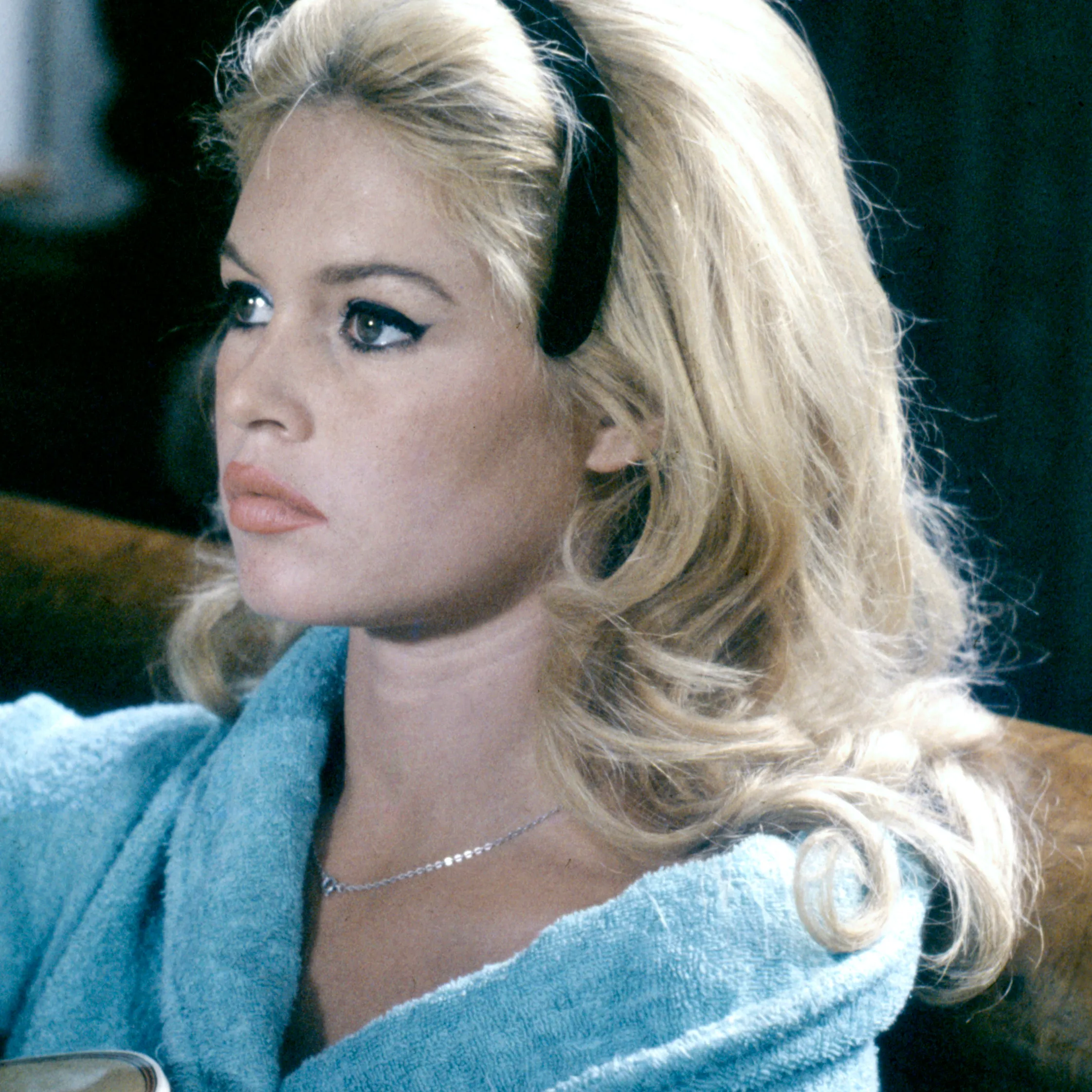
Those accounts complicate the simple image of glamorous celebrity, husband and child.
They also illustrate something celebrity photographs frequently hide.
A photograph can show what happened physically.
It cannot tell us everything that was happening emotionally.
That distinction matters when looking back at famous relationships.
It is tempting to examine an old picture and construct an entire story from someone’s expression, body language or clothing.
But a photograph doesn’t provide enough evidence for that.
We can appreciate what an image preserves without pretending it reveals every private truth.
The Marriage Did Not Last
Bardot and Charrier eventually divorced in 1962.
Their marriage had lasted only a few years.
It would be easy, decades later, to reduce their relationship to a simple explanation.
But real relationships rarely work that way.
Career pressures, personality, parenthood, expectations and the extraordinary attention surrounding Bardot all formed part of a much larger personal story.
Unless the people involved explicitly documented a particular private moment, an old photograph cannot tell us precisely what either person was thinking.
That’s why these images are perhaps most interesting when we resist trying to make them reveal more than they actually can.
Look Again at the Photograph
Knowing what came afterward changes the way an old photograph can feel.
At first, you might notice Bardot’s appearance.
Her hair.
Her clothes.
The Mediterranean atmosphere.
The seemingly effortless style of the period.
Look longer, however, and the photograph becomes something else.
It becomes a frozen piece of a life that continued moving immediately after the shutter clicked.
The people in the image had no idea how future generations would examine that moment.
They didn’t know which relationships would last.
They didn’t know which photographs would become iconic.
They didn’t know how their younger selves would eventually be remembered.
They were simply living through the present.
Why Old Celebrity Photographs Still Fascinate Us
Modern celebrity photography is everywhere.
A famous person can be photographed hundreds of times in a single day.
Phones capture everything.
Images are edited, reposted, cropped, filtered and circulated within minutes.
Older photographs feel different partly because they came from a world where images were less disposable.
One photograph could become permanently associated with a person.
That scarcity gives certain images extraordinary staying power.
But there is another reason.
Old photographs collapse time.
Someone who has spent decades in the public eye suddenly appears young again.
The future hasn’t happened yet.
Successes haven’t happened.
Failures haven’t happened.
Relationships haven’t ended.
Age hasn’t arrived.
For one fraction of a second, everything is still ahead.
That can make an ordinary photograph surprisingly emotional.
Bardot’s Influence Extended Beyond the Screen
Whatever one thinks of the different chapters of Bardot’s life, her influence on popular culture was enormous.
Her appearance became instantly recognizable.
Her hairstyles were imitated.
Her fashion choices were copied.
And the relaxed Riviera aesthetic associated with her helped create an image that designers, photographers and celebrities would revisit for generations.
The remarkable thing is how little some of those photographs need.
There may be no extravagant gown.
No enormous movie set.
No dramatic special effects.
Sometimes there is simply Bardot, sunlight and the Mediterranean landscape.
That simplicity is exactly why the images continue to work.
But Glamour Never Tells the Whole Story
Celebrity culture encourages us to believe photographs.
A beautiful home suggests happiness.
An expensive vacation suggests fulfillment.
A smiling couple suggests a perfect relationship.
A glamorous family photograph suggests a perfect family.
Real life is much more complicated.
Bardot’s marriage to Charrier and her later comments about motherhood are reminders that the public version of someone’s life can be dramatically different from the experience behind it.
