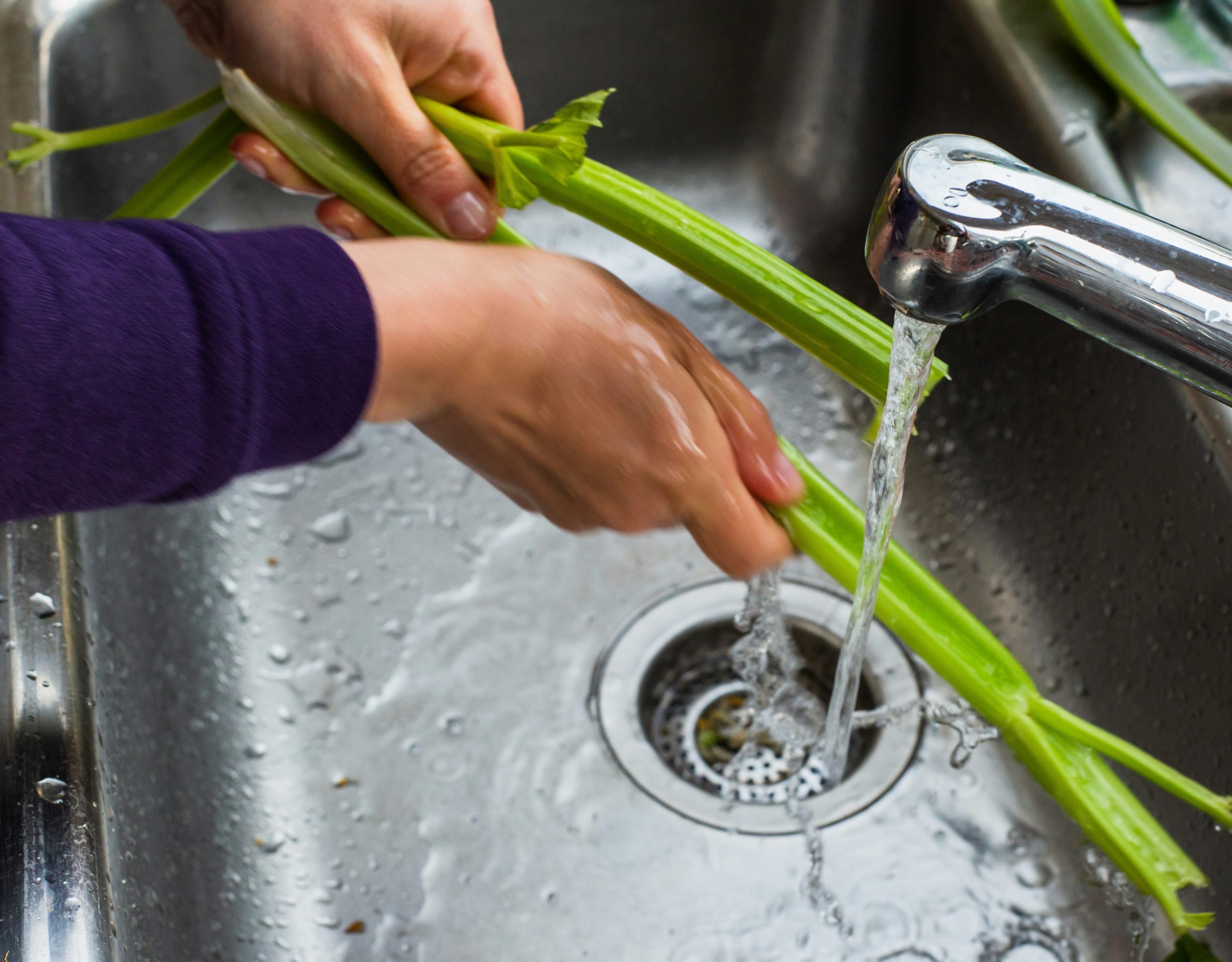
After washing, produce can be dried with a clean cloth or paper towel.
But there’s something you should not use.
Don’t Wash Your Vegetables With Dish Soap
More cleaning product doesn’t necessarily mean safer food.
The FDA does not recommend washing fruits and vegetables with soap, detergent or commercial produce washes.
Produce is porous, and household cleaning products aren’t designed to be consumed.
Ordinary running water is the recommended approach.
It’s also important to understand that washing reduces contamination risk but cannot guarantee the removal of every microorganism.
That’s why safe storage and preventing cross-contamination matter too.
What About Bags Marked ‘Pre-Washed’?
Here’s another common question.
You buy a bag of salad that says:
“Pre-washed.”
Should you wash it again?
Not necessarily.
The FDA says produce labeled as pre-washed or ready-to-eat can generally be consumed without additional washing.
If you do choose to wash it again, make sure your sink, hands, utensils and surrounding surfaces are clean so you don’t accidentally reintroduce contamination.
Sometimes trying to make food “extra clean” can expose it to a dirty kitchen surface instead.
Keep Perishable Produce Cold
Temperature matters.
Perishable fresh fruits and vegetables should generally be kept in a clean refrigerator at 40°F or below.
Pre-cut or packaged produce requiring refrigeration should also remain cold.
Don’t leave prepared salads sitting on a kitchen counter for hours and then assume they’re safe simply because vegetables were the main ingredient.
Once produce has been cut or prepared, proper refrigeration becomes even more important.
Keep Raw Meat Away From Your Salad
Cross-contamination is one of the easiest food-safety problems to prevent.
Raw meat, poultry and seafood should be kept separate from foods that will be eaten without cooking.
That applies:
- in your shopping cart
- inside grocery bags
- in the refrigerator
- on kitchen counters
- on cutting boards
Raw meat juices should never be allowed to drip onto produce.
Ideally, use separate cutting boards for raw meats and fresh produce.
If that’s not possible, thoroughly wash the board and utensils with hot, soapy water between uses.
Know When to Throw Produce Away
Sometimes the safest decision is simply not to eat it.
Avoid produce that is clearly rotten.
When shopping, choose fruits and vegetables that aren’t badly bruised or damaged.
For packaged or pre-cut produce, make sure products that require refrigeration are actually being kept cold.
At home, pay attention to obvious spoilage.
If something looks rotten or has deteriorated substantially, throwing it away is usually preferable to trying to salvage it.
Saving a few dollars isn’t worth gambling with food safety.
Washing Helps—But It Isn’t Magic
This is another misconception worth correcting.
Washing vegetables is important.
But washing does not sterilize them.
The FDA specifically notes that washing can reduce bacteria that may be present without necessarily eliminating all of it.
That distinction matters because people sometimes believe that rinsing something thoroughly makes it completely risk-free.
It doesn’t.
Food safety relies on multiple layers:
clean hands, clean surfaces, separation from raw foods, appropriate refrigeration and sensible food selection.
Should You Stop Eating Raw Vegetables?
For most people, absolutely not.
Fresh vegetables provide valuable nutrients and are an important part of healthy eating.
Fear-based claims that people should abandon vegetables because contamination is possible miss the larger point.
Many foods can become contaminated if they’re produced, stored or handled incorrectly.
The practical response is reducing avoidable risks.
Wash your hands.
Rinse produce appropriately.
Prevent cross-contamination.
Keep perishable foods refrigerated.
And pay attention when food looks spoiled.
Don’t Ignore Serious Illness
Finally, if someone becomes seriously ill after eating, don’t spend too much time trying to diagnose the cause at home.
Seek medical care when symptoms are severe.
Repeated vomiting that prevents someone from keeping fluids down can lead to dehydration.
Reduced urination can be another warning sign.
Bloody diarrhea, prolonged diarrhea and high fever are also reasons to contact a healthcare professional.
Older adults and people with weakened immune systems may need to be particularly cautious.
And remember:
The food responsible may not necessarily be the last thing the person ate.
The Bottom Line
Fresh greens aren’t something to fear.
But they’re still food—and food needs to be handled safely.
A healthy salad can become contaminated somewhere between the farm, supermarket and kitchen.
Fortunately, several of the most important precautions are remarkably simple:
Clean. Separate. Chill. And pay attention to signs of serious illness.
Those habits allow you to continue enjoying fresh vegetables without turning an uncommon risk into unnecessary fear.
Because the goal isn’t to remove nutritious foods from your diet.
It’s to make the nutritious foods you already eat as safe as reasonably possible.
