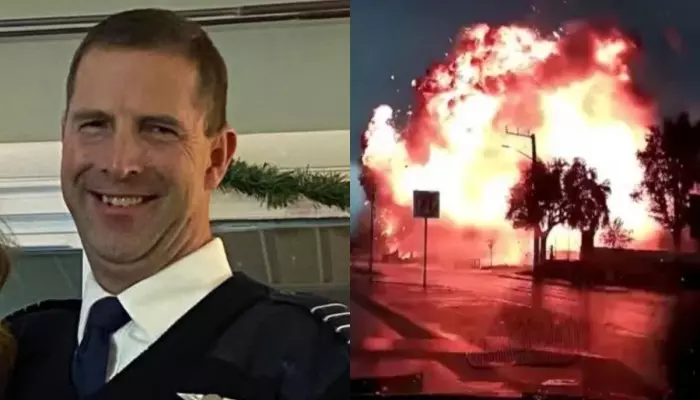
Those reactions, however, should not be confused with evidence about the cause of the accident.
What the Simulation Cannot Tell Us
The reconstruction may provide a useful visual summary of publicly reported flight information.
But there are important things it cannot establish on its own.
It cannot conclusively determine what caused the aircraft to descend.
It cannot prove whether a mechanical failure occurred.
It cannot establish the exact sequence of events inside the cockpit.
And it cannot tell viewers what the passengers experienced during the final moments.
Even a carefully prepared animation based on real data remains dependent on the accuracy, completeness and interpretation of that information.
That is why the official investigation matters.
Investigators Are Still Working to Determine the Cause
The National Transportation Safety Board is responsible for investigating the accident.
Its work involves collecting and analyzing evidence from multiple sources.
Investigators may examine the aircraft wreckage, maintenance history, flight records, weather conditions and available communications.
They must also determine whether any structural, mechanical, environmental or operational factors contributed to the crash.
Preliminary reports can provide important information, but they do not necessarily establish a final explanation.
Until investigators publish their findings, claims about precisely what caused the disaster should be treated with caution.
Nine Lives Behind the Flight Data
It is easy for discussions of an aviation disaster to become focused on numbers.
Altitude.
Speed.
Descent rate.
Seconds before impact.
But behind the technical details were nine people.
Adam Robinson was a business founder and father.
Helen Sharp was a mother with her own professional and creative life.
Emma and Charlie were two young children.
Anita Maria Cetina was a caregiver remembered for her devotion to the family.
Rachael Reed and Charmi Fehr were friends whose lives mattered deeply to those around them.
Captain Jeffrey Gregory and co-pilot Nathalia Gadelha Filgueiras were aviation professionals with families and futures of their own.
The reconstruction may help viewers understand the reported speed of the aircraft’s descent.
It cannot capture the full human loss.
A Powerful Video, but Not the Final Answer
The independent simulation has drawn attention because it turns flight-tracking information into something viewers can see.
A descent of tens of thousands of feet becomes a sequence of moments.
The reported 76-second timeline makes the disaster feel even more abrupt.
Yet the video should be understood for what it is: an independent attempt to reconstruct the aircraft’s final minutes using available information.
It is not an official determination of what happened.
The cause remains under investigation.
For now, the most important facts are that nine people lost their lives, their families are grieving, and investigators are working to understand why the aircraft crashed.
The animation may show how quickly the flight ended. Only a thorough investigation can establish why.
