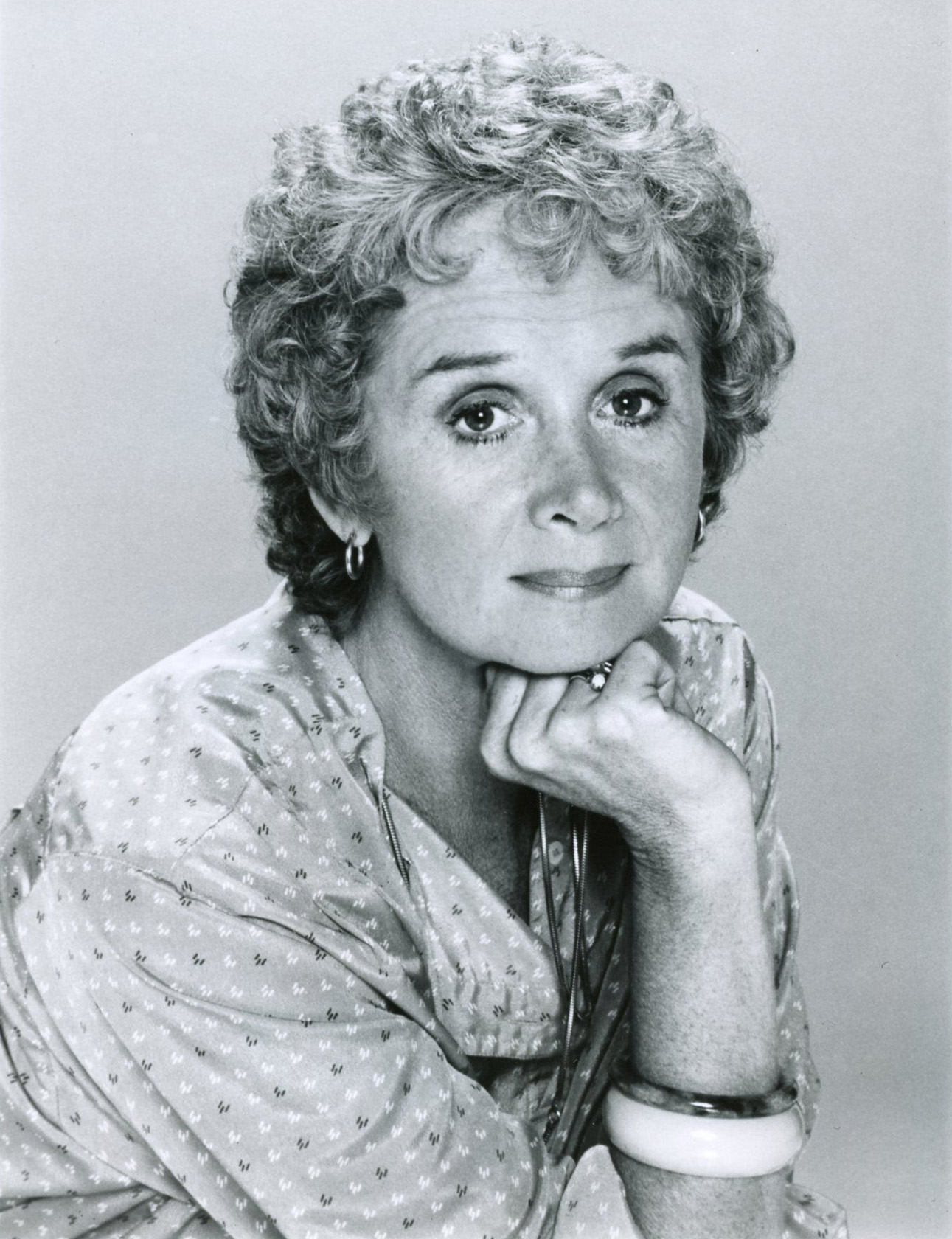
Barbara Barrie, the acclaimed actress whose career stretched from Broadway to television and an Academy Award-nominated performance in Breaking Away, has died at 95.
Barrie died Wednesday, October 28, at her home in Manhattan after receiving a terminal cancer diagnosis.
Her representative, Gary Gersh, confirmed that her death was medically assisted in accordance with New York State’s Medical Aid in Dying law, which had taken effect earlier this year.
Barrie had been a supporter of the law, according to her representative.
Her daughter, Jane Harnick, separately confirmed her mother’s terminal cancer diagnosis.
The circumstances of Barrie’s death will inevitably draw attention. But they represent only the final chapter of a life and career that spanned more than seven decades.
To movie audiences, she was the warm but clear-eyed mother in Breaking Away.
Television viewers knew her from Barney Miller and, years later, Suddenly Susan.
Broadway audiences saw a performer whose stage work earned her a Tony Award nomination.
And away from acting, Barrie became unusually candid about her own health struggles, using experiences she might easily have kept private to encourage other people to talk about illnesses often surrounded by fear and embarrassment.
Barbara Barrie Died at Her Manhattan Home
Barrie’s death was confirmed following her passing on October 28.
Her representative said her death was medically assisted under New York State law and noted that Barrie had supported the state’s Medical Aid in Dying legislation.
Her daughter said Barrie had been diagnosed with terminal cancer.
The specific type of terminal cancer was not immediately detailed in the reports confirming her death.
That distinction is important because Barrie had previously survived another cancer diagnosis decades earlier.
In 1994, she was diagnosed with rectal cancer.
She later wrote publicly about that experience and about living with a colostomy, turning an intensely personal health crisis into an effort to make other patients feel less isolated.
Barrie also disclosed in 2014 that she had idiopathic pulmonary fibrosis, a chronic and incurable lung disease.
Her Career Began Long Before Hollywood Recognition
Barbara Barrie was born Barbara Ann Berman in Chicago in 1931 and grew up in Texas.
Her path toward acting wasn’t entirely straightforward.
She studied at the University of Texas at Austin before building a professional career on the stage.
By the 1950s, Barrie was working professionally in New York.
Her Broadway career began in 1955.
It was the beginning of a remarkable run that would eventually encompass theater, film and television.
Unlike performers whose careers become associated with one brief period of fame, Barrie continued appearing on screen and stage across generations.
She could play a mother, a wife or a grandmother without allowing those characters to become anonymous background figures.
Again and again, she made them feel specific.
‘One Potato, Two Potato’ Brought Early Acclaim
One of Barrie’s most significant early film performances came in the 1964 drama One Potato, Two Potato.
She played Julie Cullen Richards, a white woman involved in an interracial relationship at a time when interracial marriage remained illegal in parts of the United States.
The subject was particularly significant in the years before the U.S. Supreme Court’s 1967 Loving v. Virginia decision struck down laws banning interracial marriage.
Barrie’s performance received major international recognition.
She won the Best Actress award at the Cannes Film Festival.
It was an early indication of the kind of performer she would become: understated when necessary, emotionally direct when the role demanded it, and capable of finding depth in characters that might have been played more conventionally by someone else.
‘Breaking Away’ Earned Her an Academy Award Nomination
For many moviegoers, however, Barrie’s defining film arrived in 1979.
