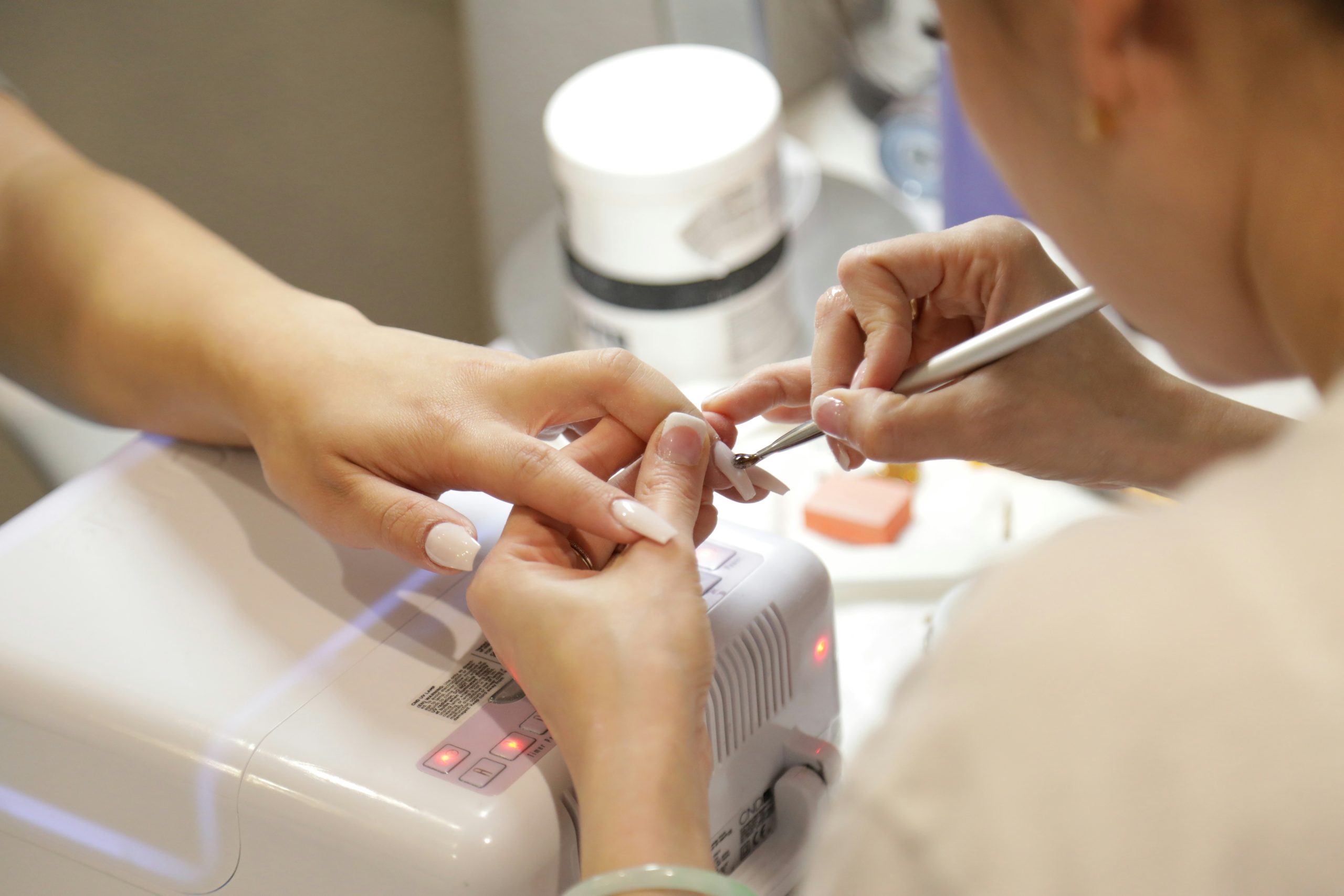
A relaxing manicure can end with a surprisingly awkward question:
How much am I supposed to tip?
Maybe your basic manicure cost $30. Perhaps you spent $75 on a gel set, or more than $100 on extensions and detailed nail art.
Then the payment screen appears.
15%?
20%?
25%?
And what happens if more than one person worked on your nails?
For most nail salon visits in the United States, there’s a fairly simple starting point: around 20% is a reasonable standard tip for good service.
From there, you can adjust depending on the service, the amount of work involved, and your experience.
Here’s a straightforward way to handle it without doing mental gymnastics at the register.
The Simple Answer: Start Around 20%
For good service, tipping approximately 20% of the service price is an easy rule to remember.
That means:
| Service Cost | 20% Tip | Total |
|---|---|---|
| $25 | $5 | $30 |
| $30 | $6 | $36 |
| $40 | $8 | $48 |
| $50 | $10 | $60 |
| $60 | $12 | $72 |
| $75 | $15 | $90 |
| $100 | $20 | $120 |
| $150 | $30 | $180 |
You don’t have to calculate the amount down to the penny.
If your service costs $48, for example, leaving $10 is perfectly straightforward.
The goal isn’t mathematical perfection. It’s appropriately recognizing the service you received.
When Should You Tip More?
Twenty percent isn’t a ceiling.
There are situations where you may decide your technician deserves something extra.
Detailed nail art is an obvious example.
A simple manicure and an elaborate hand-painted design may require dramatically different amounts of time, concentration and technical skill.
You might also consider tipping more when your technician:
- Spends considerably longer than expected on your appointment
- Accommodates detailed or difficult nail art
- Repairs a damaged nail during the service
- Fits you into a busy schedule at the last minute
- Provides particularly attentive service
- Goes beyond what was included in your original appointment
There’s no universal percentage required in these situations.
If you believe someone did exceptional work, adding a few extra dollars is a simple way to acknowledge it.
What About a Pedicure?
The same general rule works.
If your pedicure costs $50, a $10 tip represents 20%.
For a $70 pedicure, 20% would be $14.
You don’t necessarily need a different tipping formula simply because the service is a pedicure rather than a manicure.
Instead, consider the price of the service and the quality of the experience.
Should You Tip for a Quick Polish Change?
Generally, yes.
A short appointment still requires a technician’s time, products and attention.
Because inexpensive services can produce very small percentage-based tips, some customers prefer to round upward.
For example, if a quick service costs $15, 20% would only be $3.
You might decide to leave $4 or $5 instead.
That’s a personal choice rather than a requirement.
What If Two People Work on You?
This is where salon tipping can become confusing.
Perhaps one technician performs your manicure while someone else handles your pedicure.
Or one person prepares your nails before another technician completes the design.
When separate technicians provide substantial portions of the service, it can make sense to tip them separately.
If you’re unsure how the salon handles gratuities, ask.
A simple question such as, “Can I leave separate tips for each technician?” avoids guessing.
That’s particularly important if you’re paying by card and the salon distributes gratuities in a specific way.
Cash or Card?
Many salons accept tips on credit or debit cards, but policies vary.
Some technicians prefer cash because they receive it directly.
Some salons may be cash-only for gratuities.
Others handle everything electronically.
If you’re visiting a salon for the first time, having a little cash available can prevent an awkward situation.
