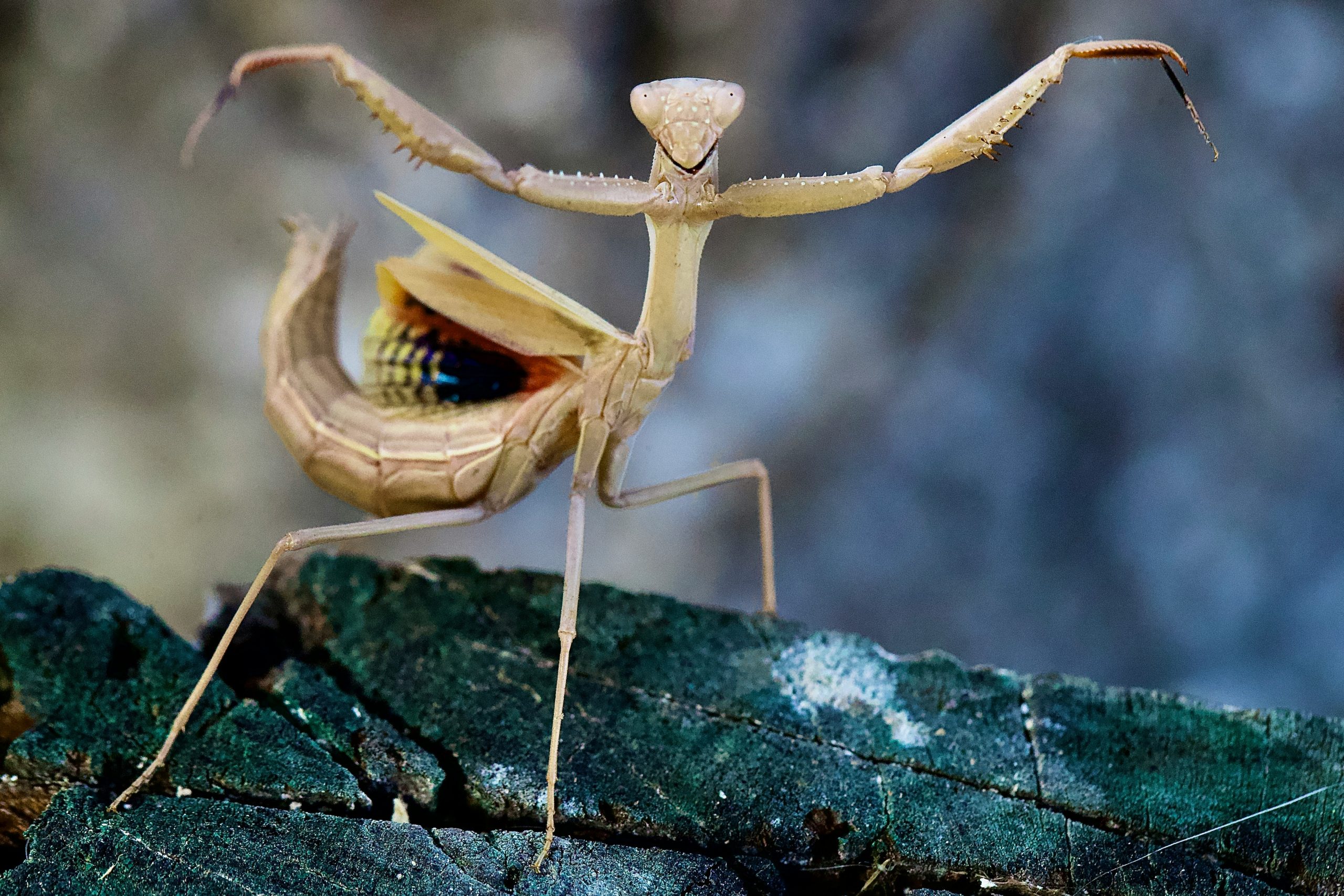
Imagine opening your front door one morning and discovering dozens—or even hundreds—of tiny insects covering the wall, porch and nearby plants.
At first glance, it can look like an infestation.
Then you look closer.
Each tiny creature has a triangular head, long legs and those unmistakable folded front limbs.
They’re baby praying mantises.
And if you suddenly find a large number of them in one small area, there’s usually a simple explanation:
A praying mantis egg case has just hatched nearby.
The strange-looking object responsible is called an ootheca, and depending on the species, one egg case can contain dozens or even hundreds of eggs.
Here’s what you should know before reaching for bug spray or trying to remove them.
First: Don’t Panic
Seeing dozens of insects around your front door can be alarming.
Fortunately, newly hatched praying mantises aren’t interested in attacking people or damaging your home.
They’ve simply emerged in the same location because their mother deposited her egg case there months earlier.
Female mantises attach their egg cases to suitable surfaces such as:
- branches
- plant stems
- fences
- walls
- rocks
- outdoor structures
The material surrounding the eggs begins foam-like and then hardens into a protective case.
That casing helps the eggs survive through colder conditions until temperatures become suitable for hatching.
Then the spectacle begins.
One Small Egg Case Can Produce a Surprising Number of Babies
This is the part that catches homeowners by surprise.
You may have noticed a small brown object attached to a branch or wall for months without realizing what it was.
Then suddenly there are tiny mantises everywhere.
University of Illinois Extension notes that mantis oothecae can contain dozens or hundreds of eggs.
When they hatch, large numbers of nymphs can emerge around the same time.
That’s why the scene can appear so dramatic.
It isn’t necessarily evidence that your property has suddenly become overrun.
You’re witnessing one generation emerge from a single protected egg case.
The Babies Look Like Miniature Adults
Newly hatched mantises are called nymphs.
They’re tiny compared with the adults they’ll eventually become, but their basic body shape is already recognizable.
You’ll see:
- long legs
- triangular heads
- prominent eyes
- long antennae
- folded grasping front legs
Initially, some may appear pale or almost translucent.
Once outside the egg case, however, they don’t remain together as a happy little family.
They begin dispersing.
And they have good reason to.
They Have to Find Food Quickly
Praying mantises are predators.
They don’t eat leaves.
They hunt other animals, primarily insects and other small prey.
Young mantises therefore need access to appropriately sized prey soon after hatching.
They’ll gradually spread into vegetation where they can hunt and hide.
And there’s another reason for leaving their siblings behind.
Praying mantises can eat each other.
Cannibalism among young mantises is one reason only a fraction of the enormous number that hatch will eventually reach adulthood.
Illinois Extension notes that many young mantises die from starvation or cannibalism after emerging.
Nature produces large numbers because survival isn’t guaranteed.
Should You Kill Them?
Usually, there’s no reason to panic and spray a group of newly hatched mantises simply because they’ve appeared outdoors.
If they’re already dispersing into your yard or garden, leaving them alone is often the simplest response.
Avoid unnecessarily handling the delicate hatchlings.
If an unhatched egg case must be moved from an inconvenient location, extension guidance recommends relocating it outdoors to a sheltered location rather than placing it on the ground, where ants may reach the eggs.
There is, however, an important complication.
Not every praying mantis species found in North America is native.
Not Every Mantis Is the Same
Several different praying mantis species occur across the United States.
