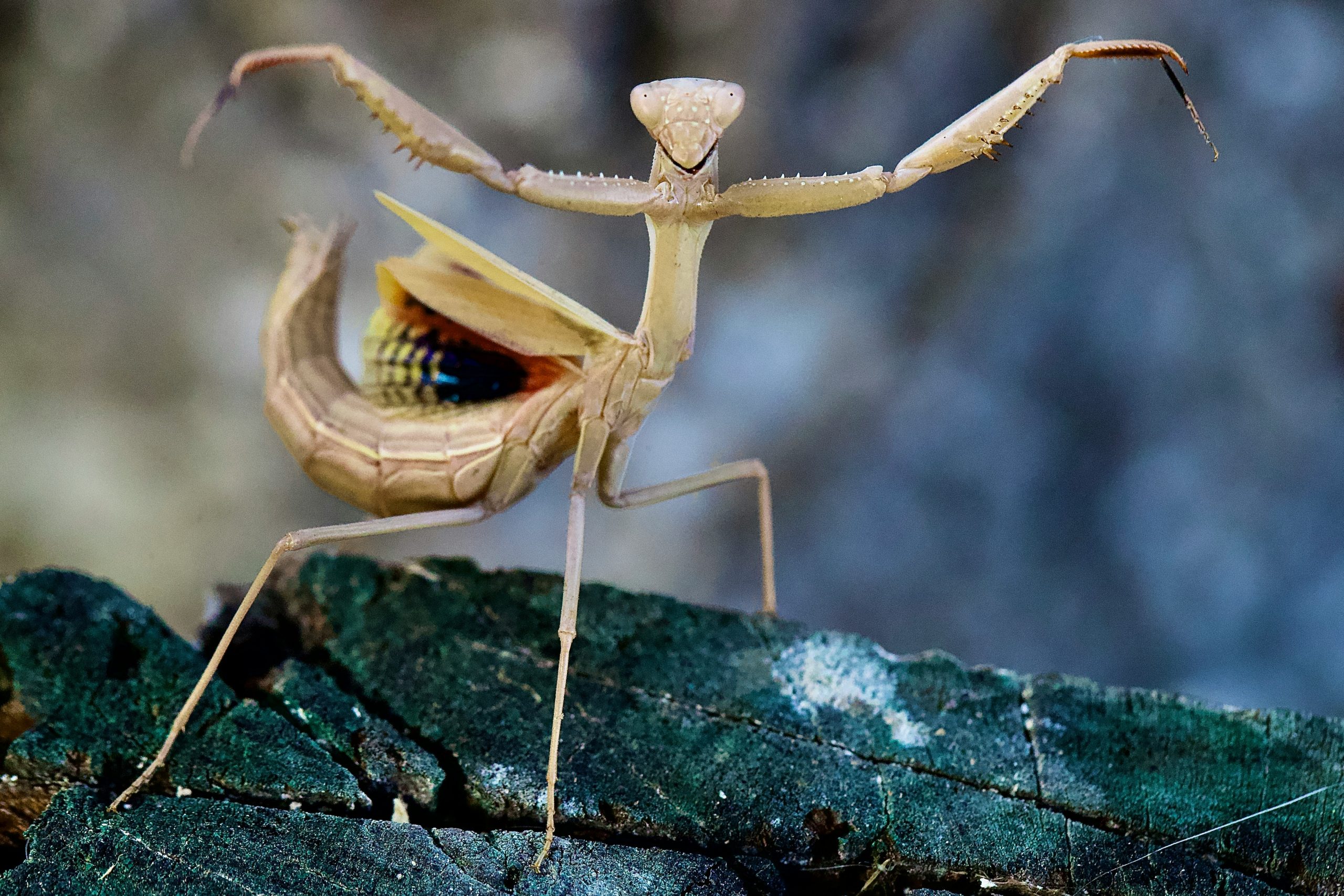
For example, Illinois Extension identifies the Carolina mantid as native in its region, while Chinese and European mantids were introduced to North America.
Their egg cases can also look different.
Chinese mantid egg cases tend to be relatively large and rounded.
Carolina mantid egg cases are smaller and more elongated.
European mantid oothecae have another distinctive shape.
So if you’re particularly interested in protecting native species, identifying the egg case can be worthwhile before deliberately moving or encouraging it.
Are Praying Mantises Good for Your Garden?
This question has a more complicated answer than many internet posts suggest.
You’ll frequently see praying mantises described as natural pest-control machines.
That’s partly true.
They are predators and can eat insects people consider garden pests.
But mantises aren’t tiny exterminators programmed to distinguish “bad bugs” from “good bugs.”
They’re opportunistic hunters.
If they can catch something suitable, they may eat it.
That can include pests.
It can also include beneficial insects such as bees and butterflies.
Illinois Extension describes them as generalist predators and notes that mantises may not have a major overall impact on garden pest populations.
So it’s more accurate to think of them as part of the local food web rather than free professional pest control.
Their Famous ‘Praying’ Pose Isn’t About Prayer
The name comes from the way a mantis holds its front legs.
When folded together, those legs can resemble hands held in prayer.
But their actual purpose is considerably less peaceful.
They’re specialized hunting tools.
Mantises remain motionless and wait for prey to move within striking distance.
Then those powerful front legs snap forward and grasp it.
Spines along the legs help hold the prey.
What looks like a peaceful insect meditating on a leaf is actually an ambush predator waiting for an opportunity.
Their Heads Are Remarkably Mobile
Another characteristic makes mantises particularly recognizable.
Their triangular heads are highly mobile.
They can turn their heads dramatically to survey their surroundings, contributing to the strange impression that the insect is actually watching you.
Combine that movement with their large compound eyes and motionless hunting posture, and it’s easy to understand why humans have found mantises fascinating for generations.
What If They Hatch Inside Your House?
This is a different situation.
Sometimes an ootheca attached to a Christmas tree, branch, decoration or other outdoor material is accidentally brought indoors.
The warmth can trigger hatching.
Suddenly, dozens of baby mantises are wandering around inside the house.
Penn State Extension notes that mantis egg masses brought indoors can hatch after several weeks, producing dozens of babies.
Keeping all those hatchlings alive indoors is difficult because they need appropriate live prey and may cannibalize one another.
The better strategy is prevention.
Inspect natural outdoor materials before bringing them inside, especially during the colder months.
What Should You Do If You Find an Egg Case?
If it’s outdoors and isn’t causing a problem, you may simply leave it where it is.
If you want to identify the species, photograph the ootheca clearly and compare it with guidance from a local university extension service or entomology resource.
This is especially useful because native and introduced species differ by region.
If the egg case is somewhere dangerous or inconvenient and must be relocated, keep it outdoors and attached above ground in a protected location.
Don’t bring it into your heated home expecting to “protect” it.
The warmth can cause the insects to emerge at the wrong time, when outdoor food and conditions may not support them.
Don’t Immediately Reach for Pesticides
Another mistake is assuming that every unfamiliar insect around the house requires chemical treatment.
