It was supposed to be an ordinary Saturday morning.
The coffee was brewing, sunlight was coming through the kitchen window, and I had just returned from the grocery store with everything I needed for breakfast.
Eggs.
Toast.
A carton of orange juice.
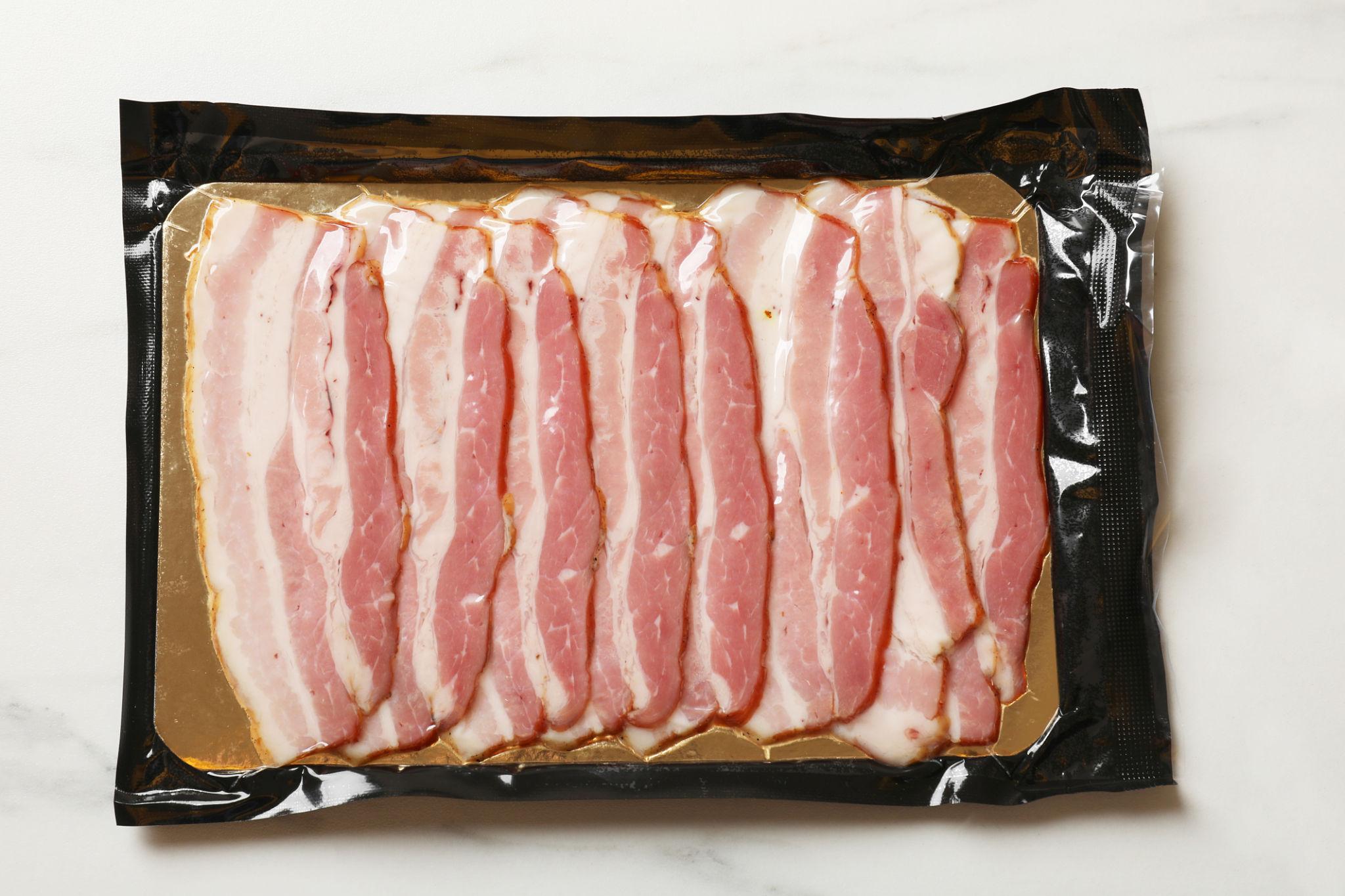
And a package of bacon.
Nothing unusual.
I had purchased the same kind of bacon countless times before. I knew exactly how it should look and feel when I removed it from the package.
But when I reached for the first strip, something stopped me.
It didn’t feel right.
Instead of the familiar soft texture of raw bacon, my fingers touched something unusually firm.
Almost rubbery.
I lifted the strip toward the window.
And what I saw made me put the entire package down.
There was something inside the bacon that looked more like a piece of plastic than meat.
For a moment, I simply stood there, wondering what I had brought into my kitchen.
A Strange Discovery in an Ordinary Grocery Purchase
I had never been particularly suspicious of packaged food.
Like most people, I trusted that the products on supermarket shelves had been processed, inspected, and prepared for sale.
I checked expiration dates.
I refrigerated meat promptly.
I cooked it properly.
And I assumed that was enough.
But the strange material in my bacon didn’t resemble anything I had seen before.
It was dense and resistant when I touched it.
One edge appeared unusually straight.
The texture seemed different from the surrounding meat and fat.
I turned the strip over.
Then I examined the rest of the package.
Everything else looked relatively normal.
That made the discovery even more confusing.
How could one part of an ordinary strip of bacon look so different?
I placed it on a clean plate and stepped back.
My appetite had disappeared.
“Is That Even Meat?”
My first thought was that a piece of packaging material had somehow become trapped in the product.
Then I wondered whether it might be a fragment of equipment used during processing.
Neither possibility was reassuring.
I had no evidence that either explanation was correct, but my imagination quickly filled the gaps.
I pictured the production process.
The machinery.
The slicing equipment.
The packaging lines.
I wondered how many people had handled the product before it reached the supermarket.
And I began asking myself a question I had never seriously considered before.
How much do we really know about the food we bring home?
The strange object was small.
But the uncertainty surrounding it made the situation feel much bigger.
The Internet Made Me More Nervous
Instead of immediately contacting the store, I did what many people would do.
I searched online.
I typed descriptions of what I had found.
“Rubbery piece in bacon.”
“Hard material inside packaged meat.”
“Bacon looks like plastic.”
Within minutes, I was looking at photographs and reading discussions from people who claimed to have discovered unusual things in meat products.
Some suggested connective tissue.
Others mentioned cartilage.
A few offered far more alarming explanations.
I saw references to contamination, parasites, and manufacturing problems.
But the more I read, the less certain I became.
Many of the posts were anonymous.
Some contained blurry photographs.
Others offered confident explanations without any evidence.
I realized that I was comparing my breakfast to unrelated incidents involving products I had never examined.
That wasn’t helping me identify what I had found.
It was simply making me more anxious.
The Explanation I Hadn’t Considered
Eventually, I came across information about the different tissues found in meat.
I had always thought of bacon as a combination of muscle and fat.
