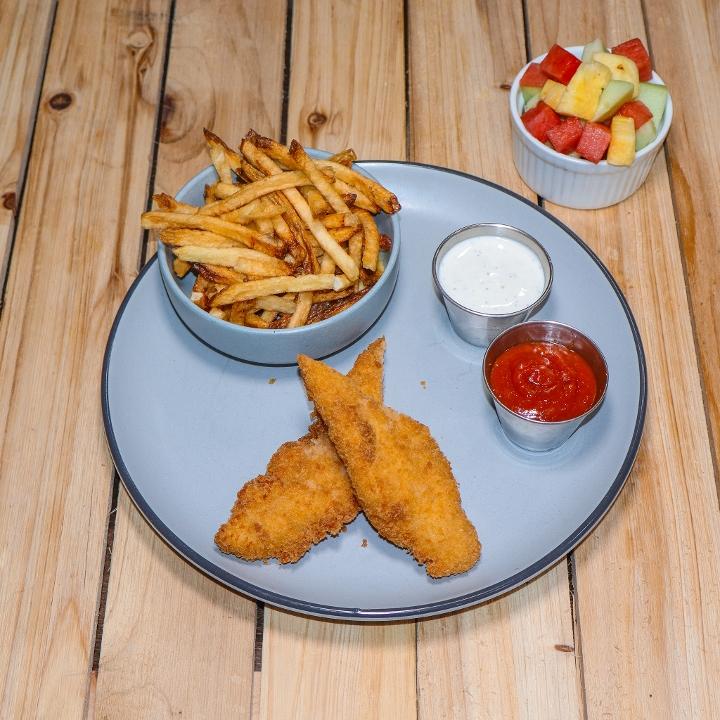
Imagine sitting down at a restaurant, opening the menu, and realizing that almost every entrée is more food than you want to eat.
The burgers are enormous. The pasta dishes arrive in oversized bowls. Even the salads seem designed for two people.
Then you notice something on the children’s menu.
A smaller portion of chicken, a side dish, and a drink.
It’s exactly what you’re looking for.
There’s just one problem.
You’re an adult.
And depending on the restaurant, you may not be allowed to order it.
The question of whether adults should be able to order from children’s menus may sound minor, but it touches on several issues that matter to diners across America: rising restaurant costs, food waste, changing appetites, and the freedom to choose how much food to buy.
It also raises a reasonable concern for restaurant owners who must balance customer preferences with the economics of running a business.
So where should the line be drawn?
Why Some Adults Prefer Children’s Meals
Not everyone wants a large restaurant meal.
Some people have naturally smaller appetites. Others prefer to eat several small meals throughout the day rather than one large serving.
Older adults may find that the portions they once enjoyed are now more than they need.
People recovering from certain medical procedures may also have dietary or portion-size requirements, although those needs vary and should be guided by appropriate medical advice.
For many customers, the decision is simply practical.
They want a smaller plate of food.
They don’t want leftovers.
And they don’t want to pay for an oversized meal when they know they won’t finish it.
A children’s menu can appear to offer a straightforward solution.
The portions are usually smaller, the selections are familiar, and the prices are often lower than those of regular entrées.
But restaurants don’t necessarily view these meals as interchangeable with adult menu items.
Why Restaurants Put Age Limits on Kids’ Menus
Many restaurants reserve children’s meals for customers under a specified age, often twelve or younger.
The exact age limit varies by establishment.
There are several reasons for these restrictions.
First, children’s meals may be priced differently from regular entrées.
A restaurant might accept a smaller profit margin on a child’s meal because it expects the child to be dining with adults who purchase full-priced food.
Second, children’s menus are often designed as part of a family dining experience.
Offering an affordable option for children can make a restaurant more attractive to parents.
Third, allowing every customer to order the least expensive meal could affect the restaurant’s revenue, especially when the children’s menu includes substantial discounts.
From the restaurant owner’s perspective, the policy may be about maintaining a workable pricing structure rather than refusing to accommodate a customer’s appetite.
That doesn’t necessarily make the restriction popular.
But it helps explain why some businesses enforce it.
The Frustration of Paying for Food You Won’t Eat
For customers with smaller appetites, a strict age limit can feel unreasonable.
Consider someone who wants a small serving of pasta.
The children’s portion costs less and contains roughly the amount they want.
The regular entrée costs more and contains significantly more food.
If the restaurant won’t sell the smaller portion to an adult, the customer may feel forced to choose between ordering too much or leaving.
Some people are happy to take leftovers home.
Others aren’t.
A traveler may not have access to a refrigerator.
Someone eating before an appointment may not want to carry a container for the rest of the day.
And certain dishes don’t reheat particularly well.
The result can be wasted food and unnecessary spending.
