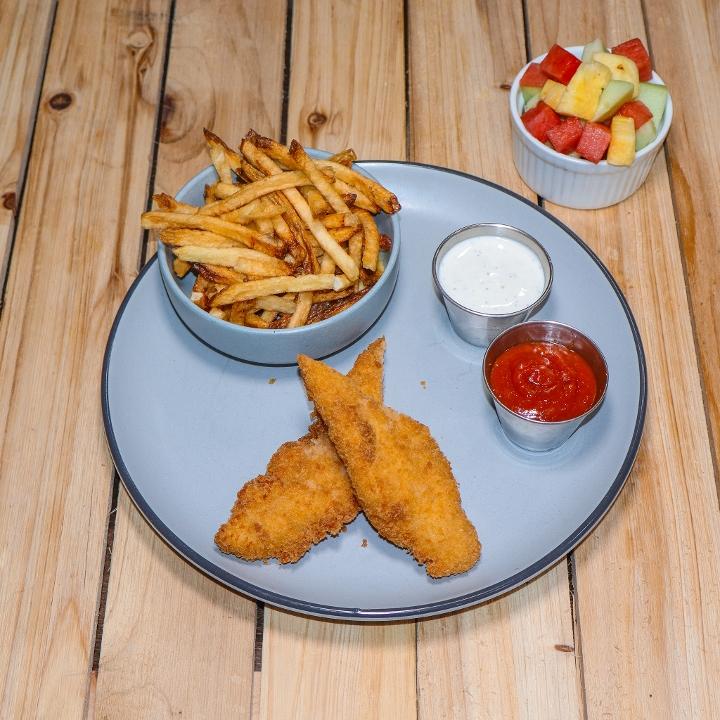
For customers watching their budgets, that frustration becomes even more significant.
Why This Issue Matters to Older Americans
Restaurant portion sizes can be a particular concern for older diners.
Appetite and nutritional needs may change with age, although those changes differ considerably from person to person.
Some older adults continue enjoying large meals.
Others prefer smaller servings.
A retired couple might enjoy eating out once or twice a week but find that the portions at their favorite restaurant are consistently too large.
They may want to enjoy the experience without taking home several containers of leftovers.
And on a fixed income, paying for food they don’t intend to eat can feel wasteful.
The children’s menu may seem like the only reasonably priced option.
But the issue isn’t limited to seniors.
Anyone who prefers smaller portions can encounter the same problem.
The question is whether restaurants could serve these customers more effectively without undermining their own pricing policies.
Could Smaller Adult Portions Solve the Problem?
One possible solution is surprisingly simple.
Restaurants could offer smaller versions of selected adult entrées.
Rather than requiring customers to order from the children’s menu, businesses could introduce a separate category of lighter meals.
These portions wouldn’t necessarily need to be priced as cheaply as children’s meals.
They would simply offer a better match between the amount of food served and the amount a customer wants.
For example, a restaurant might offer a full-size pasta entrée alongside a smaller portion at a lower price.
The smaller serving could cost more than half the price of the larger dish because restaurants still have fixed expenses, including labor, utilities, and service.
But customers would gain a choice.
Some establishments already offer lunch portions, half sandwiches, smaller salads, or lighter entrées.
Expanding those options could make restaurants more accessible to people with different appetites.
Why Half the Food Doesn’t Always Mean Half the Price
One common misunderstanding is that a meal containing half as much food should cost exactly half as much.
Restaurant pricing is more complicated.
The ingredients are only one part of the expense.
Restaurants also pay for staff, rent, insurance, equipment, utilities, cleaning, and other operating costs.
A smaller portion still requires preparation.
It still needs a plate, kitchen time, and service.
And it still occupies a seat in the dining room.
That means a smaller entrée may reasonably cost more than half the price of a full-size version.
Customers don’t always consider these expenses, especially when comparing menu prices.
But understanding them can help create a more productive conversation.
The goal doesn’t have to be making every small meal extremely cheap.
It can be giving diners a fair option that better suits their needs.
The Food Waste Question
Food waste is another important part of the discussion.
When restaurants consistently serve more food than customers want, some of it inevitably goes uneaten.
Leftovers can reduce waste when diners take them home and consume them later.
But not everyone wants or is able to do that.
Smaller portions can help prevent waste before it occurs.
They may also allow restaurants to manage ingredients more efficiently when demand is predictable.
Of course, adding multiple portion sizes can complicate kitchen operations.
Staff may need different serving guidelines, additional menu descriptions, or changes to ordering systems.
Not every restaurant can offer every dish in several sizes.
Still, a limited selection of smaller meals could be a practical compromise.
It would give customers more flexibility without requiring the entire menu to change.
Should Restaurants Make Exceptions?
Another option is allowing managers or servers to approve children’s-menu orders for adults on a case-by-case basis.
