The first time my father-in-law called me a town girl, I laughed.
I thought he was teasing.
Four years later, standing in a crowded auction tent with bidder card 47 trembling between my fingers, I realized how much that one phrase had cost our family.
My husband, Luke, stood beside me, his jaw tight and his eyes fixed on the auctioneer.
Across the crowd, his father, Walt, watched from the back.
He had no idea what we were about to do.
And until the auctioneer called out the next price, neither did I.
The Farm That Raised My Husband
Luke grew up on eighty acres of rolling pasture, cornfields, and woodland outside a small Midwestern town.
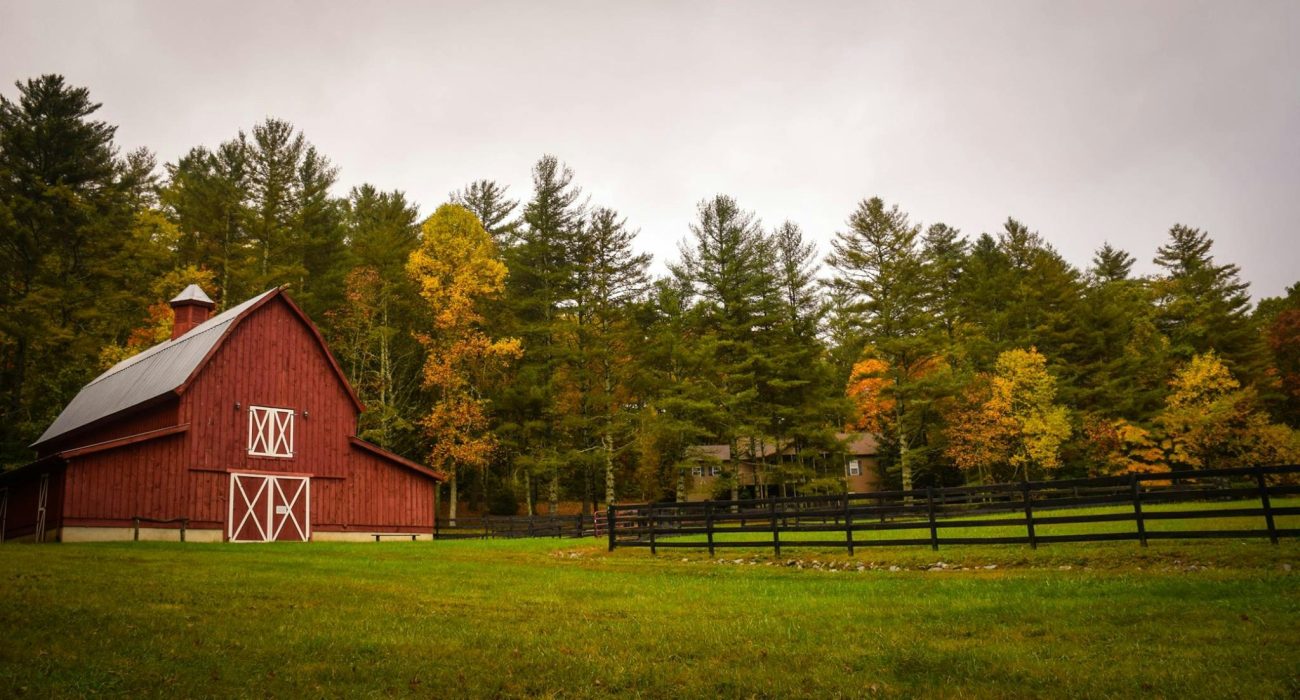
There was a white farmhouse with green shutters, a red barn that needed repainting, and a gravel driveway lined with maple trees.
His grandfather had bought the property decades earlier.
His father had inherited it.
And Luke had always assumed that someday, if he worked hard enough, he would raise his own children there.
He knew every fence line.
Every stubborn gate.
Every place where rainwater collected after a storm.
When we first started dating, he took me to the farm on a Sunday afternoon.
We walked through the orchard, where the apple trees were older than either of us.
He showed me the barn loft where he’d played as a child.
Then he took me to a small hill overlooking the fields.
“This is where I want to grow old,” he said.
I smiled.
“Then we’d better make sure there’s room for a garden.”
He laughed and kissed me.
At the time, I thought the hardest part of our future would be deciding where to plant tomatoes.
I hadn’t met his father yet.
The Girl Walt Didn’t Want
I was a dental hygienist.
I grew up in town, attended community college, and worked my way through school.
My parents weren’t wealthy.
My dad repaired appliances.
My mother worked at a grocery store.
We didn’t own land.
We didn’t raise cattle.
And apparently, according to Walt, that meant I wasn’t suitable for his son.
The first time Luke brought me home for dinner, Walt looked at my shoes before he looked at my face.
“Those won’t last five minutes in a pasture,” he said.
I smiled.
“Good thing we’re eating dinner.”
Luke laughed.
Walt didn’t.
Throughout the meal, he asked questions that sounded polite until I understood what he was really asking.
Did I know how to drive a tractor?
Had I ever butchered a chicken?
Could I tell the difference between hay and straw?
Did I plan to keep working after marriage?
Finally, he leaned back in his chair.
“Farm life isn’t for everybody.”
“I understand that,” I said.
He looked at Luke.
“Especially town girls.”
Luke set down his fork.
“Dad.”
Walt shrugged.
“I’m just telling the truth.”
I tried not to take it personally.
But the comments continued.
At Thanksgiving, he joked that I’d probably call someone to remove a mouse from the barn.
At Christmas, he asked whether I knew bread could be made without buying it from a store.
And when Luke proposed, Walt didn’t congratulate us.
He asked whether Luke was sure.
The Wedding That Changed Everything
We married in a small church on a warm June afternoon.
My parents helped decorate the reception hall.
My mother made the centerpieces.
Luke’s friends arranged the tables.
Walt attended the ceremony.
But he left before the reception ended.
A week later, Luke went to the farm to help repair a broken section of fencing.
He returned home looking as though someone had punched him.
