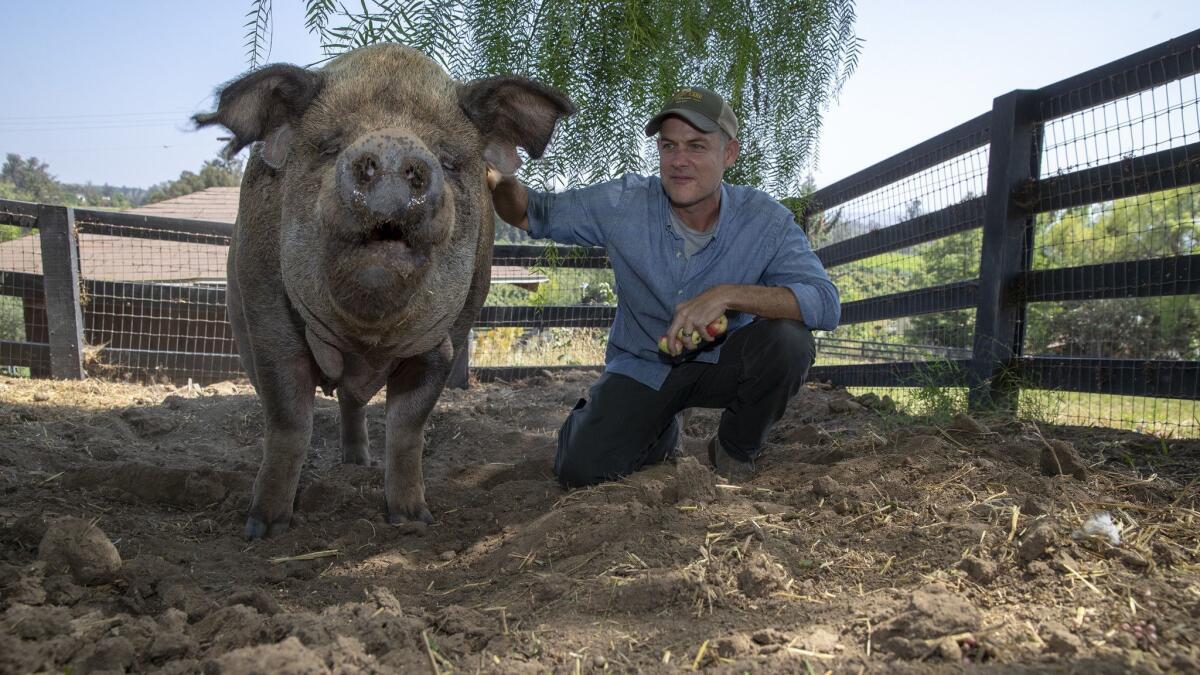
A farmer may need to make difficult decisions with incomplete information.
Sometimes an approach that appears reasonable doesn’t produce the expected result.
And sometimes an animal’s behavior reveals something important that caretakers had not fully considered.
None of this means serious illness can be treated through affection alone.
High fever, infection, and refusal to eat require appropriate veterinary attention.
But good animal care also involves understanding behavior, social relationships, and the needs of mothers and newborns.
Emma’s story brought those considerations together in a memorable way.
The Mother Who Surprised Everyone
The most striking part of Emma’s story wasn’t simply the number of piglets she delivered.
It was the uncertainty that followed.
A mother already in poor condition gave birth to 17 babies.
She became dangerously ill.
The farmers feared she might not survive.
They tried to protect her by separating her from the newborns.
And when her condition remained poor, they reunited the family.
What followed was a recovery that deeply affected the people who witnessed it.
John Chester later described Emma as an exceptionally gentle animal.
His affection for her was clear.
The experience became part of his larger understanding of how much humans can learn by observing the animals in their care.
A Story About Hope, Responsibility, and Connection
It’s easy to describe Emma’s recovery as a miracle.
For the people watching her struggle, it may have felt that way.
But the story is meaningful without needing to exaggerate what happened.
Emma was sick.
Her caretakers worked to help her.
Her piglets were returned.
And she recovered.
Those events were extraordinary enough.
The story also reminds us that animals are not simply background figures in the lives of people who care for them.
They have needs, behaviors, and relationships that deserve attention.
Emma’s recovery became an example of how careful observation and compassion can influence decisions on a farm.
Why People Still Remember Emma
Years after the events at Apricot Lane Farms, Emma’s story continues to resonate because it contains something people immediately understand.
A vulnerable mother.
Newborn babies.
A frightening illness.
And a reunion followed by an unexpected recovery.
These are the elements of a powerful story.
But Emma’s experience was not invented merely to create an emotional ending.
It was documented by the farmer who cared for her.
And it became part of a larger account of the difficulties and rewards of building a farm.
Emma arrived at Apricot Lane Farms weak and facing an uncertain future. She went on to deliver 17 piglets and survive an illness that threatened her life.
For John Chester, her recovery was a lesson he would never forget.
And for everyone who discovers her story, Emma remains a memorable reminder of the bond between a mother and her young.
