Social media platforms allow people to respond instantly to news, public figures, and one another.
In some ways, that accessibility reflects the participatory spirit Donahue helped bring to television.
Ordinary people no longer need a producer’s invitation to join a public conversation.
But greater access to speaking does not necessarily produce greater willingness to listen.
Online discussions can reward speed, certainty, and emotional intensity.
A complicated argument may be reduced to a short clip.
A disagreement may become a personal attack.
And people can find themselves surrounded by opinions that reinforce what they already believe.
Donahue’s work offers a useful contrast.
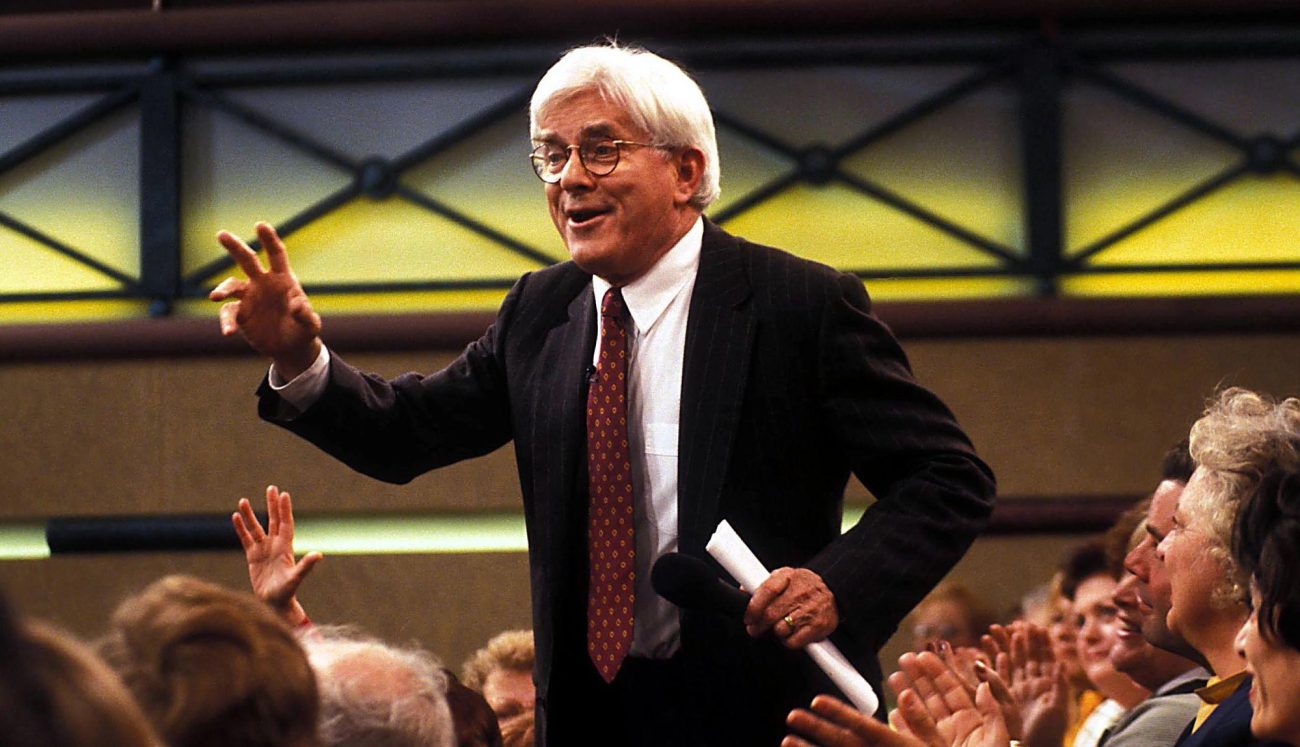
His format required participants to occupy the same conversational space.
They could disagree.
They could become uncomfortable.
But they also had to hear responses in real time.
That did not guarantee understanding.
Still, it created opportunities that are easily lost when conversations become performances for separate audiences.
Listening Is Harder Than Winning an Argument
One of the most important lessons from Donahue’s career is that listening requires effort.
It is easy to wait for someone to finish speaking so that we can deliver our own response.
It is harder to consider whether their words reveal something we have overlooked.
Listening does not require agreement.
It does not mean abandoning deeply held convictions.
And it does not mean treating every claim as equally credible.
It means being willing to understand an argument before responding to it.
Donahue’s program demonstrated how powerful that process could be.
A question from an audience member might expose an assumption.
A personal story might complicate a political position.
A guest’s explanation might challenge what viewers thought they knew.
The conversation could change because someone had been given the opportunity to speak — and someone else had remained long enough to hear the answer.
Why His Absence Still Matters
Donahue belonged to a generation of television personalities who became trusted fixtures in American homes.
But his importance extended beyond familiarity.
He helped establish a public space where difficult questions could be discussed openly.
The studio audience became something like a temporary community.
People arrived with different experiences, opinions, and expectations.
They might leave without agreeing.
But they had participated in a shared conversation.
That sense of a common public space can feel increasingly difficult to find.
Modern audiences are divided among countless platforms, channels, and online communities.
Information travels faster than ever.
Yet meaningful exchanges across disagreement can seem harder to sustain.
Donahue’s legacy is a reminder that communication requires more than access to a microphone.
It requires a willingness to remain engaged when the conversation becomes uncomfortable.
The Real Tribute to Phil Donahue
It would be easy to honor Donahue by remembering his most famous interviews or celebrating the awards he received.
Those achievements deserve recognition.
But his influence also invites a more practical response.
Ask better questions.
Give people time to answer.
Challenge ideas without automatically dismissing the people expressing them.
Recognize that personal experiences can illuminate public issues.
And understand that disagreement does not have to end a conversation.
Donahue did not always get everything right.
No television host does.
But he helped demonstrate that ordinary voices deserved a place in discussions about the issues shaping their lives.
That idea remains valuable.
Perhaps more valuable now than ever.
Final Thoughts: The Microphone Has Passed to Us
Phil Donahue changed daytime television by doing something that now seems remarkably simple.
He invited people to speak.
He allowed them to challenge authority.
He brought uncomfortable subjects into American living rooms.
And he trusted audiences to remain interested in conversations that did not always produce easy answers.
His death marked the end of an extraordinary life in broadcasting.
But the values that made his program influential do not belong to one television studio or one generation.
They can still shape the way people communicate.
At family tables.
In classrooms.
In workplaces.
And in the endless public conversations taking place online.
We cannot recreate the exact world in which Donahue first appeared.
But we can preserve something of its spirit.
The most meaningful tribute to Phil Donahue is not simply remembering the questions he asked. It is finding the courage to ask difficult questions ourselves — and the patience to listen when someone answers.
