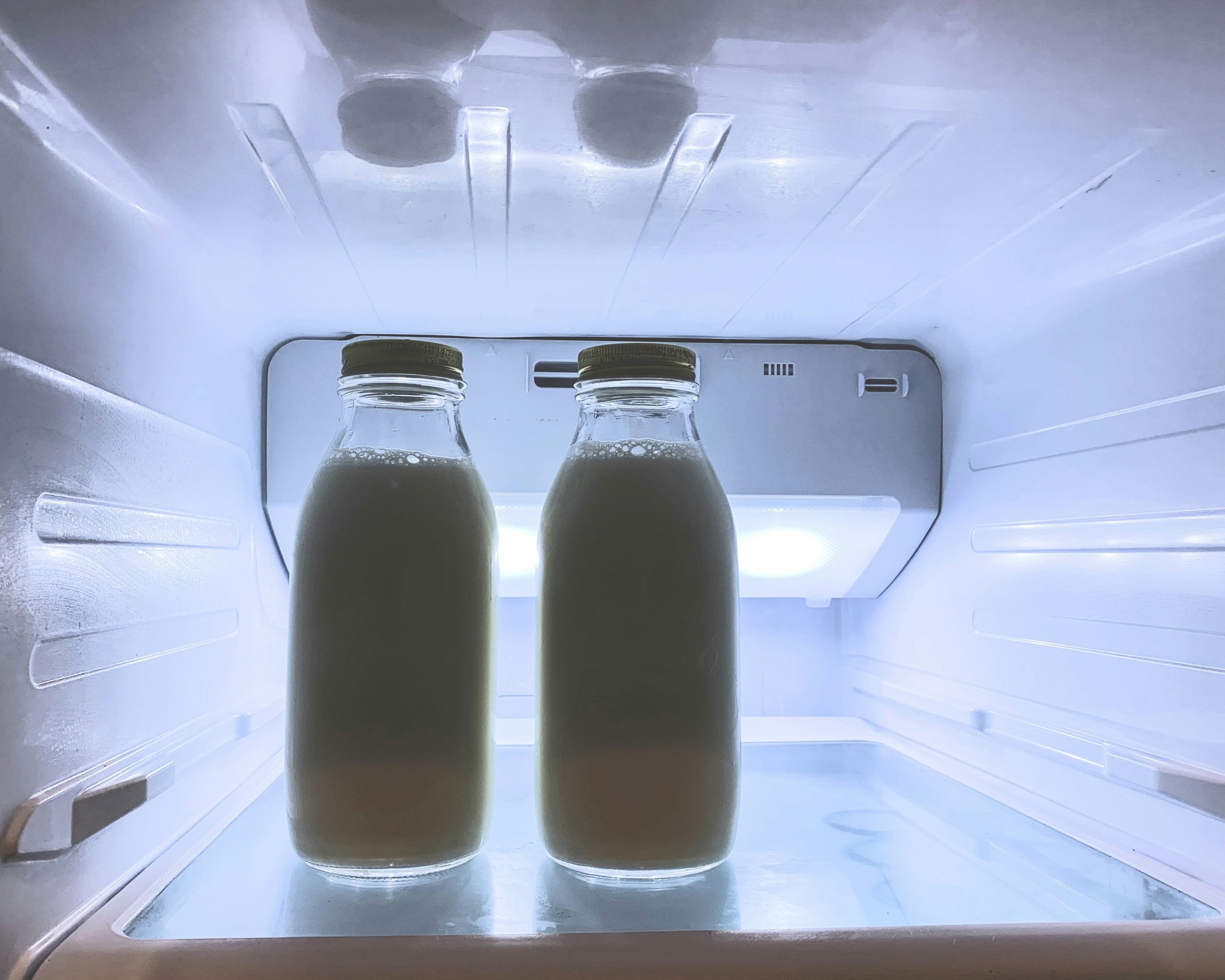
Plan ahead and thaw it in the refrigerator.
A large container may require roughly a day or potentially longer to thaw completely, depending on its size and refrigerator temperature.
Smaller frozen portions will naturally thaw much faster.
Keeping the milk refrigerated during thawing helps maintain appropriate cold storage.
Try Turning the Container Occasionally
A large frozen jug doesn’t always thaw evenly.
The outside may become liquid while the center remains frozen.
If the container permits it, gently turning or repositioning it occasionally while it thaws in the refrigerator can help.
Once completely thawed, shake it thoroughly.
Then check the milk as you normally would before using it.
Freezing doesn’t make milk permanently immune to spoilage.
What Can You Do With Thawed Milk?
Quite a lot.
If you enjoy the texture after thawing, you may be perfectly happy using it exactly as you normally would.
Pour it over cereal.
Add it to coffee.
Use it with oatmeal.
But cooking is where frozen milk becomes particularly convenient.
Try it in:
Pancakes and waffles
Milk that has separated slightly usually isn’t a major issue once incorporated into batter.
Mashed potatoes
Thawed milk can add the same creaminess you’re looking for.
Sauces
It’s useful when milk is one ingredient among several.
Soups
Creamy soups can be another practical destination.
Muffins and cakes
Baking can be one of the easiest ways to use milk you’ve frozen.
Smoothies
Small frozen portions can sometimes be incorporated directly into blended drinks, depending on the recipe and your blender.
Ice Cube Portions Can Be Surprisingly Convenient
Imagine you live alone and buy milk primarily for coffee.
You open a container.
Use a little each morning.
Then your routine changes or you travel for several days.
By the time you return, you may end up throwing away what’s left.
Instead, before leaving, you could freeze portions you know you won’t use.
Later, you don’t need another entire container just because you need a splash of milk for a recipe.
Take out what you need.
That’s the real advantage of freezing milk.
It isn’t simply about keeping milk longer.
It’s about making the amount you buy match the amount you actually use.
Freezing Can Make Bulk Purchases More Practical
Sometimes a larger container is significantly cheaper per unit than a smaller one.
But a bargain isn’t really a bargain if half of it ends up in the trash.
The same applies when stores run promotions.
Buying extra only saves money if you can actually use what you purchase.
Freezing gives households another option.
Use what you need now.
Preserve some for later.
That can be particularly useful for families whose milk consumption changes from week to week.
But Don’t Freeze Milk That’s Already Spoiled
Freezing pauses deterioration; it doesn’t reverse it.
If milk has already spoiled, putting it in the freezer isn’t going to restore its freshness.
Freeze milk while it is still in good condition.
And after thawing, continue treating it as a perishable refrigerated food.
Use ordinary food-safety judgment if it develops signs of spoilage.
The freezer is a preservation tool.
It isn’t a reset button.
Don’t Refreeze and Thaw It Repeatedly
Portioning before freezing can help here too.
Instead of repeatedly handling a large container, freeze quantities appropriate for how you’ll use them.
Need milk mainly for baking?
Freeze recipe-sized portions.
Need only a little at a time?
Use smaller containers or cubes.
Planning portions reduces waste and makes the whole process easier.
This Trick Isn’t Just About Milk
There’s a larger lesson hiding in this simple kitchen habit.
A surprising amount of household food waste happens because people buy more than they can use before it deteriorates.
