Broad-spectrum insecticides can kill predators and pollinators along with pests.
Penn State and Illinois Extension both recommend considering the effect pest-control methods can have on beneficial organisms.
If the mantises are outdoors and simply dispersing, intervention may not be necessary at all.
Give them space.
They’ll begin moving away from the hatching site on their own.
By Later That Day, They May Be Gone
That’s perhaps the strangest part of witnessing a mass hatch.
For a brief period, your porch, wall or shrub can appear covered in tiny mantises.
Come back hours later and many may have disappeared into surrounding vegetation.
They aren’t necessarily dead.
They’ve dispersed.
Each tiny predator has begun searching for food, shelter and a place in an ecosystem considerably larger and more dangerous than the egg case it just left.
Most won’t survive to adulthood.
Those that do will molt repeatedly as they grow.
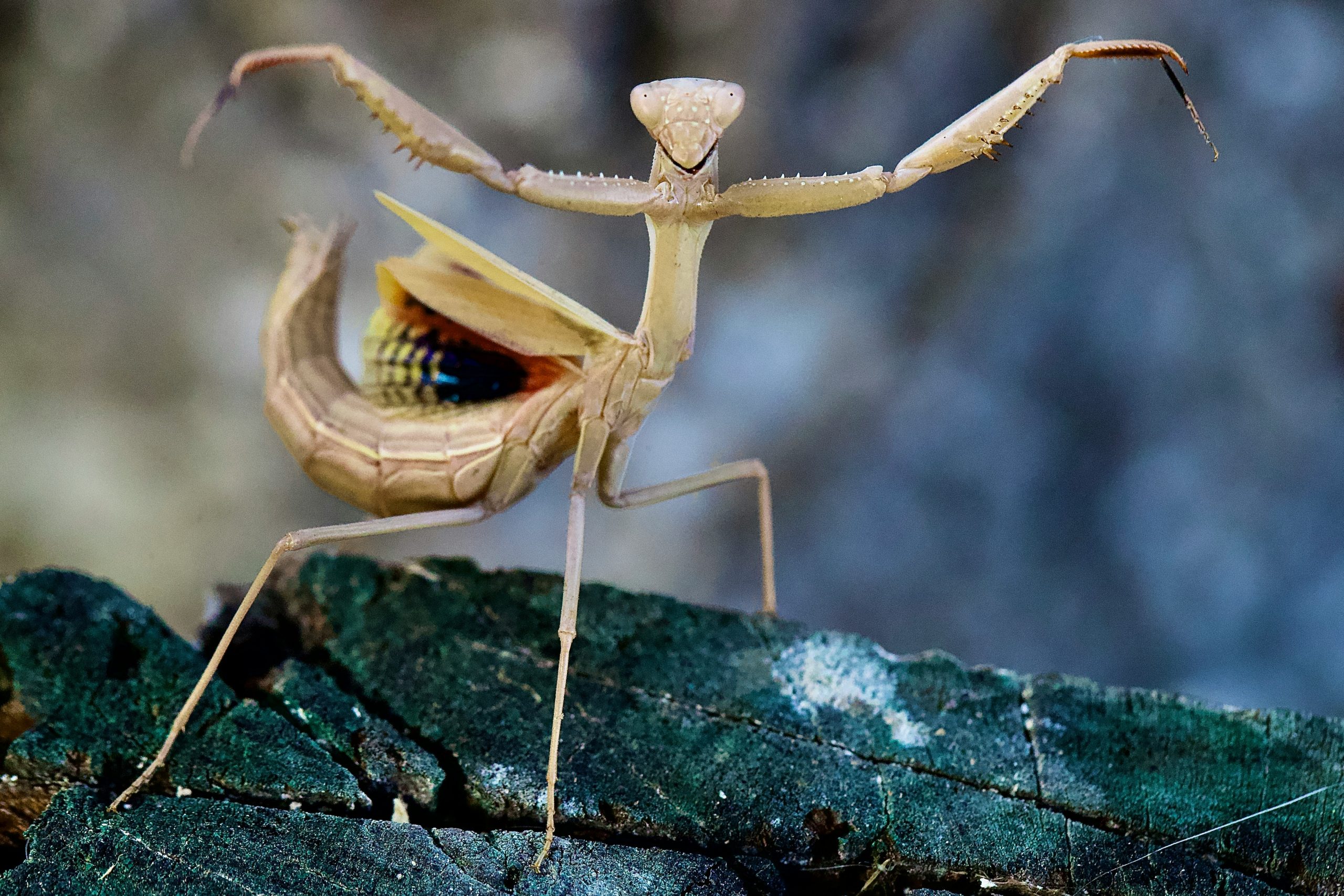
Eventually, the survivors become the much larger mantises people recognize in gardens during warmer months.
Then the cycle begins again.
An adult female deposits another foam-like egg case.
It hardens.
The eggs remain protected.
And months later, another homeowner may open the front door and wonder:
“Why are there hundreds of tiny praying mantises all over my house?”
Now you know.
It’s usually not an invasion.
It’s a nursery.
Have you ever found a praying mantis egg case—or watched dozens of baby mantises hatch at once?
