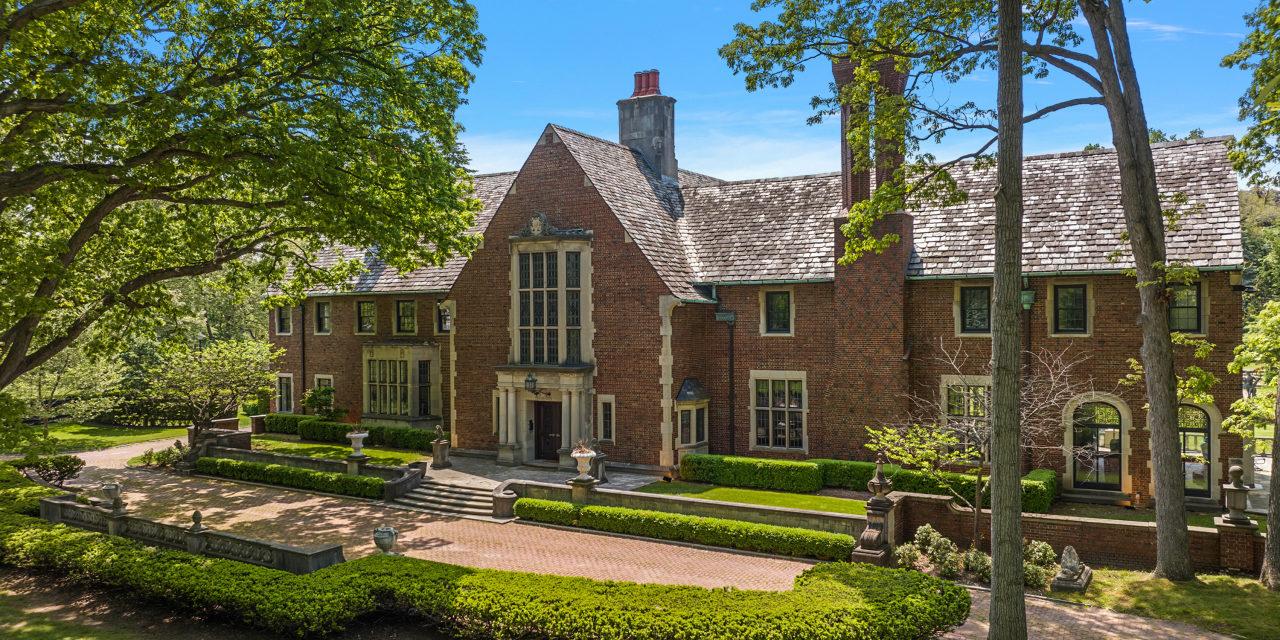
Inside a Restored Historic Tudor Estate in Detroit’s Palmer Woods
Some homes make an impression the moment you see them. Others reveal their character gradually, through carefully preserved details, beautiful materials, and rooms that seem to carry stories from another era.
This restored Tudor-style estate in Detroit’s prestigious Palmer Woods neighborhood offers a compelling combination of both.
With its striking stone exterior, slate roof, leaded-glass windows, and beautifully landscaped surroundings, the residence captures the architectural elegance associated with historic American estates.
Yet behind its traditional appearance lies a home thoughtfully adapted for modern living.
From soaring ceilings and intricate woodwork to updated kitchen amenities and peaceful outdoor spaces, the property demonstrates how historic craftsmanship and contemporary comfort can coexist.
A Remarkable Tudor Exterior
The home’s exterior establishes its distinctive identity.
Stone construction gives the residence a substantial, enduring appearance, while the slate roof reinforces its traditional Tudor character.
Leaded-glass windows contribute to the architectural richness, creating visual interest while allowing natural light to enter the interior.
Surrounding landscaping softens the grandeur of the building.
Mature trees and carefully maintained grounds provide privacy and help create a sense of separation from the surrounding city.
The overall impression is one of established elegance rather than excessive ornamentation.
An Interior Defined by Craftsmanship
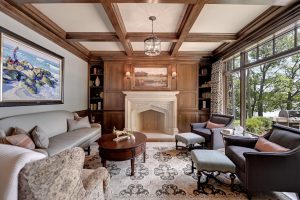
Stepping inside reveals the craftsmanship that gives the residence its lasting appeal.
White oak paneling brings warmth and texture to the rooms, while decorative moldings introduce an additional layer of architectural detail.
Reclaimed wood floors contribute to the home’s historic atmosphere.
Above, hand-carved beams provide visual interest and reinforce the sense of traditional craftsmanship.
These materials help establish a consistent architectural identity throughout the interior.
Rather than replacing the home’s original character with an entirely contemporary design, the restoration emphasizes details that make the property distinctive.
A Living Room Filled With Natural Light
The soaring living room is one of the home’s most memorable spaces.
Its generous proportions create an immediate sense of openness, while arched windows bring daylight into the room.
The combination of natural light, wood detailing, and architectural scale creates an inviting atmosphere.
Despite its impressive dimensions, the room maintains a sense of warmth.
It is easy to imagine the space accommodating both formal gatherings and quieter evenings at home.
The room’s appeal comes not simply from its size, but from the way its architectural features work together.
A Kitchen That Connects Past and Present
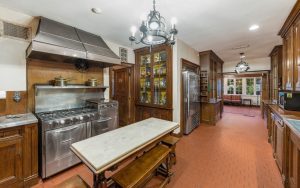
The kitchen offers one of the property’s most interesting combinations of old and new.
Updated appliances support contemporary everyday needs, while a restored original refrigerator provides a memorable connection to the home’s history.
That preserved feature is particularly notable.
In many historic renovations, older kitchen elements disappear entirely as homeowners prioritize modern functionality.
Here, the refrigerator serves as a reminder of the property’s earlier life.
The result is a kitchen that respects the past without sacrificing practical convenience.
It reflects the broader philosophy of the restoration: preserving meaningful architectural and historical details while making the residence comfortable for present-day living.
A Private Primary Suite
The primary suite offers a quieter and more personal expression of luxury.
Designed as a retreat from the home’s larger gathering spaces, it includes a spa-inspired bathroom, a dressing area, and a private sitting space.
Together, these features create a comfortable environment for relaxation.
The bathroom introduces contemporary convenience, while the dressing area provides dedicated space for organization.
