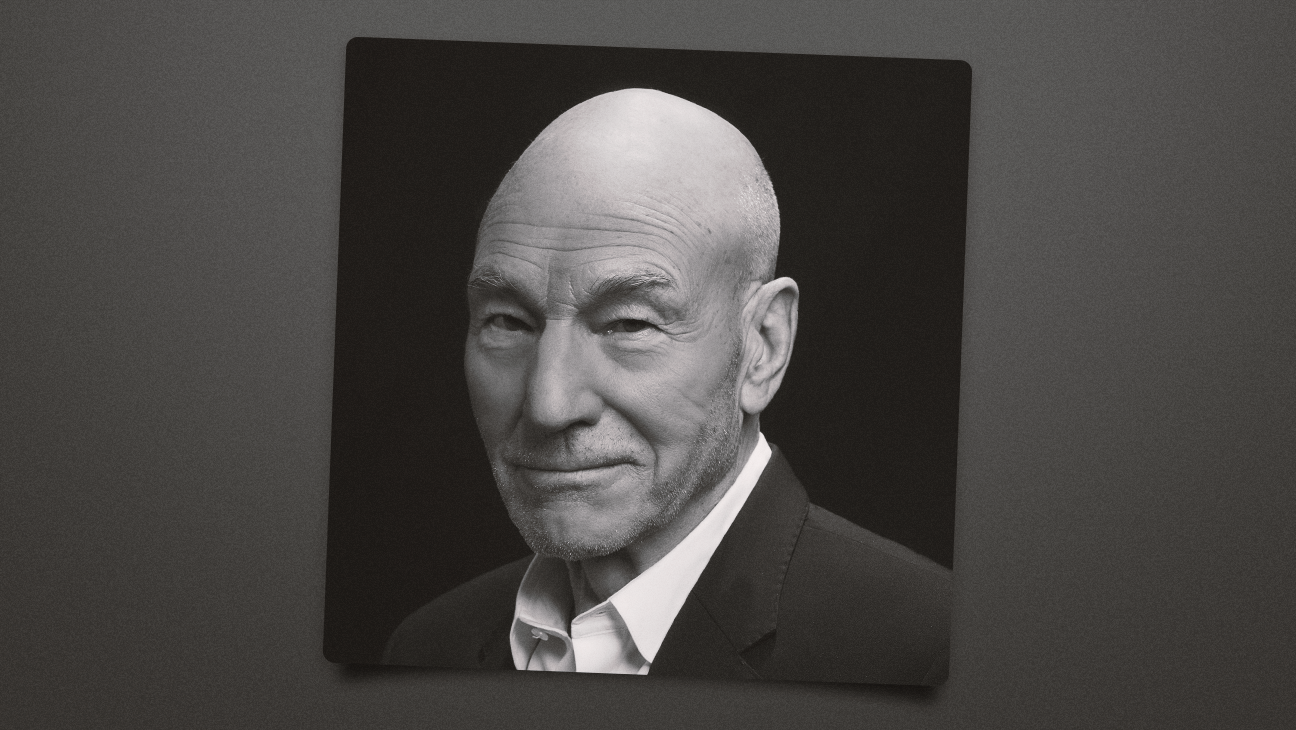
Sir Patrick Stewart, the acclaimed British actor whose commanding voice and unmistakable presence made Captain Jean-Luc Picard one of science fiction’s most enduring characters, has died.
He was 86.
Stewart died Wednesday, October 28, at his home in Los Angeles, according to a statement announcing his death.
For millions of viewers, Stewart will forever be associated with the bridge of the USS Enterprise in Star Trek: The Next Generation.
For another generation, he was Professor Charles Xavier, the powerful and compassionate leader at the center of the X-Men films.
But those enormously popular roles represented only part of a remarkable career that stretched across more than six decades.
Long before Hollywood made him internationally famous, Stewart had established himself as a formidable Shakespearean actor on the British stage.
His journey from a working-class childhood in Yorkshire to the Royal Shakespeare Company—and eventually to worldwide fame—became one of the most distinctive careers in modern British acting.
Patrick Stewart Died at His Los Angeles Home
Stewart’s death was announced on October 29.
According to the statement, he died the previous day at his Los Angeles home, with his wife, Sunny Ozell, caring for him.
The announcement said Stewart had experienced what his family described as a brief journey with Alzheimer’s disease and Lewy body dementia.
The statement described him as being surrounded by family and friends during his final days.
News of the diagnoses had not previously been widely known, making the announcement especially striking for longtime fans.
The family also requested that those wishing to honor Stewart consider supporting Alzheimer’s research and caregiver resources in lieu of flowers.
But while the circumstances of his death were only now being made public, the body of work he leaves behind has been celebrated for decades.
From Yorkshire to the Stage
Patrick Stewart was born on July 13, 1940, in Mirfield, in the West Riding of Yorkshire, England.
His beginnings were far removed from Hollywood.
Stewart grew up in a working-class household and later spoke openly about the difficulties of his childhood, including domestic violence in his family.
Acting eventually offered him another path.
His talent developed through theater, and by 1969 he had joined the prestigious Royal Shakespeare Company.
It was there that Stewart spent years building the classical foundation that would later distinguish him on television and film.
He performed Shakespeare.
He worked on some of Britain’s most respected stages.
And he developed the deep, authoritative voice that would eventually become instantly recognizable to audiences around the world.
Yet his greatest popular breakthrough wouldn’t arrive until Stewart was already in his 40s.
Captain Jean-Luc Picard Changed Everything
In 1987, Stewart stepped into the role that would permanently change his career.
He became Captain Jean-Luc Picard in Star Trek: The Next Generation.
Following an iconic character such as Captain James T. Kirk was no small challenge.
But Stewart didn’t attempt to imitate what had come before.
Picard was different.
He was thoughtful rather than impulsive.
Diplomatic rather than aggressive.
Intellectual, disciplined and deeply committed to principle.
And Stewart’s classical training gave the character unusual weight.
A speech delivered from the bridge of a fictional starship could sound as carefully considered as a Shakespearean monologue.
The result was a captain who became beloved in his own right.
Star Trek: The Next Generation ran for seven seasons from 1987 to 1994.
The series transformed Stewart from a respected stage performer into an international television star.
And Picard wasn’t finished.
He Continued Playing Picard for Decades
Stewart reprised the character in multiple Star Trek films after the television series ended.
Then, decades after first sitting in the captain’s chair, he returned again for Star Trek: Picard.
