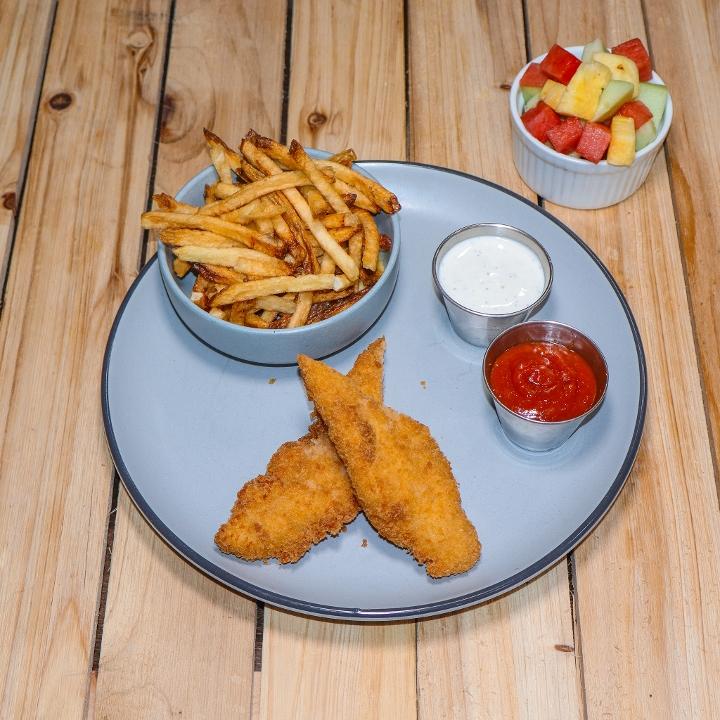
Some restaurants already permit this.
Others enforce their age limits consistently.
There are advantages and disadvantages to both approaches.
Flexible policies can make customers feel welcome and allow staff to respond to individual circumstances.
But inconsistent exceptions may create confusion.
One diner might be allowed to order a children’s meal while another is refused.
Employees may also feel uncomfortable deciding whose reasons are acceptable.
For that reason, clear policies can be helpful.
A restaurant might explicitly state that adults can order children’s meals for an additional charge.
Another might allow smaller portions of certain regular entrées.
A third might choose to maintain a strict age limit.
Whatever the policy, customers benefit from knowing it before placing an order.
Why Clear Menus Prevent Awkward Situations
Few diners enjoy being told they can’t order something after they’ve already made their selection.
The situation can be particularly uncomfortable when the customer has explained that they simply don’t want a large meal.
A clearly written menu can prevent misunderstandings.
If children’s meals are restricted to guests under twelve, that information should be easy to find.
If adults may order them for an additional charge, the menu can explain that as well.
Restaurants can also train employees to offer alternatives.
Instead of simply saying no, a server might suggest a smaller appetizer, a half portion, or a lighter entrée.
That approach respects both the customer’s needs and the restaurant’s business model.
It also reduces the chance that a routine ordering question turns into an unpleasant exchange.
What Customers Can Do Before Ordering
If you prefer smaller meals, there are several practical ways to approach the situation.
Ask about half portions. Some restaurants offer smaller servings even when they aren’t listed on the menu.
Consider an appetizer. A starter may provide enough food for someone with a modest appetite, although not every appetizer is nutritionally balanced as a meal.
Look for lunch-size entrées. Certain restaurants serve smaller portions during lunch hours.
Ask whether adults can order from the children’s menu. Policies vary, and a quick question can save an awkward conversation later.
Share a dish when permitted. Some restaurants allow customers to split an entrée, although a plate-sharing charge may apply.
Check the menu online. Reviewing portion options and restrictions before arriving can help you choose a restaurant that suits your needs.
These approaches won’t work everywhere, but they give customers alternatives.
Why Respect Matters on Both Sides
Disagreements over restaurant policies can become unnecessarily personal.
A customer may feel embarrassed when refused a children’s meal.
A server may feel uncomfortable enforcing a rule they didn’t create.
And a restaurant owner may worry that relaxing the policy will make an already difficult business less profitable.
All three perspectives deserve consideration.
Customers should be able to ask reasonable questions without being treated dismissively.
Employees shouldn’t be blamed for policies outside their control.
And restaurant owners should be able to explain their pricing decisions without automatically being accused of greed.
A polite conversation often resolves the issue.
When it doesn’t, customers can choose another establishment that offers portions and prices they prefer.
A Small Change That Could Make Dining Out More Comfortable
Restaurants have adapted to changing customer preferences in many ways.
Menus now commonly include vegetarian dishes, allergy information, and a wider variety of beverage options.
Some establishments also offer lighter meals, smaller plates, or flexible combinations.
Portion size could become another area where restaurants provide greater choice.
A smaller adult entrée wouldn’t solve every problem.
It wouldn’t be appropriate for every dish or every business.
But it could help customers who want to enjoy dining out without ordering more food than they need.
For older adults, solo diners, and people on tighter budgets, that flexibility may make a meaningful difference.
The Bigger Question Behind a Small Meal
At first, the debate seems to be about whether a grown adult should be allowed to order chicken tenders or a small plate of pasta from the children’s menu.
But the underlying question is broader.
Should customers have more choices when it comes to portion sizes?
Restaurants need to remain profitable.
Customers need to feel that they’re receiving reasonable value.
And neither side benefits from food being prepared only to be thrown away.
There may not be one policy that works for every restaurant.
But offering smaller adult portions, explaining menu restrictions clearly, and responding politely to requests could make dining out easier for everyone.
After all, wanting less food shouldn’t have to become a complicated conversation.
Sometimes, a smaller plate is simply all someone needs.
