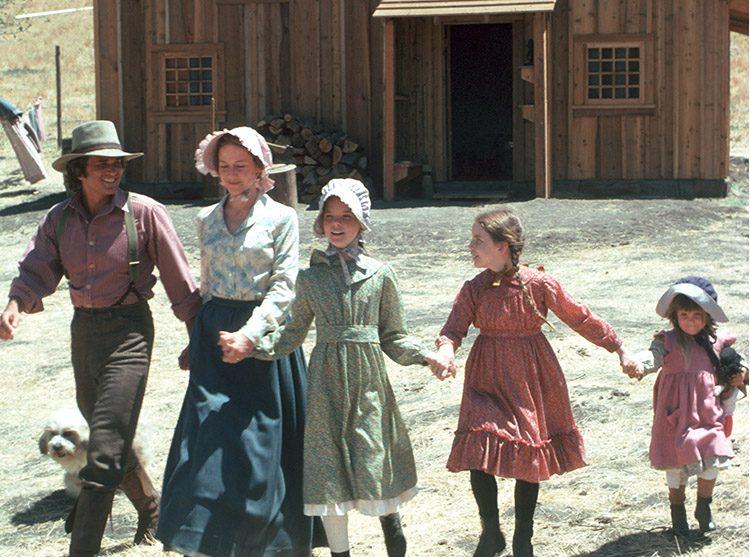
For millions of Americans, Little House on the Prairie was more than a television show. It was a weekly visit with a family that felt remarkably real.
There was Charles Ingalls, always ready with a reassuring smile or a difficult lesson. Caroline brought warmth and quiet strength to the household. Mary and Laura grew up before viewers’ eyes, while Nellie Oleson provided enough mischief to keep everyone in Walnut Grove on their toes.
The series, which premiered in 1974, became one of television’s most enduring family dramas. Its stories about hardship, friendship, forgiveness, and perseverance continue to resonate with viewers decades later.
But there’s something fascinating about watching a beloved series again after so many years.
You begin noticing details you missed as a child.
A cabinet changes position between shots. A winter scene looks suspiciously warm. A character’s pregnancy seems to stretch across an impossible amount of time. And sometimes, a supposedly nineteenth-century town encounters something that belongs unmistakably to the twentieth century.
Then there are the stories from behind the cameras, including an unforgettable prank involving Michael Landon and a live frog.
Some of these moments are genuine continuity errors. Others are deliberate jokes, historical liberties, or production secrets that explain how the show achieved its familiar look.
Here are twelve details that make revisiting Little House on the Prairie even more interesting.
1. Laura Ingalls Had a Pregnancy That Seemed to Last Forever
One of the most frequently discussed timeline oddities involves Laura Ingalls Wilder and her first pregnancy.
Laura’s marriage to Almanzo Wilder was an important turning point in the series. Viewers who had watched her grow from a spirited little girl into a young woman were now following her journey into adulthood.
But the show’s handling of her pregnancy created an unusual problem.
Laura discovers she is expecting in the seventh-season episode “I Do, Again.” Her pregnancy then continues into the eighth season, with her daughter Rose eventually arriving in “Days of Sunshine, Days of Shadow.”
That progression isn’t inherently impossible. Pregnancies can certainly span television seasons.
The confusion comes from the way other stories, weather conditions, and apparent seasonal changes fit around it.
To some viewers, the amount of time that seems to pass between Laura’s announcement and the birth feels much longer than nine months.
It’s a familiar problem in serialized television.
Writers want to develop several stories simultaneously, but those stories don’t always follow an obvious calendar.
An episode might suggest that weeks have passed. Another may appear to move the characters into a new season. Meanwhile, a pregnancy continues according to the needs of the larger plot.
For longtime fans, Laura’s unusually elastic timeline has become a favorite subject of discussion.
It doesn’t ruin the emotional significance of Rose’s arrival.
But it does make viewers wonder whether the residents of Walnut Grove were using a different calendar.
2. Nellie Oleson’s Perfect Curls Weren’t Always Her Real Hair
Few television hairstyles are as instantly recognizable as Nellie Oleson’s golden ringlets.
Alison Arngrim’s portrayal of Nellie was unforgettable. Whether she was tormenting Laura, manipulating her mother, or pretending to be innocent after causing trouble, those perfectly arranged curls were part of the character’s identity.
But maintaining them was not easy.
Early in the series, Arngrim’s own hair was styled into the elaborate curls.
The process took considerable effort, and the results weren’t always reliable under demanding filming conditions.
Television production involved long days, repeated takes, bright lighting, and outdoor scenes.
A hairstyle that looked perfect in the morning could become difficult to maintain by the afternoon.
Eventually, the production turned to a wig.
