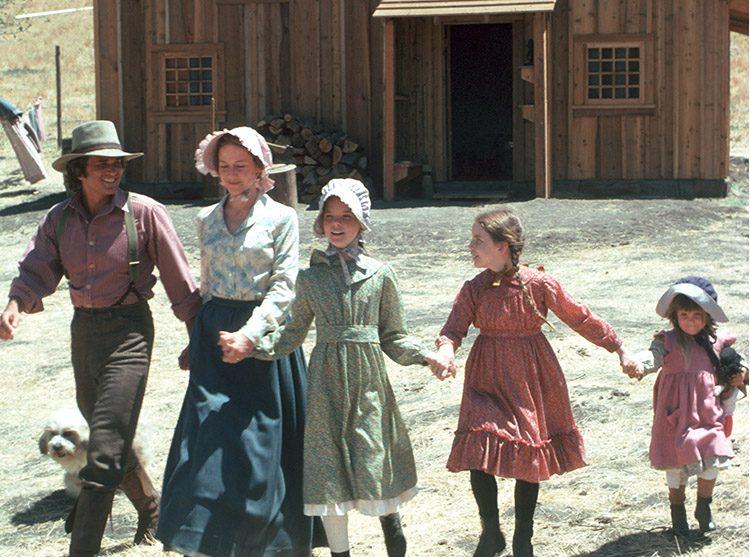
The series was inspired by Laura Ingalls Wilder’s books, which themselves drew from her childhood and family experiences.
But the television writers adapted that material freely.
They introduced characters.
Changed relationships.
Created dramatic situations.
And sometimes altered events to serve the needs of the series.
The real Ingalls family lived through hardship, uncertainty, and the challenges of frontier life.
But the television version frequently gave those experiences a more dramatic structure.
Charles Ingalls, for example, became a central figure in numerous storylines created specifically for television.
The show also explored social issues through fictional plots involving Walnut Grove residents.
Those stories helped the series connect with audiences during the 1970s and 1980s.
But they shouldn’t all be mistaken for events that happened to the historical family.
This distinction is especially important for viewers who discover the series before reading Wilder’s books.
The television show can inspire curiosity about American history.
It just shouldn’t be treated as a perfectly accurate record of it.
12. The Show’s Emotional Realism Sometimes Hid Its Production Shortcuts
Perhaps the most interesting thing about these mistakes is how little they affected the show’s popularity.
Viewers noticed the occasional modern-looking hairstyle.
They spotted continuity errors.
They questioned the calendar.
And they laughed at a stunt dummy that wasn’t quite convincing.
But they kept watching.
Why?
Because the series offered something more important than flawless production.
It gave viewers characters they cared about.
Charles and Caroline’s marriage provided a reassuring center to the story.
Laura’s stubbornness and determination made her relatable.
Mary’s experiences brought some of the show’s most difficult emotional moments.
And Nellie Oleson provided a memorable mixture of comedy, conflict, and eventual character development.
Even the supporting characters felt familiar.
Mr. Edwards, Reverend Alden, Doc Baker, and the Oleson family helped create the sense of a living community.
That community was the heart of the show.
The production details mattered, but the relationships mattered more.
A viewer might notice that a winter scene looked too warm and still be moved by the family gathering around the fireplace.
A questionable historical reference could provoke laughter without diminishing the emotional message of an episode.
And a visible stunt prop might briefly interrupt the illusion without changing how much the audience cared about Albert.
Why These Little Mistakes Are So Enjoyable to Discover
There’s a special pleasure in returning to a television series you loved years ago.
The first time you watched, you may have been focused entirely on the story.
Would Laura get into trouble?
Would Charles find a way to help his family?
What was Nellie planning now?
Would everything work out before the credits rolled?
Years later, you bring a different perspective.
You notice the clothes.
The sets.
The editing.
The ways television production has changed.
You may also recognize themes that seemed less important when you were younger.
Financial hardship.
Parenting.
Marriage.
Loss.
The difficulty of making the right decision when every available choice carries a cost.
That combination of nostalgia and new understanding is part of what makes classic television so rewarding.
And spotting a small mistake can feel like discovering a hidden detail in a familiar family photograph.
It doesn’t make the memory less valuable.
It simply gives you something new to talk about.
The Legacy of Little House on the Prairie
More than fifty years after its television debut, Little House on the Prairie remains closely associated with a particular kind of American family storytelling.
Its world was not always historically precise.
Its characters sometimes experienced improbable developments.
And its production occasionally revealed the practical limitations of television filmmaking.
But its central themes have proved remarkably durable.
Families struggle.
Children make mistakes.
Neighbors disagree.
People face illness, disappointment, and loss.
And sometimes, despite everything, they find ways to help one another.
That emotional foundation explains why audiences continue returning to Walnut Grove.
The series may not have recreated nineteenth-century life perfectly.
But it created a television community that generations of viewers still remember.
And perhaps that’s why its mistakes have become part of its charm.
They’re reminders that the show was made by real people, working long hours to create stories that would mean something to the families watching at home.
So the next time you revisit Little House on the Prairie, pay attention to the little things.
Watch the background.
Notice the weather.
Look closely at the costumes.
And when a scene makes you laugh for a reason the writers probably didn’t intend, enjoy it.
After all, even a beloved television classic can have a few surprises hiding in plain sight.
Which of these details had you noticed before? And have you spotted another mistake in Walnut Grove that other fans might have missed?
