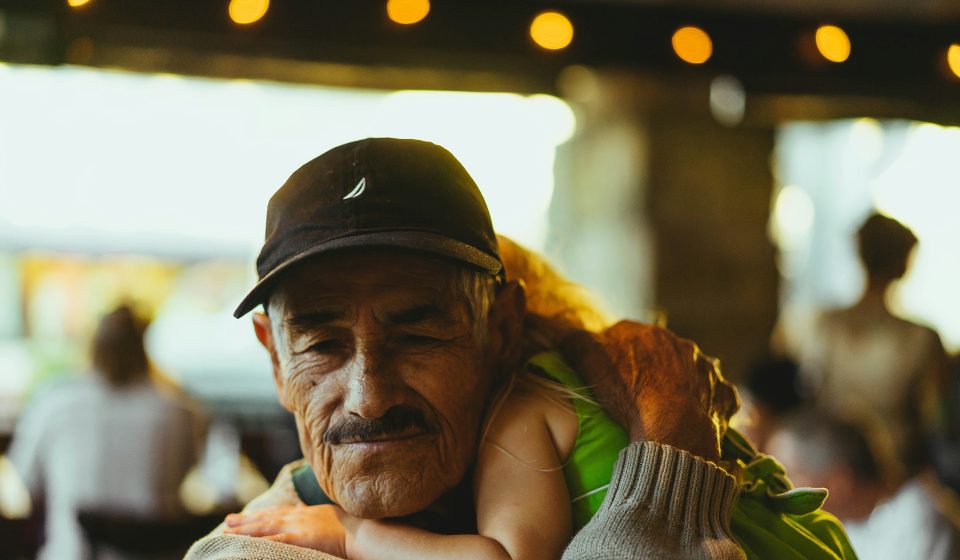
My Parents Abandoned Me at Five—Then Returned With a Moving Truck to Claim Grandpa’s House

The moving truck arrived the morning after my grandfather’s funeral.
At first, I thought it had the wrong address.
I was standing in the kitchen, staring at Grandpa Arthur’s coffee mug beside the sink, when the low rumble of a diesel engine made me look through the window.
A large white truck was backing into the driveway.
Then a familiar car pulled in behind it.
My stomach dropped.
My father stepped out first.
Richard Bennett.
The man I hadn’t called Dad in seventeen years.
My mother, Linda, climbed out from the passenger side. A younger woman emerged from the back.
Brianna.
My sister.
I hadn’t seen any of them at Grandpa’s bedside.
They hadn’t been there during the months when his health deteriorated.
They hadn’t helped arrange the funeral.
Yet less than 24 hours after we buried him, they had arrived with a moving truck.
I walked onto the porch.
“What are you doing here?”
My father looked at the house as if he were inspecting something he’d just purchased.
“We’re moving in.”
I thought grief had made me misunderstand him.
“You’re what?”
“This is the family house now.”
Then my mother waved toward the movers.
“Start with the furniture in the truck. We’ll sort out what’s staying afterward.”
Nobody asked my permission.
Why would they?
As far as they were concerned, I was still the five-year-old girl they’d left on this same doorstep.
What they didn’t know was that Grandpa had anticipated their return.
And he’d prepared for it years before he died.
My Parents Said They’d Be Back in a Few Weeks
I was five when my parents left me with Grandpa Arthur.
I don’t remember every detail from that day.
Memory at that age comes in fragments.
My mother’s perfume.
A suitcase.
My father talking quietly with Grandpa near the front door.
The feeling of being told to behave.
They said they were having problems.
They needed some time to work on their marriage.
Grandpa would take care of me temporarily.
A few weeks, they promised.
Maybe a little longer.
I believed them because children believe their parents.
For weeks, I listened for their car.
Every time someone pulled into the driveway, I ran toward the window.
Eventually, I stopped running.
They never came back for me.
Grandpa Never Pretended They Had
Arthur Bennett could have invented explanations.
He could have told me my parents were too busy.
He could have promised they’d return when he knew they probably wouldn’t.
Instead, he did something kinder.
He didn’t lie.
When I asked why Mom and Dad hadn’t called, he’d say, “I don’t know, sweetheart.”
When I asked whether I’d done something wrong, he became firmer.
“No.”
That answer never changed.
Not once.
When children at school asked why my parents didn’t attend events, Grandpa didn’t manufacture stories about business trips or emergencies.
He simply showed up.
Parent-teacher conferences.
School plays.
Birthdays.
Dentist appointments.
Everything.
When rain poured down after school, his old car would be waiting outside.
When I wanted to learn to ride a bicycle, he ran behind me until his knees hurt.
When nightmares woke me, he sat beside my bed.
When I developed pneumonia at twelve, he barely slept for days.
Grandpa never formally announced that he was replacing my parents.
He just became the person who stayed.
Seventeen Years Later, They Came Back for the House
I was 22 when Grandpa died.
Losing him felt like losing my entire family at once.
Then my biological family appeared.
My mother entered the house without waiting for an invitation.
She began looking around.
“This place needs work.”
I stared at her.
She hadn’t been inside for years.
Brianna walked upstairs.
Several minutes later, she returned.
“I’ll take the big bedroom.”
Grandpa’s bedroom.
The room where I’d sat beside him when he couldn’t sleep.
The room where his reading glasses were still resting on the nightstand.
“You’ll take what?”
She looked confused by the question.
“The main bedroom.”
“No.”
My mother turned toward me.
“Emily, don’t start.”
“Nobody is moving into Grandpa’s room.”
Linda sighed as though I were an inconvenience.
Then she picked up several garbage bags she’d apparently brought with her and pushed them into my arms.
“Fine. Start packing your things.”
I looked down at the bags.
Then at her.
“You think I’m leaving?”
My father finally spoke.
“Emily, don’t make this difficult. Dad is gone. I’m his son. This is a family property.”
I almost admired the confidence.
He hadn’t raised me.
He hadn’t cared for Grandpa.
He hadn’t been there when Grandpa needed him.
But he had arrived with a moving truck before the flowers from the funeral had begun to wilt.
Then someone knocked at the open door.
Grandpa’s Attorney Walked In
“Mr. Bennett?”
My father turned.
An older man carrying a briefcase stood on the porch.
I recognized him immediately.
Mr. Harrison had been Grandpa’s attorney for years.
Richard’s expression relaxed.
“Perfect timing.”
Mr. Harrison looked at the moving truck.
“I suspect it is.”
My father gestured around the house.
“We’re dealing with Dad’s property.”
“Yes,” the attorney said. “That’s why I’m here.”
He entered and placed his briefcase on the dining-room table.
My mother crossed her arms.
“If this is about probate, Richard is Arthur’s son.”
Mr. Harrison looked at her.
“This particular property is governed by the estate arrangements Arthur put in place.”
My father frowned.
“What does that mean?”
The attorney opened his briefcase.
“It means you should stop the movers.”
Grandpa Had Planned for This
Mr. Harrison removed a stack of documents.
According to the estate plan he described, Grandpa had transferred the property into a living trust years earlier.
And I had been designated to receive the property under that arrangement.
The exact legal mechanics weren’t something I understood immediately.
I didn’t need to.
The important part was simple.
My father could not arrive with a truck and simply declare the house his.
Brianna laughed.
Not because she found anything funny.
It was the kind of laugh people make when reality is too inconvenient to accept.
“Emily?”
Mr. Harrison nodded.
My mother’s face went blank.
Richard stepped forward.
“That’s impossible.”
“It isn’t.”
“I’m his son.”
“I understand.”
“Then explain how my daughter gets the house.”
Mr. Harrison looked at me.
“Arthur wanted Emily to have something as well.”
He reached into his briefcase again.
This time, he removed a small black envelope.
My name was written across the front.
I recognized the handwriting instantly.
Emily.
My hands began trembling before I even opened it.
Grandpa Had Left Me One Last Message
The note wasn’t long.
That was typical of Grandpa.
He never needed a page when four sentences would do.
He wrote that if I was reading the letter, the people who had once walked away from me might have returned.
He told me not to confuse shared blood with obligation.
He told me not to let anger, guilt, or pressure persuade me that protecting what he’d left me was selfish.
Then came the sentence I couldn’t read aloud.
For years, I’d secretly believed that being abandoned meant there had been something wrong with me.
Maybe I’d been difficult.
Maybe I cried too much.
Maybe my parents had looked at their five-year-old daughter and decided life would simply be better without her.
Grandpa knew I’d carried that question.
His note gave me the answer he’d apparently wanted me to remember after he was gone.
I had never been unwanted by him.
I had been his greatest treasure.
I covered my mouth.
My mother looked away.
Then Mr. Harrison opened his laptop.
“Arthur also recorded something.”
Grandpa Appeared on the Screen
There he was.
Sitting in his favorite chair.
Blue sweater.
Gray hair.
Hands folded across his stomach.
For one irrational second, I wanted to reach through the screen.
Then Grandpa began speaking.
He addressed Richard first.
His own son.
Grandpa reminded him about the day my parents had brought me to the house.
They had promised to return.
They didn’t.
Days became weeks.
Weeks became months.
According to Grandpa, he waited for explanations that never came.
He waited for calls.
Birthdays passed.
Christmases passed.
School years passed.
I grew up.
My parents built another life.
Grandpa said he’d spent seventeen years wondering whether his son would eventually understand what he’d done.
Then his voice changed.
He wasn’t shouting.
Grandpa rarely shouted.
Disappointment was enough.
“You Remembered This Family When There Was Something to Inherit”
My father shifted uncomfortably.
Grandpa explained that he’d arranged his affairs years before his death after receiving professional legal and financial guidance.
He wanted the house protected.
He wanted his intentions documented.
Most of all, he wanted to reduce the possibility that I’d be pressured into surrendering the home after he was gone.
Then he addressed Brianna.
He said his decision wasn’t about punishing her.
She hadn’t been responsible for what happened when I was five.
But she also couldn’t appear at the end of his life and assume the house was a prize waiting to be divided.
Grandpa said he had chosen the granddaughter who had actually made the house a home.
The granddaughter who had eaten breakfast with him.
Helped in the garden.
Driven him to appointments.
Sat beside him when he became sick.
Then came the part none of us expected.
My father had already known.
Richard Had Asked About the Inheritance Months Earlier
Three months before Grandpa died, Richard had contacted Mr. Harrison.
Not to ask about his father’s health.
Not to ask whether he could visit.
He wanted information about the estate.
According to the account Grandpa left behind, Richard became angry when he discovered arrangements had already been made.
He threatened to challenge any plan that favored me.
Then he described me in words that made my stomach turn.
A child Grandpa had been “stuck raising.”
I looked at my father.
He didn’t deny it.
That hurt more than I expected.
Even after seventeen years, some small part of me had apparently been waiting for him to say:
That’s not true.
He didn’t.
Grandpa’s Final Words Were for Me
On the screen, Grandpa looked directly toward the camera.
His expression softened.
“Emily.”
I started crying before he continued.
He told me I wasn’t required to hate my parents.
But I wasn’t required to forgive them immediately either.
Forgiveness, if it ever came, belonged to me.
He told me I didn’t have to prove that I was a good daughter by surrendering the future he’d tried to protect.
And then he said the thing I needed most.
I’d spent enough of my childhood wondering why my parents left.
I shouldn’t spend adulthood allowing their decision to determine what I thought I was worth.
Then Grandpa smiled.
“I love you, Emily. Always have. Always will.”
The video ended.
Nobody moved.
Suddenly, the Moving Truck Looked Ridiculous
My mother spoke first.
“This has obviously been misunderstood.”
I stared at her.
“What part?”
“Your grandfather was upset.”
“About being abandoned by his son?”
“Emily.”
“No. Explain the misunderstanding.”
She couldn’t.
Richard became angry instead.
He questioned the documents.
He questioned Grandpa’s judgment.
He questioned the attorney.
Anything was easier than questioning himself.
Finally, I walked toward the front door.
The movers were still waiting outside.
I addressed them directly.
“Nothing from this house is going into that truck.”
One of them glanced toward my father.
Richard started to object.
I continued.
“And nobody is moving in.”
Brianna folded her arms.
“So you’re throwing out your own family?”
That sentence might once have destroyed me.
Instead, I looked at the three of them.
“You can’t be thrown out of a home you never lived in.”
My Father Told Me I’d Regret It
Richard followed me toward the doorway.
“You’ll regret treating your parents this way.”
I almost couldn’t believe he’d said it.
My parents.
The title suddenly sounded strange.
“I’ve spent seventeen years wondering why my parents didn’t want me,” I said. “I think I’ve already done enough regretting for this family.”
He stared at me.
Then he walked out.
Linda followed.
Brianna came last.
Within minutes, the truck pulled away.
I closed the door.
Locked it.
And collapsed onto the floor.
I Didn’t Feel Like I’d Won
Stories like this often make confrontation sound satisfying.
The villain leaves.
The hero wins.
Justice arrives.
That wasn’t how it felt.
I sat on Grandpa’s floor sobbing.
The house was mine.
I didn’t care.
I would have exchanged every room, every piece of furniture, and every dollar connected to it for one more morning with him.
There was no victory in learning that my parents had returned because they wanted property.
There was only confirmation of something I’d spent years hoping wasn’t true.
The person who loved me was gone.
The people who were supposed to love me had arrived with a moving truck.
Then Came a Second Envelope
The following day, Mr. Harrison returned.
“There is something else Arthur wanted you to know.”
He handed me another envelope.
This one was thicker.
Grandpa had written a more detailed account of what happened after my parents left me at five.
It was worse than I’d known.
For months after dropping me off, they’d barely communicated.
Eventually, my father contacted Grandpa.
Richard said he and Linda wanted to start over.
Parenting, apparently, no longer fit the life they intended to build.
Grandpa offered to help them financially if they remained involved in my life.
Richard refused.
According to Grandpa’s account, he said I was Arthur’s responsibility now.
I had to stop reading.
Mr. Harrison waited.
“Why didn’t Grandpa tell me?”
“Because he didn’t want you growing up with this.”
That sounded exactly like him.
He Protected Me From a Truth He Couldn’t Change
Grandpa couldn’t force my parents to love me properly.
What he could do was protect me from carrying the ugliest details while I was still a child.
Years later, when I was around thirteen, my mother apparently contacted him.
For a moment, I allowed myself to imagine she’d asked about me.
She hadn’t.
She was having financial problems.
She wanted to know whether Grandpa had set aside money that might eventually come to her.
I sat there in silence.
All those birthdays.
All those school photographs.
All those Christmas mornings.
She had known where I was.
And when she finally reached out, she asked about money.
Grandpa had carried that knowledge so I wouldn’t have to.
Until I was old enough to understand that their abandonment wasn’t evidence that I had been difficult to love.
It was evidence that the adults responsible for me had failed to act like parents.
Grandpa Had More Than He Let Anyone Know
As the estate was sorted out, I discovered another surprise.
Grandpa had lived simply.
He repaired things rather than replacing them.
He grew vegetables.
He drove the same car for years.
He once glued the sole back onto a pair of shoes because, according to him, “The top half still works.”
I assumed he had enough to live comfortably and little more.
I was wrong.
Over the years, he’d accumulated savings and investments.
There was also a modest rental property.
But the part that mattered most wasn’t what he left me.
It was what he’d already been doing for other people.
Grandpa had quietly directed money toward helping young people who lacked dependable parental support.
Some assistance went toward education.
Some helped young adults facing difficult transitions.
I had known none of this.
Apparently, that was how he wanted it.
One Young Woman Told Me What His Help Had Meant
Months later, I met a woman who had benefited from the support connected to Grandpa’s charitable work.
She had grown up without stable parental support and had struggled financially while studying to become a nurse.
At one point, she was working two jobs while trying to remain in school.
She told me the assistance she’d received was the reason she hadn’t dropped out.
I thought about Grandpa sitting at the kitchen table comparing grocery prices.
I thought about those repaired shoes.
He hadn’t been frugal because he worshipped money.
Money was simply a tool to him.
He spent less on things he didn’t value so he could use more for things he did.
People.
Opportunity.
Security.
Home.
My Parents Came Back Again—This Time Without the Truck
Several weeks later, they returned.
No movers.
No shouting.
My mother carried pastries.
My father brought wine.
The performance had changed.
Now they wanted reconciliation.
They talked about family.
Healing.
Misunderstandings.
Then, eventually, they mentioned the estate.
My father offered to “help manage” the investments.
I almost laughed.
“No.”
“We’re trying to help you.”
“I already have professional help.”
“Emily, you don’t understand complicated finances.”
“Then I’ll learn.”
My mother placed the pastries on the porch.
“Can’t we at least come inside?”
I looked at the doorway.
Grandpa had carried me through that doorway when I was five.
I shook my head.
“Not today.”
My Mother Left an Old Photograph
After they drove away, I found an envelope beneath the pastry box.
Inside was a photograph of me as a little girl.
My mother was holding me.
On the back she’d written:
I know I don’t deserve it, but someday I’d like the chance to explain.
I kept the photograph.
That didn’t mean I’d forgiven her.
It didn’t mean I believed an explanation could repair seventeen years.
But I kept it.
Understanding and forgiveness aren’t the same thing.
Neither is forgiveness the same as reconciliation.
Maybe someday I would want to hear what she had to say.
Maybe I wouldn’t.
For the first time, I understood that I was allowed to make that decision slowly.
Brianna Eventually Came Alone
My sister surprised me.
Months later, she asked if we could meet.
No parents.
No lawyers.
No discussion of ownership.
We met at a coffee shop.
She looked embarrassed.
“I’m sorry about the bedroom.”
I almost smiled.
“That was quite an entrance.”
She covered her face.
“I know.”
Then she told me the truth.
Her husband had lost his job.
They were drowning in debt.
When our father told her Grandpa’s house would become available, she’d allowed herself to believe moving there would solve everything.
That didn’t excuse what she did.
She knew that.
“I’m not asking for the house,” she said.
“Good.”
“I’m asking whether there’s any chance we could eventually know each other.”
I didn’t answer immediately.
Then I said, “Maybe.”
It was the most I could honestly offer.
A sister couldn’t be created overnight simply because we shared parents.
If we built anything, we’d build it without demands.
The Legal Challenge Came Anyway
My father’s threats eventually became paperwork.
A challenge was raised against Grandpa’s estate arrangements.
Among other claims, questions were raised about my ability to manage the assets and about Grandpa’s decision-making when he established his plan.
But Grandpa had anticipated conflict.
Mr. Harrison explained that the estate planning had been documented carefully and that independent professional records supported the circumstances under which Grandpa had made his decisions.
The dispute didn’t become the dramatic courtroom battle my father seemed to expect.
Eventually, the challenge was withdrawn.
I learned something from the experience.
Grandpa hadn’t merely written down what he wanted.
He had planned for the possibility that someone would try to overturn it.
Even after death, he was still protecting me.
In Spring, I Finally Changed Grandpa’s Bedroom
For months, I couldn’t touch it.
His sweater remained on the chair.
His books stayed beside the bed.
His slippers remained underneath it.
Then spring arrived.
The garden began growing again.
One Saturday morning, I opened every window upstairs.
I cleaned.
Not because I wanted to erase Grandpa.
Because I finally understood that keeping his bedroom frozen wouldn’t keep him alive.
I moved the bed.
Packed some clothes.
Donated things I knew he would have wanted someone else to use.
And transformed the room Brianna had once tried to claim.
I made it a library.
I Kept His Chair
Grandpa’s favorite armchair went beside the window.
I kept his books.
His old desk lamp.
I added shelves for my own collection.
A comfortable sofa.
A writing desk.
And beside the window, I placed a photograph of Arthur Bennett.
Not the photograph from his funeral.
I hated that one.
I chose a picture from the garden.
His sleeves were rolled up.
There was dirt on his shirt.
He was laughing.
Beneath the photograph, I placed a small brass plaque.
It carried the sentence that had defined my childhood:
A home is built by the people who show up.
Grandpa Had Been Showing Up My Entire Life
For years, I thought my story began with abandonment.
Two parents drove away.
A five-year-old waited.
They didn’t return.
But that wasn’t the whole story.
Someone else stayed.
Grandpa showed up after school.
He showed up when I was sick.
He showed up when I was scared.
He showed up for birthdays, graduations, ordinary dinners, scraped knees, broken friendships, and every moment in between.
Eventually, I realized something.
My parents leaving was something that happened to me.
It wasn’t the definition of me.
And the house they tried to claim wasn’t valuable because of its walls.
It was valuable because inside those walls, a frightened little girl had learned that family could also mean the person who stayed when everyone else walked away.
My grandfather’s greatest gift wasn’t the house.
It wasn’t the investments.
It wasn’t even the protection he’d built into his estate plan.
It was seventeen years of showing me, through ordinary actions, that I had always been worth showing up for.
And every rainy evening when I sit in his old chair with a book and look toward the garden he planted, I remember exactly what he taught me:
Blood may connect people. But showing up is what turns a house into a home.
Editor’s note: This piece is presented as a fictionalized/unverified human-interest narrative based on the supplied story. The people, estate arrangements, legal dispute, charitable activities, and other events have not been independently verified. Trust and inheritance laws also vary by jurisdiction, so the legal elements should not be interpreted as general legal advice.