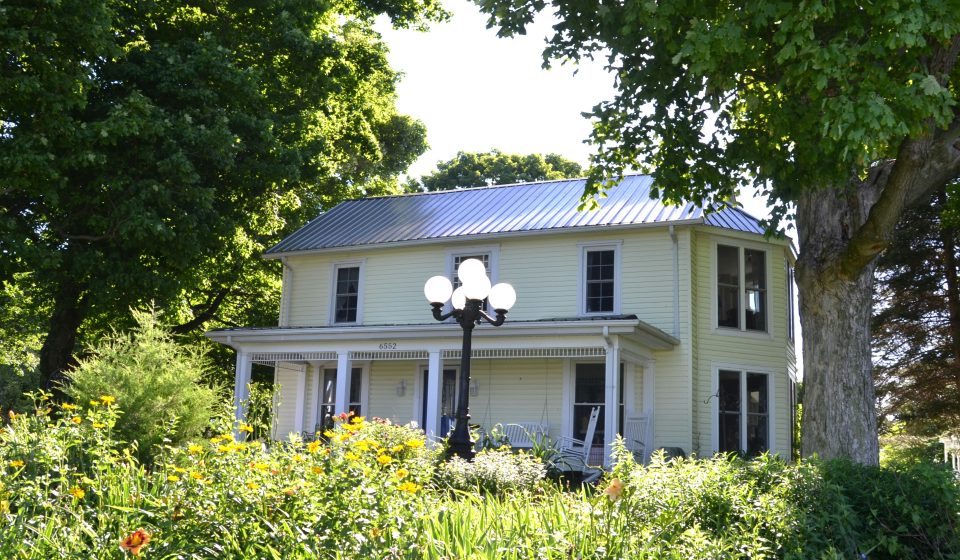
My Daughter Wanted $800 a Month and Four Days of Babysitting for Her Basement—So I Rented My Own House for $550

My son-in-law slid a piece of notebook paper across the kitchen table.
There was one number written on it.
$800.
My daughter, Michelle, sat across from me with both hands wrapped around a cup of coffee that had already gone cold.
“That covers rent, utilities and your share of the groceries,” she explained.
Then came the second part.
Four days a week, I would watch the children.
According to Michelle, that way I would be “earning my keep.”
Those three words stayed with me longer than the number.
I Was 67 Years Old and Suddenly Needed Somewhere to Live
My name is Judy.
I was 67, widowed, and receiving $1,640 a month from Social Security.
I had worked as a bookkeeper at a lumber yard for 22 years, so I didn’t need a calculator to understand Michelle and Todd’s proposal.
Eight hundred dollars for the basement would leave me with $840 each month.
From that would come my car insurance.
Medicare supplement.
Gas.
Medication.
Church giving.
Christmas gifts for my two grandchildren.
And whatever unexpected expense life decided to send my way.
But even the arithmetic wasn’t what bothered me most.
It was the arrangement.
I would pay $800 every month and provide childcare four days a week.
In my own daughter’s house.
To earn my keep.
Michelle Showed Me the Basement
I tried not to react immediately.
Instead, I asked to see where I would be living.
Michelle took me downstairs.
To be fair, they’d tried.
There was carpet laid over the concrete.
A double bed.
A lamp.
A dehumidifier humming in the corner.
There was one small window high on the wall.
The bathroom was upstairs.
Thirteen steps.
I counted.
My four-year-old granddaughter, Sadie, followed us downstairs in a princess nightgown.
She called the basement “the under.”
Apparently there was also a spider down there.
My grandchildren had named him Kevin.
At least I’d have company.
I Could Have Said No Immediately
Part of me wanted to.
I wanted to tell Michelle:
I’m your mother.
I’m not paying $800 a month for a basement while working four days a week to justify being there.
But I didn’t.
I’d already buried my husband.
Michelle was my only child.
I wasn’t going to turn a difficult conversation into a family war if I could avoid it.
So I thanked them.
I told them I could see they’d put thought into the offer.
Then I said I needed some time.
I folded Todd’s paper twice and placed it inside my purse.
I Couldn’t Stay Where I Was
My housing problem was real.
My late husband, Dale, had worked for a farmer named Jim Olson for 31 years.
Dale was a hired man.
And for those 31 years, we lived in the house that came with his job.
It was never ours.
We never pretended it was.
Dale died two years earlier.
The Olsons could reasonably have asked me to leave soon afterward.
They didn’t.
They let me remain for another two years and seven months.
Jim plowed my lane in winter.
His wife sent sweet corn in August.
They treated me with more kindness than I had any right to demand.
Eventually, though, Jim’s son was coming home to farm.
He had a wife, a baby and another child on the way.
They needed the house.
I understood.
Nobody had betrayed me.
Nobody was throwing me into the street.
Life had simply changed.
By November, I needed another place to live.
Then I Found a Tiny House
I’d passed it before.
A little white house near the grain elevator.
Green roof.
Small front porch.
A swing.
One step from the sidewalk to the porch.
Just one.
Mr. Brandt owned it.
It had belonged to his mother.
Inside was a combined kitchen and living area.
One bedroom.
One bathroom.
A stove.
A refrigerator.
A heating unit.
A good window over the kitchen sink.
That was basically the entire house.
You could stand in the middle and see almost everything.
Mr. Brandt warned me about the noise.
During harvest, the elevator fans could run all night.
Freight trains came through during the early morning hours.
Corn dust got everywhere.
None of that frightened me.
I’d spent two years listening to a quiet house after Dale died.
Maybe some noise would be good.
Then I asked the question that mattered.
“How much?”
“Five Hundred and Fifty”
I did the calculation immediately.
$1,640 minus $550.
$1,090 left.
That was $250 more each month than I’d have after paying my daughter.
And nobody had mentioned four days of childcare.
Mr. Brandt told me it wasn’t much of a house.
I looked around.
It had something the basement didn’t.
A door that was mine.
“I’ll take it.”
He suggested I think about it first.
Maybe talk to Michelle.
But I’d already done enough thinking.
I wrote him the check on the hood of my Buick.
Then he removed two brass keys from his key ring.
Front door.
Back door.
He placed them in my hand.
And something about those keys nearly made me cry.
At 67, They Were the First Keys That Felt Entirely Mine
At 19, I’d gone from my father’s home to the house that came with Dale’s employment.
I’d been grateful for both.
But I’d always lived beneath a roof connected to someone else’s circumstances.
My father’s.
My husband’s employer’s.
Now, at 67 years old, I had chosen a home entirely for myself.
It was tiny.
It was noisy.
It wasn’t fancy.
But the keys were in my hand because I had decided to live there.
That mattered more than I expected.
Then I Made a Mistake of My Own
I didn’t tell Michelle.
Not immediately.
When she called and asked whether I’d decided about the basement, I said I was still thinking.
That wasn’t entirely true.
I’d already signed up for the little house.
I knew I should tell her.
I also knew the conversation would hurt.
So I postponed it.
That was cowardly.
I can admit that now.
Thirty-One Years Fit Onto One Flatbed
Jim Olson and his son helped me move.
I took my bed.
The couch.
The kitchen table Dale and I had bought at a farm sale in 1981.
Four chairs.
My sewing machine.
Dale’s recliner.
Nine boxes.
That was most of what I needed.
Thirty-one years of married life reduced to one flatbed load and whatever fit inside a Buick.
I hung curtains.
Put Dale’s recliner beside the heater.
Placed my African violets in the window over the sink.
That first night, the elevator fans roared.
At 2 a.m., the freight train shook the water beside my bed.
I lay awake thinking:
Judy, what have you done?
The second night, I slept until five.
Todd Discovered Me
Nine days later, he drove past the elevator on his way to work.
There was my Buick.
There was a light in the window.
And there I was in my housecoat, watering my violets.
Michelle called that evening.
“You rented a house.”
There was no point pretending anymore.
I admitted it.
I also apologized for not telling her sooner.
Then she asked the rent.
“Five hundred and fifty.”
Her reaction came immediately.
“So it wasn’t even about the money.”
She pointed out that the difference was only $250.
Why would I rather give money to someone else than to my own family?
And that’s when I finally explained it.
“I’d Rather Be Your Mother Than Your Renter”
That was the heart of it.
I would have watched my grandchildren without being paid.
Gladly.
But Michelle had told me I’d be earning my keep.
I had already spent a lifetime earning.
Working.
Raising her.
Helping my family.
Keeping books.
Supporting Dale.
I didn’t believe motherhood created a debt I was required to repay at 67.
Michelle became angry.
She told me she’d already talked to the daycare.
She’d considered changing her work schedule.
I hadn’t known any of that.
Then she hung up.
Ten Days Passed
No calls.
No photographs of the children.
Nothing.
Usually Michelle sent pictures constantly.
Sadie making a mess at dinner.
Eli missing another tooth.
Now my phone stayed silent.
Every evening, I sat on my porch swing and watched the trucks pull onto the grain scale.
I had what I’d wanted.
My own door.
My own keys.
My own tiny home.
And I wondered whether I’d paid too much for them.
Not in dollars.
In family.
The Basement Wasn’t Really the Problem
I’ve lived simply all my life.
I could have survived a basement.
Even $800 wasn’t the entire issue.
The problem was living under terms.
Every grocery bag would remind me that I was paying my share.
Every day I felt tired and didn’t want to babysit, I’d hear those words again.
Earning your keep.
I didn’t want my relationship with my grandchildren measured against rent and childcare.
I wanted to be their grandmother.
Not an employee who happened to love them.
Then a Shoebox Changed Something Else
A few days after moving, I stopped at Mr. Brandt’s store for sunflower seeds.
He was behind the counter surrounded by papers.
Invoices.
Charge tickets.
Bank statements.
His late wife, Lois, had handled the bookkeeping for 43 years.
She’d been gone four years.
Mr. Brandt was struggling.
His accountant needed numbers.
His ledger wouldn’t balance.
I looked at the mess.
Then I told him something he apparently didn’t know about me.
I’d kept books at a lumber yard for 22 years.
Double-entry bookkeeping.
Give me the ledger.
Give me the shoebox.
Give me coffee.
Three Afternoons Later, His Books Balanced
I found customers who hadn’t been billed.
One deposit had been entered twice.
There were more than $2,000 in charge tickets that had never gone out.
When I finished, the books balanced to the penny.
That Friday evening, Mr. Brandt came to my porch.
He wanted me to handle the books every Friday.
He couldn’t pay me what he thought the work was worth.
So he offered another arrangement.
He would reduce my rent from $550 to $400.
I accepted.
But something about this arrangement felt completely different from the one my daughter had offered.
He Asked for Something I Was Good At
That was the difference.
Mr. Brandt didn’t tell me I needed to earn the right to live in my home.
He needed bookkeeping.
I knew bookkeeping.
He proposed an exchange.
I could say yes.
Or no.
My skills had value to him.
My rent wasn’t a judgment on my worth.
For the first time, I understood exactly what had bothered me at Michelle’s table.
I didn’t mind helping.
I wanted to be asked.
On the Tenth Day, Todd and Michelle Came Over
I was frying potatoes when I heard Todd’s truck.
Michelle got out.
Her eyes were red.
Todd was carrying a yellow legal pad.
They came inside.
Michelle looked around.
The couch.
Her father’s recliner.
The violets.
Then she noticed the old kitchen table.
The same table she’d known as a child.
She touched the burn mark she’d made when she was 11.
“You kept the table.”
Of course I had.
We sat down.
Then Todd placed the legal pad in front of me.
This Time, He Showed Me the Real Numbers
It was their household budget.
Income:
$5,400 a month.
Expenses:
$5,710.
They were short $310 every month.
Todd’s overtime had been cut in June.
For three years, they’d treated those extra hours like permanent income.
When the overtime disappeared, their bills didn’t.
The difference went onto a credit card.
Then their furnace had failed during winter.
Another $4,800 went on the card at an ugly interest rate.
And daycare alone was costing them $1,080 a month.
Suddenly, the basement offer looked different.
Todd Admitted What He Had Done
When he realized I needed somewhere to live, he saw an opportunity to solve several problems at once.
If I moved into the basement, they could reduce childcare.
Then he looked up apartment rents.
He wrote down $800.
He told himself it was fair because other people paid similar amounts for apartments.
But eventually he admitted the truth.
He wasn’t really setting a fair price for a basement.
He was trying to plug the hole in his household budget with my Social Security check and my labor.
And he’d known it.
He apologized.
Then Michelle Explained “Earn Your Keep”
Her explanation surprised me.
She wasn’t trying to humiliate me.
She was ashamed to ask for help.
She knew Dale and I had never had much extra.
She couldn’t bring herself to say:
Mom, we’re struggling. We need you.
So she tried to turn the situation into a formal arrangement.
I’d pay.
I’d babysit.
They’d provide space.
Nobody would be receiving charity.
Nobody would have to admit they needed help.
Then those terrible words came out:
“Earn your keep.”
She heard them too.
But instead of stopping, she kept going.
Then I Asked Her a Question
“Who taught you that you can’t ask for help?”
Michelle laughed through her tears.
“You did.”
And she was right.
I’d spent decades being proud of needing nothing.
Thirty-one years living in someone else’s farmhouse, determined never to become a burden.
I had taught my daughter self-reliance.
Maybe too well.
Now she was drowning financially because she couldn’t bring herself to ask her own mother for help.
So We Started Again
I accepted their apology.
But there were still numbers on the table.
And once you’ve been a bookkeeper for 22 years, it’s difficult to ignore books that don’t balance.
I asked Todd for a pencil.
Then I made an offer.
Tuesdays and Thursdays.
Both grandchildren.
I would care for them.
At my house.
For free.
Not because it was payment.
Not because I owed anyone rent.
Because I was their grandmother and I wanted to do it.
But There Were Boundaries
I wasn’t their employee.
If I had a doctor’s appointment, I’d tell them ahead of time.
Fridays were reserved for Mr. Brandt’s bookkeeping.
That schedule wouldn’t change.
Then I asked about daycare’s reduced schedule.
Michelle gave me the numbers.
I calculated it.
With me helping two days each week, their childcare expense could drop enough to cover the $310 monthly deficit.
There would even be a little left.
That extra money would go directly toward the furnace credit card.
Not Christmas.
Not the truck.
Not something new.
The debt.
For the First Time, Their Budget Was in the Black
Barely.
But barely was enough.
The important thing was that they could stop borrowing simply to survive each month.
And if Todd’s overtime returned?
This time, it wouldn’t become part of the permanent household budget.
They would save it.
Then I made one more thing clear.
I loved them.
I wasn’t going to carry resentment forever.
But I would not be spoken to that way again.
If they needed help, they could ask.
They might be surprised how often I’d say yes.
The First Tuesday, Sadie Arrived With a Backpack
It was nearly as big as she was.
She stopped when she saw my porch.
“Grandma. You have a swing on your house.”
I told her it belonged to whoever was sitting on it.
So we sat.
Later, I picked Eli up from school.
When he saw me waiting near the flagpole, he ran toward me.
He hadn’t run to me like that since he was three.
Something changed.
Before, I had been Grandma who came to their house.
Now Grandma’s house was somewhere they went.
I had become a destination.
Then Michelle Did Something Important
She asked.
Not assumed.
Not scheduled.
Asked.
She came to my door one Wednesday and wanted to know whether I’d be willing to keep the children Saturday night so she and Todd could finally go somewhere together.
She even told me I could say no.
I could.
I didn’t.
My House Didn’t Have a Spare Bedroom
It barely had spare space.
So I put quilts on the living-room floor.
My mother’s wedding-ring quilt went on top.
I called it a nest.
We ate pancakes for supper.
We played cards.
I washed two little faces at the kitchen sink while the grain elevator glowed outside the window.
It wasn’t a large house.
It didn’t need to be.
“Is This Your Whole House?”
Sadie asked me that in the dark.
Yes.
This was all of it.
She thought for a moment.
Then she said:
“I like it. I can see you from everywhere.”
That one took me a moment.
Because I could see them from everywhere too.
Then Eli asked something harder.
Why hadn’t I wanted to live with them?
I had to answer carefully.
I told him I had wanted to live near them.
That wasn’t the same as living inside their house.
Here, they had to come visit me.
On purpose.
That’s what I wanted.
To be someone they came to see on purpose.
“I’d Come See You on Purpose”
Eli said it immediately.
He said he’d visit me even if I lived inside the grain elevator.
I told him I couldn’t afford the elevator.
He laughed.
So did Sadie.
Within minutes, both children were asleep.
I stayed awake listening to them breathe.
At 2 A.M., the Train Came Through
The windows rattled.
Sadie woke up.
I told her it was only the train.
It came every night.
Just passing through.
She asked whether it was saying goodnight.
I told her I believed it was.
Then she climbed onto the couch beside me, all elbows and knees and cold feet.
She fell asleep before the train was gone.
And lying there, I thought about Dale.
I still talked to him sometimes in my head.
I told him the porch step needed leveling.
I told him the books balanced.
And I told him:
I’ve got both grandchildren here with me.
And I’m not earning anything.
The Next Morning, Michelle Came to Pick Them Up
She walked toward the porch.
Todd had already fixed the uneven step.
He’d done it without being asked.
One step.
Level now.
Through the screen door, Michelle could see all of us.
The children were at the old kitchen table in their pajamas, covered in pancake syrup.
I was standing at the stove.
The door was open.
Still, my daughter stopped.
And knocked.
That mattered.
“It’s open,” I called.
“Come in, honey. There’s plenty.”
She came inside.
Kissed both children.
Kissed me.
Then pulled out the fourth chair and sat down.
I Didn’t Reject My Family
That’s important.
This wasn’t a story about an elderly mother teaching her selfish daughter a lesson.
Michelle and Todd were wrong in how they approached me.
I was wrong to hide my decision after renting the house.
They were struggling financially.
I was struggling with the fear of losing my family.
Everyone brought pride into the situation.
Everyone made mistakes.
What changed things wasn’t revenge.
It was honesty.
Helping Family and Having Boundaries Can Coexist
Families sometimes treat these ideas as opposites.
Either you help or you’re selfish.
Either you establish boundaries or you don’t love them enough.
But I learned that isn’t true.
I could watch my grandchildren.
I could help Michelle and Todd reduce their daycare bill.
I could share my bookkeeping experience.
And I could still have my own home.
My own schedule.
My own keys.
My own front door.
Help doesn’t have to mean surrendering independence.
Money Changes Family Relationships When Expectations Aren’t Clear
The original basement arrangement mixed too many things together.
Housing.
Rent.
Groceries.
Childcare.
Family obligation.
Grandparenting.
Financial desperation.
Nobody clearly separated one from another.
That created resentment before I had even moved in.
Once we spoke honestly, everything became easier to define.
I wasn’t paying rent to my daughter.
I wasn’t her employee.
I was helping with the children on two agreed days because I wanted to.
That’s a completely different relationship.
Older Parents Still Need Autonomy
A person doesn’t stop needing independence because they reach their 60s, 70s or 80s.
Family support can be invaluable.
Multigenerational living can work extremely well.
But dignity matters.
Privacy matters.
Choice matters.
A parent moving into an adult child’s home should ideally understand:
What they will pay.
What space belongs to them.
What household responsibilities are expected.
Whether childcare is voluntary or required.
What happens if their health changes.
What boundaries everyone expects.
Unspoken assumptions are where resentment grows.
Adult Children Need Permission to Ask for Help Too
There was another lesson I hadn’t expected.
Michelle’s pride came partly from me.
I had spent her entire childhood showing her that strong adults solved their own problems.
That sounds admirable.
Until someone genuinely needs help.
There is strength in independence.
There is also strength in saying:
I’m struggling. Can you help me?
If Michelle had said that at the beginning, I probably would have helped.
In fact, I eventually did.
The unnecessary damage came from disguising the request as a transaction.
The $550 House Gave Me More Than Lower Rent
Financially, the difference mattered.
Then my bookkeeping work lowered the rent further to $400.
But the real value wasn’t the savings.
It was the ability to decide.
When my grandchildren came over, they were guests I was delighted to have.
When I worked on Fridays, I was providing a skill someone valued.
When I locked my door at night, it was my door.
That changed how every other relationship felt.
Independence Didn’t Make Me Lonely
I had worried it might.
Instead, independence made room for connection on healthier terms.
My daughter came because she wanted to.
My grandchildren came because Grandma’s house became part of their lives.
Todd fixed my porch step because he noticed it needed fixing.
Mr. Brandt came because he needed a bookkeeper.
None of those relationships required me to surrender ownership of my time.
The House Was Tiny
Two rooms.
Two keys.
One porch step.
A swing.
African violets in the window.
Freight trains in the middle of the night.
Grain elevator fans during harvest.
Corn dust everywhere.
It wasn’t the retirement home anyone dreams about in a magazine.
But it was mine to choose.
Sometimes dignity doesn’t look like a large house.
Sometimes it looks like two brass keys warming in your palm.
Final Thoughts
At 67 years old, Judy faced a decision that was about much more than rent.
Her daughter and son-in-law offered her a basement for $800 a month plus four days of childcare each week.
She instead rented a tiny house for $550.
Later, bookkeeping work reduced her rent to $400.
But the story wasn’t ultimately about winning a financial argument.
When the family finally spoke honestly, Judy learned that Michelle and Todd were struggling with a monthly budget deficit and high childcare costs.
Todd admitted he’d tried to use Judy’s rent and labor to solve their financial problem.
Michelle admitted that pride had prevented her from simply asking her mother for help.
Judy admitted her own mistake in hiding the fact that she’d already rented another house.
Then they created something better.
Not dependence.
Not estrangement.
A relationship with boundaries.
Judy helped with her grandchildren because she wanted to—not because she had to earn her place in the family.
And her daughter learned that asking for help was different from being entitled to it.
By the end, Judy didn’t have much by conventional standards.
Two rooms.
Two keys.
Two grandchildren visiting on Tuesdays and Thursdays.
A bookkeeping job on Fridays.
And a front door her family learned to knock on.
But perhaps that was exactly what she’d been looking for.
A place close enough to love her family freely.
And separate enough to remain herself.
Editor’s note: This is a fictionalized family and financial-life narrative based solely on the supplied story. The identities, exact financial figures, town-specific events and circumstances have not been independently verified and should not be presented as documented news or financial advice.



Beautiful Story… Wish I Could Find Somewhere To Rent For $550 🤣🤣🤣