Susan Saint James Lost Her 14-Year-Old Son in a Plane Crash—Now Her Family Is Remembering What She Did in Her Darkest Hours

Susan Saint James spent decades making television audiences laugh.
But behind the familiar face from Kate & Allie and McMillan & Wife was a mother who endured a loss almost impossible to comprehend.
Her youngest son, Teddy Ebersol, was only 14 when he died in a plane crash in Colorado in 2004.
More than two decades later, following Saint James’ death at age 80 on October 26, 2026, her family is remembering not only the tragedy that changed their lives but something remarkable she did while living through the deepest grief of her own.
Weeks after losing Teddy, Saint James stood before her grieving family to deliver his eulogy.
But she didn’t make the moment only about her own pain.
Instead, according to her family, she addressed her surviving children and husband individually, giving them words intended to help them heal.
Her family would later describe it as one of the defining acts of her life.
Susan Saint James Dies at 80
Saint James, the Emmy-winning actress known to generations of television viewers, died Monday, October 26, at age 80.
Her family confirmed that she had been diagnosed with pancreatic cancer.
For many viewers, Saint James will forever be associated with two major television roles.
She played Sally McMillan opposite Rock Hudson in McMillan & Wife during the 1970s.
Then, beginning in 1984, she starred opposite Jane Curtin in the CBS sitcom Kate & Allie, playing Kate McArdle.
The comedy ran for six seasons and became one of the defining roles of her career.
But as tributes emerged following her death, her family focused on something that had nothing to do with awards or television ratings.
They remembered what happened after Teddy died.
The Family Had Been Traveling Home After Thanksgiving
The tragedy occurred on November 28, 2004.
The family had spent Thanksgiving in Los Angeles and was making the journey back east aboard a chartered jet.
Saint James got off during a stop in Colorado to go to the family’s second home.
Her husband, longtime NBC executive Dick Ebersol, continued aboard the aircraft with their sons Charlie and Teddy.
The plane was departing Montrose Regional Airport for South Bend, Indiana.
Snow was falling.
There were six people aboard.
Moments after beginning its takeoff, the aircraft crashed.
Teddy Was Only 14
Three people died.
Teddy Ebersol.
The captain.
And the flight attendant.
Dick Ebersol, Charlie Ebersol and the first officer survived but suffered serious injuries.
For Saint James, the news meant that the youngest of her children—the boy she would later describe as extraordinarily close to her—was gone.
Teddy was 14 years old.
The crash left the Ebersol family confronting two realities at once.
They had lost Teddy.
And two other members of their immediate family had survived a catastrophic accident.
Charlie Helped Get His Father Out
One of the most extraordinary details documented after the crash involved Teddy’s older brother, Charlie.
Charlie, who was 21 at the time, survived the impact.
His father was seriously injured.
According to information later documented during the investigation, Charlie helped get his father out of the wreckage.
Then he went back looking for Teddy.
He couldn’t find him.
The aircraft was subsequently consumed by fire.
For a family already dealing with the sudden death of a child, Charlie’s experience added another layer to an almost unimaginable trauma.
Investigators Determined What Went Wrong
The National Transportation Safety Board conducted an investigation into the accident.
Its findings provided an important answer.
The NTSB concluded that the probable cause was the flight crew’s failure to ensure that the airplane’s wings were free from ice or snow contamination that had accumulated while the aircraft was on the ground.
The contaminated wing subsequently contributed to a stall during takeoff.
The NTSB also identified the pilots’ lack of experience flying in winter-weather conditions as a contributing factor.
The finding underscored a critical aviation principle:
Even relatively small amounts of ice or snow on an aircraft’s wings can seriously affect aerodynamic performance.
For the Ebersol family, however, understanding the mechanics of the accident couldn’t undo its consequence.
Teddy was gone.
Susan Faced the Loss of the Son She Called Her Best Friend
Saint James later spoke publicly about the enormous hole Teddy’s death left in her life.
She had stepped away from much of her acting career years earlier to devote more time to raising her family.
Teddy was her youngest.
In interviews following his death, she made clear just how close they had become.
The physical reminders of him were particularly difficult.
Even years after the accident, she acknowledged struggling with his belongings.
For parents who have lost a child, objects that once seemed ordinary can suddenly become almost impossible to move.
Clothing.
Books.
Photographs.
A bedroom.
Everyday possessions can become connections to a life that ended far too soon.
Saint James understood that firsthand.
Then the Family Read Something Teddy Had Written
After his death, the family discovered an autobiography Teddy had written for school.
Reading it gave them another glimpse of the boy they had lost.
Saint James later recalled that the family learned things from his writing they hadn’t fully realized while he was alive—including how deeply Teddy valued his family.
For grieving parents, finding a child’s own words after death can carry extraordinary emotional weight.
The person is gone.
But their thoughts remain.
For Saint James and her family, Teddy’s school assignment became something far more meaningful than homework.
It became another piece of him.
Then Came the Eulogy Her Children Never Forgot
Weeks after the crash, Saint James faced Teddy’s funeral.
A mother preparing to bury her 14-year-old son would have had every reason to focus entirely on her own grief.
Instead, her family says she did something they would remember for the rest of their lives.
She used Teddy’s eulogy to speak directly to the people around her.
Her surviving children.
Her husband.
She offered each of them individual words of comfort and guidance.
Years later, following Saint James’ own death, her family singled out that moment.
They described it as characteristic of who she was.
Even while experiencing the most devastating loss of her life, she was thinking about how to help everyone else survive it.
She Publicly Thanked People Who Reached Out
Saint James’ response didn’t end at the funeral.
Days after the accident, she appeared with longtime family friend and journalist Tim Russert to acknowledge the enormous wave of support the family had received.
People they knew—and many they didn’t—had reached out.
Saint James wanted to thank them.
It was another revealing decision.
The family had every reason to disappear from public view.
Instead, she took time during those first painful days to acknowledge the compassion being directed toward them.
She Refused to Let Grief Become Anger
Her son Charlie later described another lesson his mother gave the family.
They were allowed to be devastated.
They were allowed to mourn.
But Saint James didn’t want grief to transform into consuming anger.
That distinction became important to the way the family processed Teddy’s death.
It did not make the loss smaller.
Nothing could.
Instead, it provided a way of living with something that couldn’t be changed.
The goal wasn’t to stop being sad.
It was to avoid allowing anger to take over the grief itself.
She Began Helping Other Parents Who Lost Children
Perhaps the most lasting consequence of Saint James’ experience came later.
She understood a kind of pain nobody wants to understand.
And when other parents experienced similar losses, she reached out.
Over the years, Saint James offered support to grieving parents.
One of those relationships was with Lynn McDonnell, whose 7-year-old daughter, Grace, was killed in the 2012 Sandy Hook Elementary School shooting.
McDonnell sought Saint James’ guidance after the tragedy.
Their connection developed into a close friendship.
Saint James couldn’t give another mother a formula for eliminating grief.
She knew there wasn’t one.
What she could offer was something different:
The presence of another parent who understood.
Her Life Had Long Extended Beyond Hollywood
That compassion was consistent with Saint James’ broader life outside acting.
She had been involved with Special Olympics for decades and served in leadership and fundraising roles supporting the organization.
Although television made her famous, Saint James spent much of her later life away from the constant pursuit of Hollywood roles.
After Kate & Allie ended in 1989, she largely stepped back from acting to concentrate on raising her family.
She occasionally returned to television, but fame no longer appeared to be the center of her life.
Family was.
That makes the loss of Teddy even more significant when looking back at her story.
Teddy’s Memory Continued Beyond the Crash
The Ebersol family also found ways to preserve Teddy’s memory.
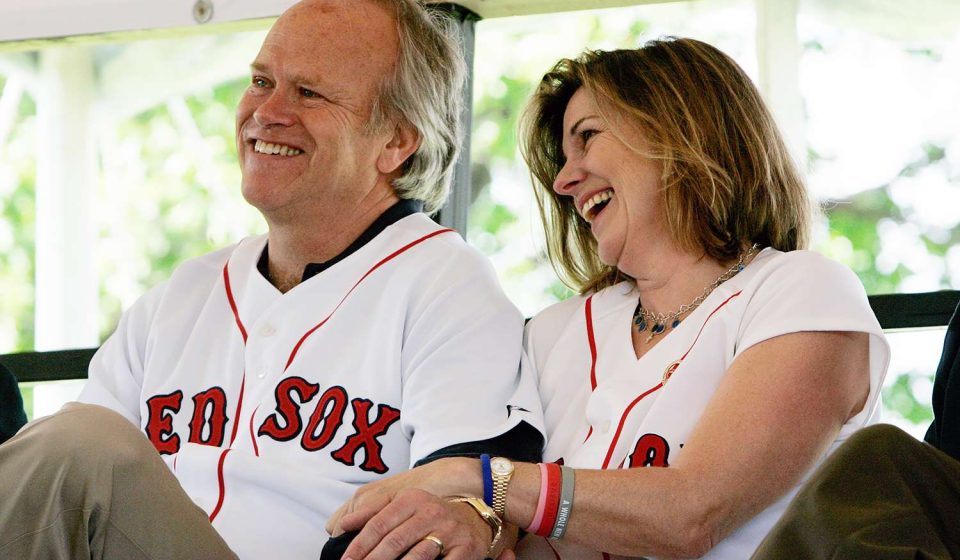
In Boston, athletic fields along the Charles River Esplanade were renovated and dedicated as Teddy Ebersol’s Red Sox Fields.
Teddy had been an enthusiastic Boston Red Sox fan.
The dedication transformed his name into something associated not only with tragedy, but also with children playing the sports he loved.
For families dealing with loss, remembrance can take many forms.
Sometimes it’s private.
Sometimes it’s a photograph kept beside a bed.
Sometimes it’s telling stories.
And sometimes it becomes a place where future generations of children can play.
Grief Never Meant Forgetting
Saint James never suggested that losing Teddy was something a parent simply “gets over.”
Years later, she continued speaking about him.
She continued acknowledging the pain.
But she also found ways to carry his memory while continuing to live.
That’s an important distinction.
Resilience after losing someone doesn’t mean the loss stops hurting.
It doesn’t mean the person becomes less important.
And it certainly doesn’t mean forgetting.
Sometimes resilience simply means learning how to carry love and grief at the same time.
Now Her Family Is Telling Her Story
Following Susan Saint James’ death at 80, audiences are understandably remembering the television work.
The Emmy.
McMillan & Wife.
Kate & Allie.
The decades of entertainment.
But her children have highlighted something else.
Not a television episode.
Not an award.
Not a red-carpet moment.
They remembered a grieving mother standing at her 14-year-old son’s funeral.
She had just experienced a loss that would permanently divide her life into before and after.
Yet when she stood to speak, she looked toward the people she loved and tried to help them.
That, her family says, was Susan.
A Legacy Larger Than Television
For audiences, Susan Saint James leaves behind decades of performances.
For her family, the legacy is necessarily different.
It’s the mother who helped them through tragedy while suffering herself.
The woman who reached out to other grieving parents because she understood the territory they had suddenly entered.
And the mother who continued carrying Teddy with her long after November 28, 2004.
Saint James once entertained millions of strangers.
But the story her family chose to emphasize after her death wasn’t about being famous.
It was about what she did when there were no scripts and no easy answers.
She lost her youngest son.
She grieved him for the rest of her life.
And somehow, in the middle of that grief, she kept looking for ways to help other people carry theirs.
Do you remember Susan Saint James best from Kate & Allie, McMillan & Wife, or from another part of her long career?