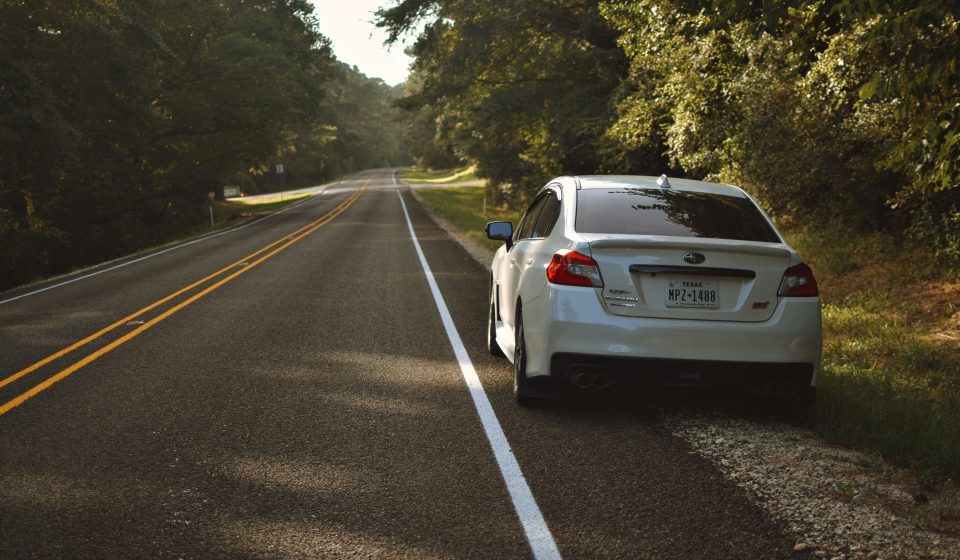

Most license plates aren’t designed to get your attention.
They’re identification markers—letters, numbers, a state name, perhaps a slogan—and most drivers barely notice them.
Then you pull up behind a car at a red light and see a plate that makes you look twice.
At first, the characters seem random.
You read them again.
Suddenly, the meaning clicks.
And now you’re laughing at a joke created with little more than a handful of letters and numbers.
That’s the peculiar appeal of the personalized license plate.
With extremely limited space, drivers have found ways to turn an ordinary piece of vehicle identification into a miniature joke, puzzle, tribute, nickname, or statement of personality.
The best examples accomplish something surprisingly difficult:
They tell you an entire story in just a few characters.
A License Plate Can Become a Tiny Puzzle
Personalized plates work because they force people to compress language.
There isn’t enough room for a normal sentence.
So drivers improvise.
Letters can represent entire words.
Numbers can replace sounds.
Vowels disappear.
Words get shortened.
Two ideas get squeezed together.
A combination that initially looks meaningless can suddenly become obvious once your brain decodes it.
Imagine examples in the style of:
GR8DAY
It takes only a moment to read it as “great day.”
Or:
LUV2DRV
“Love to drive.”
Neither requires a complete sentence.
The person looking at the plate fills in the missing information automatically.
That’s part of the fun.
The Cleverest Plates Make You Look Twice
A good personalized plate often has two stages.
First comes confusion.
Then comes recognition.
You might spend several seconds wondering what the combination means.
Maybe you quietly pronounce the letters.
Then you substitute a number for a sound.
And suddenly:
“Ohhh.”
That moment of recognition is what makes a clever plate memorable.
The driver has essentially created a tiny roadside riddle.
And unlike a bumper sticker, which can simply spell out the message, a license plate forces the owner to work within tight limitations.
Humor Is an Obvious Favorite
Some people simply want other drivers to laugh.
A personalized plate can turn an otherwise ordinary vehicle into part of the joke.
Imagine an enormous pickup truck with a plate suggesting that it’s tiny.
Or a tiny compact car carrying a name that sounds better suited to a monster truck.
The contrast creates the humor.
The vehicle itself becomes the setup.
The plate delivers the punchline.
Car enthusiasts can take this even further.
A plate might reference horsepower, a particular engine, a model nickname, manual transmission, electric driving, restoration work, or some mechanical quirk that only another enthusiast would immediately understand.
To most drivers, it may look like nonsense.
To the right person, it’s instantly recognizable.
Some Jokes Only Work on the Right Car
Context can completely change a plate’s meaning.
A word on its own might not be funny.
Put it on a particular vehicle and suddenly it is.
An electric-car owner might create a joke about charging.
Someone driving a very old car might joke about its age.
A sports-car owner could poke fun at speed—or at how rarely the car actually gets to use its performance in everyday traffic.
An off-road vehicle might carry a joke about mud.
A meticulously maintained classic could have a plate referencing its era.
That’s why photographs of clever plates often work so well online.
You need to see both the message and the vehicle to understand the full joke.
Other Plates Reveal a Hobby
Not everyone is trying to be funny.
For some drivers, the plate functions almost like a miniature biography.
A photographer might reference cameras.
A musician could incorporate an instrument or musical term.
A gamer might use a recognizable abbreviation.
A runner could reference a race distance.
A cook might squeeze a food joke into the available characters.
Sports fans frequently use team-related combinations.
The same happens with occupations.
Doctors, engineers, pilots, programmers, teachers, mechanics, and countless other professionals sometimes incorporate their work into personalized plates.
It’s a small way of saying:
This is part of who I am.
Pop Culture Gives Drivers Endless Material
Movies, television, books, music, and internet culture provide another enormous source of inspiration.
A few carefully chosen characters can reference a famous fictional character, song, quote, franchise, or meme.
The interesting part is that not everybody will understand it.
And sometimes that’s exactly the point.
Imagine two strangers stuck in traffic.
One sees the plate ahead and recognizes a reference to a favorite movie.
Everyone else sees random letters.
For those two people, however, there is an instant connection.
It’s almost like a private joke shared between people who have never met.
Some Plates Have Much Deeper Meaning
A personalized plate isn’t always designed to make strangers laugh.
Some carry emotional significance that outsiders may never understand.
Initials might represent someone important.
A date may commemorate a milestone.
A short combination might honor a family member.
Others can reference a pet, hometown, anniversary, career achievement, or personal experience.
To another motorist, the plate might seem ordinary.
To the owner, it can represent decades of memories.
That’s an important part of personalized plates that viral collections sometimes overlook.
The cleverest-looking combination isn’t necessarily the one that means the most.
Then There Are the Plates That Seem to Argue With the Car
Irony can produce some of the funniest combinations.
Picture a luxury car with a plate joking about being broke.
A large SUV might have a plate suggesting it’s miniature.
A tiny car might be given an absurdly intimidating nickname.
An older vehicle might joke about still running.
The contradiction between the message and what you’re looking at creates the punchline.
It’s a very efficient form of comedy.
No explanation required.
Numbers Become Letters—and Letters Become Sounds
Limited space has created its own strange language.
The number 2 can become “to” or “too.”
4 can become “for.”
8 can produce an “ate” sound.
A single letter can sometimes represent an entire word.
Vowels can disappear while the phrase remains readable.
That’s why personalized plates can look almost like another language to someone unfamiliar with them.
You don’t necessarily read every character literally.
You sound them out.
A plate can therefore function as a combination of spelling, phonetics, abbreviations, and visual clues.
The Restrictions Actually Encourage Creativity
If drivers could put an entire paragraph on the back of the car, there wouldn’t be much of a challenge.
The limited format is what makes the best plates interesting.
The owner needs to communicate something recognizable within the rules of the issuing jurisdiction.
That forces compromises.
Maybe the perfect combination is already taken.
Maybe it’s too long.
Maybe a different spelling is necessary.
Maybe a number has to substitute for a word.
Suddenly, creating a license plate becomes a puzzle.
The goal isn’t merely to find something meaningful.
It’s to find something meaningful that fits.
And Every State Has Rules
In the United States, personalized plates are administered at the state level, so the exact rules aren’t identical everywhere.
States can establish their own character limits, fees, availability requirements, plate designs, and review procedures.
A requested combination also generally has to be available.
Two drivers can’t simply claim the same personalized registration within the same plate category when uniqueness is required for identification.
Then there is content review.
Motor-vehicle agencies can reject proposed combinations under their applicable rules.
That means the personalized plate someone wants isn’t necessarily the plate the state will approve.
The Approval Process Has Created Its Own Controversies
Determining what should and shouldn’t appear on a government-issued license plate isn’t always simple.
Some proposed messages are obviously inappropriate.
Others can have multiple interpretations.
A sequence that appears harmless in one context might be offensive in another.
Slang changes.
Abbreviations change.
Internet culture changes extremely quickly.
A combination might also contain an innocent person’s initials while coincidentally resembling something completely different.
That creates an unusual challenge for agencies reviewing thousands of requests.
The line between personal expression and an acceptable government-issued registration can become complicated.
Availability Can Be the Hardest Part
Sometimes the perfect idea isn’t rejected.
It’s simply gone.
Someone else thought of it first.
Short, obvious words and popular references are particularly difficult because there are only so many combinations available.
That forces drivers to become more inventive.
Add a number.
Remove a vowel.
Reverse something.
Use phonetic spelling.
Find another reference.
What begins as a second choice can sometimes become more clever than the original idea.
Social Media Gave Vanity Plates a Second Life
Personalized plates once had a relatively small audience.
The owner saw them.
Nearby drivers saw them.
People in the parking lot saw them.
Then the moment disappeared.
Smartphones and social media changed that.
Now someone can photograph an especially clever plate and share it with thousands or even millions of people.
A joke intended for drivers in one town can suddenly travel around the world.
That has turned unusual license plates into a category of internet entertainment all their own.
People collect photographs of them.
They debate what cryptic ones mean.
They rank the funniest.
And occasionally, an ordinary driver becomes briefly internet-famous because of a joke attached to the back of a car.
The Best Ones Don’t Need an Explanation
There is a balance.
If a plate is too obvious, it may not feel particularly clever.
If it’s too cryptic, nobody understands it.
The sweet spot is somewhere in between.
You look at it.
You struggle for a second.
Then it clicks.
That’s the satisfying part.
It’s essentially a tiny communication challenge between the vehicle owner and everyone behind them.
Can you figure out what I meant?
When the answer is yes, the plate has done its job.
Cars Have Always Been Personal
Personalized plates also make sense because cars themselves often become expressions of identity.
People choose colors.
Wheels.
Interior accessories.
Decals.
Technology.
Performance modifications.
Restoration styles.
Some keep their vehicles completely original.
Others customize almost everything.
A personalized registration plate is simply another way of making a mass-produced vehicle feel individual.
Two people might own exactly the same model in exactly the same color.
One clever plate can make them feel completely different.
Sometimes the Plate Becomes More Memorable Than the Vehicle
You’ve probably experienced this yourself.
You can’t remember whether the car was a sedan or an SUV.
You don’t remember the color.
You certainly don’t remember the model year.
But you remember the plate.
That’s impressive considering how little space the owner had to work with.
A good personalized plate becomes almost like a nickname for the vehicle.
In some cases, it becomes the vehicle’s entire identity.
They Also Capture a Moment in Culture
Look at personalized plates from different decades and the references can reveal something about their era.
Technology changes.
Slang changes.
Popular television changes.
Music changes.
Internet terminology appears.
New occupations emerge.
Car culture evolves.
An abbreviation that seems obvious today might leave someone completely confused decades from now.
In that sense, personalized plates can become tiny cultural artifacts.
They capture what someone thought was funny, meaningful, fashionable, or worth announcing at a particular moment.
Not Everyone Loves Them
Of course, some people can’t understand the appeal at all.
Why pay extra to customize something as ordinary as a registration plate?
Why make strangers read a joke?
Why put personal information on a car?
Those are reasonable questions.
For some drivers, a plate is purely functional.
They’ll happily accept whatever combination the motor-vehicle agency assigns.
For others, that’s exactly why personalization is appealing.
If the plate has to be on the car anyway, why not make it interesting?
A Few Characters Can Say a Surprising Amount
That’s ultimately what makes clever license plates so entertaining.
They operate under severe limitations.
There isn’t room for explanation.
There isn’t room for context.
Sometimes there aren’t even enough characters to spell the words correctly.
Yet people still manage to communicate jokes, interests, memories, occupations, fandoms, and pieces of their personalities.
The limitation becomes the art form.
A few letters.
Maybe a number.
A car passing you on the highway.
And suddenly you’re smiling.
The Next Clever Plate Could Be Right in Front of You
Most of the vehicles you pass today will probably have ordinary plates.
You won’t remember them.
Then, eventually, you’ll see one that makes absolutely no sense.
You’ll stare at it for another second.
Read it aloud.
Swap the number for a word.
And suddenly the joke will appear.
That’s why the best personalized license plates are so difficult to forget.
They’re not just registrations.
They’re riddles traveling down the highway at 65 miles per hour.
And sometimes, a handful of characters is all it takes to make an otherwise ordinary drive a little more entertaining.
What’s the cleverest personalized license plate you’ve ever seen—and how long did it take you to figure out what it meant?