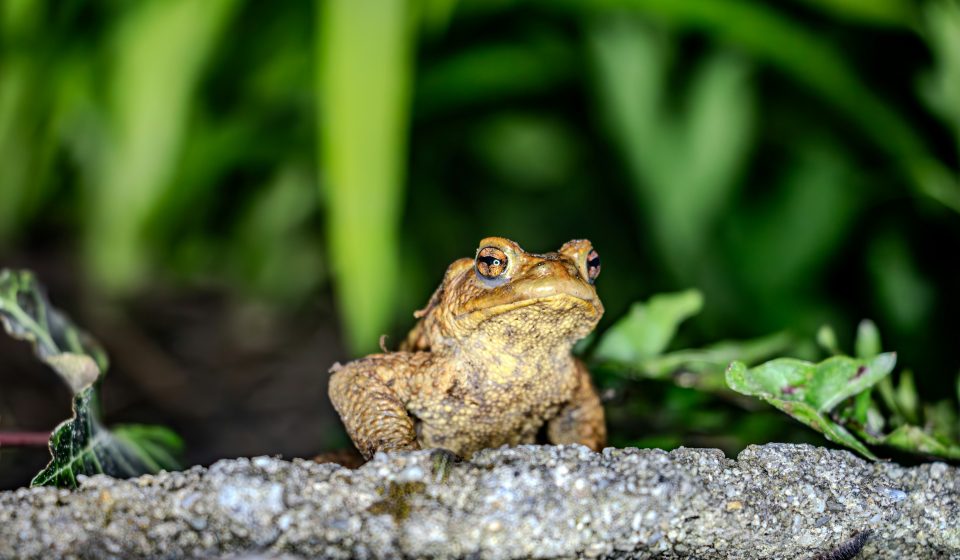
Found a Toad Near Your Home? Here’s What It Really Means—and Why You May Want to Leave It Alone

You open the door at night and there it is.
A small, round creature sitting almost perfectly still beside the porch.
Or perhaps you discover one in a damp corner of the garage, near a basement entrance, underneath a flowerpot, or—more surprisingly—somewhere inside the house.
A toad.
For some people, the first reaction is disgust.
For others, it’s curiosity.
And because frogs and toads have accumulated centuries of folklore, an unexpected visitor can also lead to a more unusual question:
Does finding a toad around your home mean something?
Biologically, the explanation is usually straightforward.
The animal is probably looking for some combination of shelter, suitable moisture, comfortable temperatures and food.
But culturally, toads have carried much more complicated meanings.
They have appeared in stories associated with transformation, fortune, longevity and supernatural ideas.
One particularly famous three-legged toad from Chinese tradition has a documented association with wealth and good fortune.
The key is not to confuse those traditions with biology.
A real toad appearing on your porch isn’t scientifically predicting that money is coming.
But it may still be doing something useful.
Why Would a Toad Come Near Your House?
To understand the visitor, start by forgetting symbolism for a moment.
Think like a toad.
Amphibians depend heavily on environmental conditions.
Unlike mammals, they don’t internally maintain their body temperature in the same way we do. They rely on their surroundings and behavior to warm up or cool down.
Their skin also makes moisture important.
Adult toads can spend considerable time away from open water, but they still need appropriate conditions and generally avoid becoming excessively dry.
A shaded area around a home can provide exactly the kind of temporary refuge they need.
Add insects and other small prey, and your porch can become an attractive hunting area.
Your Porch Light May Be Helping Create a Feeding Spot
Anyone who has left an outdoor light on during a warm evening has probably seen what happens.
Insects gather around it.
And where prey gathers, predators may follow.
Frogs and toads eat a variety of invertebrates. The National Park Service notes that frogs and toads commonly consume insects, spiders and worms.
That makes areas around houses potentially useful feeding locations.
A toad sitting quietly near a porch isn’t necessarily confused.
It may simply be waiting for dinner to come within reach.
Toads Are Ambush Hunters
One of the most interesting things about watching a toad is how little it seems to do.
It may sit motionless for long periods.
Then suddenly it moves.
That isn’t laziness.
Many frogs and toads use a sit-and-wait hunting strategy, watching for prey before striking. Their diets can include insects, spiders, worms and other small animals.
This is one reason gardeners often welcome toads.
They consume invertebrates that people may consider garden pests.
Penn State Extension, for example, describes toads as useful garden partners because they feed on grubs, slugs, snails and numerous insects.
So the toad beside your plants may be providing a small ecological service while you’re asleep.
Does One Toad Mean Your Yard Is Environmentally Healthy?
Not necessarily.
This claim needs some qualification.
Amphibians genuinely are important environmental indicators.
Their permeable skin and complex life cycles can make them sensitive to pollution, habitat change, disease, drought and other environmental stresses. Scientists therefore monitor amphibian populations as one way of studying ecosystem change.
But that doesn’t mean:
“I saw one toad, therefore my property is toxin-free.”
That’s too strong.
A single animal can wander through many environments.
Ecologists look at populations, species diversity, reproduction, abundance and changes over time—not simply the presence of one individual on someone’s doorstep.
So seeing toads around suitable habitat can certainly be interesting.
It just isn’t a home environmental-quality test.
Why Do Toads Look So Different From the Frogs People Imagine?
When people hear “frog,” they often picture a smooth, shiny animal beside a pond.
Toads tend to look different.
Many have comparatively dry-looking, rough or bumpy skin and spend substantial portions of their adult lives on land.
But the everyday distinction between “frog” and “toad” can be misleading.
Toads are frogs in the broader biological sense; the familiar animals commonly called “true toads” belong to the family Bufonidae.
And no, touching one does not give you warts.
That’s an old myth.
But That Doesn’t Mean You Should Handle One Casually
The wart myth is false.
That doesn’t make bare-hand handling ideal.
Amphibian skin is biologically important and permeable.
Residues on human hands—including lotions, chemicals and other substances—can potentially be harmful to amphibians. The National Park Service recommends leaving wild frogs and toads alone when possible and notes that residues on human hands may harm them.
There’s another reason for caution.
Toads possess skin glands that produce defensive secretions.
These secretions help discourage predators.
They don’t mean an ordinary toad is waiting to attack you.
But they are another reason not to rub your eyes or touch your mouth after handling one.
Dogs and Toads Can Be a Bad Combination
Pet owners should pay particular attention.
A curious dog may see a hopping toad and immediately investigate with its mouth.
That’s not something you want to encourage.
Toad defensive secretions can irritate predators, and some species produce toxins capable of causing serious poisoning in pets.
The risk varies dramatically by toad species and geographic location.
Virginia Cooperative Extension notes that although most frogs and toads in the United States do not produce lethal poisons, certain toad species in southern and southwestern parts of the country can produce toxins dangerous to small dogs or cats if ingested.
So if your pet mouths or bites an unidentified toad and develops symptoms such as excessive drooling, vomiting, weakness, abnormal behavior, tremors or seizures, seek veterinary advice promptly.
Don’t assume every toad encounter is harmless for a pet.
What Should You Do If the Toad Is Outside?
Usually?
Very little.
If the animal is outdoors, isn’t trapped and isn’t in immediate danger, leaving it alone is often the best option.
It knows how to be a toad better than we do.
You don’t necessarily need to relocate every wild animal that enters your yard.
Give it space.
Keep pets away.
Avoid spraying chemicals directly around it.
Allow it to move on when it’s ready.
The animal may disappear before morning.
What If It’s Inside the House?
That’s different.
A toad that has accidentally entered a house should generally be helped back outside rather than encouraged to become a roommate.
First, keep pets and children away.
Don’t chase it frantically around the room.
If possible, guide it gently into a suitable container without squeezing or injuring it.
Then release it outside in a sheltered location appropriate to the surrounding habitat.
The goal is simple:
minimal handling and minimal stress.
If you must handle an amphibian, avoid having chemicals, sanitizer, lotion, insect repellent or similar residues on your hands, and wash your hands afterward.
Don’t Relocate It Miles Away
Finding an animal near your home doesn’t usually mean it needs to be driven somewhere else.
Moving wildlife long distances can create additional problems.
The animal may be unfamiliar with the new habitat.
You can also unintentionally contribute to the movement of wildlife diseases between locations.
If you’re simply removing a toad that wandered indoors, returning it to suitable nearby outdoor habitat is generally more sensible than taking it on a road trip.
Don’t Try to Turn Every Wild Toad Into a Pet
A toad that repeatedly appears near your garden can become strangely familiar.
You may even start recognizing where it hides.
That doesn’t mean it needs to come inside.
Wild amphibians have specific environmental and dietary needs, and regulations regarding collection can vary.
Enjoying a wild animal doesn’t require possessing it.
Sometimes the best relationship with wildlife is simply allowing it to remain wild.
Can You Make Your Yard More Toad-Friendly?
If toads naturally occur where you live and you enjoy having them around, a wildlife-friendly yard can provide useful habitat.
Shelter matters.
So does access to appropriate moisture.
Dense vegetation, natural ground cover and sheltered areas can provide hiding places.
Avoid unnecessary pesticide use, particularly where amphibians are active.
A simple shaded shelter can also provide refuge in a garden.
Penn State Extension even discusses creating basic “toad abodes” as garden shelters.
The goal shouldn’t be to capture a toad and force it to stay.
It’s to create habitat that wildlife can choose to use.
Now, What About the “Hidden Meaning”?
This is where biology ends and culture begins.
Humans have assigned symbolic meanings to animals for thousands of years.
Owls.
Snakes.
Ravens.
Butterflies.
Frogs and toads are no exception.
Those beliefs can be historically and culturally interesting without being treated as scientific predictions.
A toad on your doorstep doesn’t objectively mean that wealth, transformation or spiritual change is about to enter your life.
But particular representations of toads genuinely do carry those meanings in some traditions.
The Famous Three-Legged Toad Has a Real Cultural History
One of the strongest examples comes from Chinese art and Daoist tradition.
The Smithsonian’s National Museum of Asian Art describes the Daoist immortal Liu Hai as frequently depicted with a three-legged toad.
Liu is also associated with strings of coins.
In this artistic tradition, Liu and the toad became symbols connected with wealth and good fortune.
That’s a documented cultural association.
But notice the distinction.
We’re talking about a specific symbolic tradition involving a particular mythical three-legged toad.
We’re not talking about scientific evidence that a wild toad entering your kitchen predicts financial prosperity.
Those are completely different claims.
Why Transformation Is an Easy Symbol to Understand
Frogs and toads also lend themselves naturally to ideas about transformation.
Their life cycle is dramatic.
A tadpole looks and lives very differently from the adult animal it eventually becomes.
During metamorphosis, the animal undergoes major changes as it develops from its aquatic larval form toward adulthood.
It’s easy to understand why humans might look at such a life cycle and use it metaphorically.
Change.
Transition.
Adaptation.
Growth.
Those are meaningful interpretations.
They’re simply interpretations—not messages being intentionally delivered by the animal.
There’s No Evidence the Toad Came to Deliver a Message
This is perhaps the most important distinction.
The toad isn’t sitting beside your door because it knows you’re facing a major life decision.
It didn’t arrive because your finances are about to improve.
It isn’t cleansing “stagnant energy” in any scientifically measurable sense.
And its appearance isn’t a prediction.
If symbolic interpretations are meaningful within someone’s cultural or spiritual practice, they can be appreciated as such.
But the biological explanation remains much simpler.
The toad probably found conditions it liked.
The Real Story Is Interesting Enough
In some ways, turning every wildlife encounter into a supernatural event can distract from what’s actually remarkable.
Consider what a toad already is.
It’s an amphibian capable of living across aquatic and terrestrial stages of life.
It participates in a food web as both predator and prey.
It consumes insects and other invertebrates.
Its skin makes it unusually responsive to environmental conditions.
Its ancestors belong to an ancient lineage of animals that existed long before humans started building porches for them to sit on.
That doesn’t need embellishment.
Nature is already interesting.
Why Amphibians Matter
Toads aren’t simply insect-eating garden visitors.
They’re part of a larger ecosystem.
Amphibians consume invertebrates and other prey.
They are then eaten by birds, reptiles, mammals, fish and other predators.
That places them on both sides of the food web.
The National Park Service describes amphibians as important components of terrestrial and aquatic ecosystems for precisely this reason.
Remove enough pieces from a food web and effects can spread well beyond one species.
That’s why amphibian conservation matters.
Their Sensitivity Is Also Their Vulnerability
The same biological characteristics that make amphibians useful environmental indicators can make them vulnerable.
Pollution.
Habitat destruction.
Disease.
Drought.
Changes to water quality.
Fragmentation of habitat.
These pressures can affect amphibian populations.
So when a toad appears in your garden, perhaps the most grounded response isn’t to ask what supernatural event it’s predicting.
It’s to recognize that you’re sharing space with wildlife whose survival depends on functioning habitat.
A Quiet Visitor Can Still Change Your Perspective
You don’t need to believe in omens to find meaning in the encounter.
Perhaps the toad reminds you how little of the natural world you normally notice.
While you’re sleeping, insects are moving through the garden.
Spiders are hunting.
Birds are resting.
Small mammals are passing through.
And somewhere beneath a plant or beside a wall, a toad may be waiting motionless for its next meal.
Your property isn’t isolated from nature.
It’s part of a larger environment.
So Should You Shoo It Away?
If it’s sitting safely outside, probably not.
You can simply leave it alone.
If it’s inside the house, move it outside gently.
If it’s somewhere dangerous—such as a road, pool, or area accessible to a curious pet—use reasonable judgment while minimizing handling.
And if you live somewhere with potentially dangerous invasive or highly toxic toad species, local wildlife guidance becomes particularly important.
Species and location matter.
There is no single rule for every toad in every part of the world.
The Real Meaning of a Toad at Your Door
Scientifically, it probably means something fairly ordinary.
There is suitable habitat nearby.
There may be prey available.
The animal found shelter or favorable conditions.
Culturally, you can find much richer interpretations.
Certain toad figures have represented wealth and good fortune.
The amphibian life cycle readily inspires ideas about transformation.
And different traditions have developed their own stories around these unusual animals.
Both perspectives can coexist—as long as we don’t confuse them.
One is biology.
The other is symbolism.
Perhaps that’s more interesting than pretending the toad is carrying a secret message.
The next time you find one sitting silently near your doorway, you don’t need to panic—and you don’t need to expect a financial windfall either.
Give it some space.
Keep curious pets away.
Take a moment to look at it.
Then remember that this strange little visitor is doing something humans sometimes forget how to do:
quietly finding its place in the world around it.