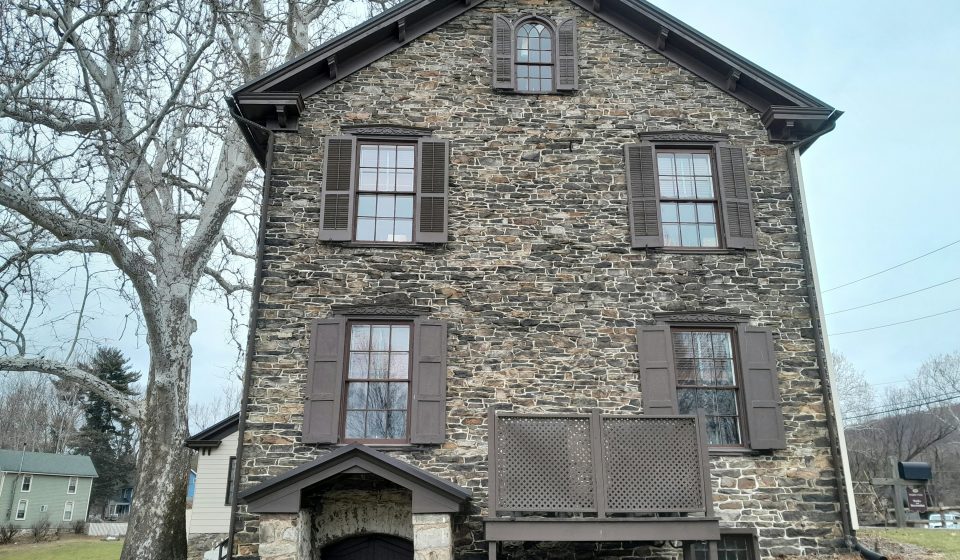
This 1920 Brick Home in Pennsylvania Is Listed for $190,000—and the Details Inside Take You Back in Time

For buyers who love old houses, sometimes the most interesting homes aren’t the ones that have been completely modernized.
They’re the ones where you can still see the past.
In Salisbury, Pennsylvania, a traditional three-story brick residence offers exactly that kind of opportunity.
Built around 1920 and reportedly listed for $190,000, the home combines the substantial exterior of an early-20th-century residence with interior details that are increasingly difficult to find in newer construction.
Hardwood floors.
Stained glass.
Decorative tile.
Detailed woodwork.
A prominent wooden staircase.
And there’s another feature that could make the property especially interesting for the right buyer:
A separate apartment above the garage.
For someone willing to take on the responsibilities that come with an older house, this Pennsylvania property could offer plenty of possibilities.
But as with any century-old home, the charm is only part of the story.
The Brick Exterior Immediately Sets It Apart
Before stepping through the front door, the house makes its age apparent in a good way.
Its substantial brick facade gives it the solid, traditional appearance associated with many homes from the early decades of the 20th century.
Brick has remained desirable for generations partly because of its durability and partly because it ages differently from many modern exterior materials.
On an older home, the masonry can become part of the architecture itself.
This house takes that traditional appearance across three stories, giving it considerably more visual presence than a smaller single-level property.
Then There’s the Entrance
One of the home’s notable exterior details is its double-door entrance.
Decorative tilework surrounds the area, creating a focal point before visitors even enter the house.
These are the kinds of details that can make an older home interesting.
They aren’t necessarily extravagant.
But they reflect an era when builders often incorporated decorative elements into ordinary residential architecture.
For a future owner interested in preservation, retaining features like these could help maintain the home’s original personality.
Their condition, however, should always be evaluated carefully.
A century of weather and use can affect masonry, mortar, doors and decorative finishes.
Inside, the Character Continues
The interior reportedly contains several features that old-house enthusiasts often look for.
Among them are hardwood flooring, stained-glass accents, decorative tile and substantial wooden trim.
Individually, none of those elements determines whether an old house is worth buying.
Together, however, they can create something that new construction often tries to imitate.
A sense of history.
Hardwood Floors Can Completely Change an Older Interior
Original or older hardwood flooring can become one of a historic home’s greatest visual assets when it remains in restorable condition.
Rather than immediately replacing older flooring, a buyer may want to determine whether it can be cleaned, repaired or refinished.
Years of scratches and wear don’t always mean a floor has reached the end of its life.
Sometimes restoration can reveal attractive wood underneath decades of use.
But condition matters.
A professional assessment is more valuable than assumptions based on photographs alone.
The Stained Glass Adds Another Layer
Stained glass has a different effect.
It doesn’t merely decorate a room.
It changes the light entering it.
Depending on where the glass is positioned, different colors can appear throughout the interior as daylight changes.
In an older property, stained glass can also become one of the features that most strongly communicates the home’s period character.
For a buyer interested in preservation, keeping those elements may be more appealing than replacing them with generic modern windows or finishes.
Don’t Overlook the Woodwork
Detailed wooden trim is another feature worth examining closely.
Modern homes can certainly include elaborate woodwork, but reproducing older craftsmanship throughout a large house can become expensive.
Existing molding, doors, staircase components and built-in details may therefore deserve careful consideration before any renovation begins.
Paint can be changed.
Wallpaper can be removed.
Lighting can be updated.
Original craftsmanship, once discarded, can be much harder to replace.
The Staircase May Be One of the Interior’s Best Features
With three levels of living space, the staircase naturally becomes an important part of the house.
The property description highlights a prominent wooden staircase with a built-in storage seat near its base.
It’s both decorative and practical.
In an older home, a staircase isn’t merely a way to move between floors.
It can become the architectural centerpiece connecting the entire interior.
Preserved woodwork around stairs can immediately communicate the age and craftsmanship of a property.
Three Stories Create Plenty of Possibilities
A multi-level home can provide flexibility that a smaller floor plan cannot.
Depending on the actual room arrangement, dimensions and condition, future owners might consider using the available space for combinations of bedrooms, guest rooms, offices, hobby areas or storage.
But three stories also create practical questions.
How comfortable are the stairs?
How effectively does the heating system serve every floor?
How much natural light reaches the interior?
Would accessibility become an issue for anyone in the household?
These questions are just as important as the number of rooms.
Then There’s the Apartment Above the Garage
This may be one of the property’s most intriguing features.
According to the description, there is a separate apartment above the garage.
That immediately creates several possibilities.
It could potentially provide privacy for visiting relatives.
It might work as guest accommodation.
Depending on the space, it could potentially become a home office or creative workspace.
Some buyers will inevitably think about rental income.
That’s understandable.
But that’s also where verification becomes essential.
Don’t Automatically Assume the Apartment Can Be Rented
A space that looks like an apartment isn’t automatically approved as an independent rental unit.
Before calculating potential income, a buyer would need to establish its legal and practical status.
That could include questions involving zoning, occupancy approval, building requirements, fire safety, utilities and other local regulations.
The apartment could add significant flexibility.
But its actual permitted use needs to be confirmed.
That’s especially important before including hypothetical rental income in a purchasing decision.
A $190,000 Price Will Get Attention
The reported asking price is $190,000.
For a substantial three-story brick home with historic details and additional space above the garage, that number may immediately attract buyers browsing older properties.
But price alone doesn’t tell us whether a house is a bargain.
A $190,000 century-old home requiring major structural and mechanical work can ultimately cost more than a more expensive property in better condition.
That’s why the next number matters just as much:
The renovation budget.
A 1920 Home Deserves a Serious Inspection
A house approaching or exceeding a century in age should be evaluated carefully before purchase.
The attractive features are easy to notice.
The expensive problems may not be.
A qualified inspection should help buyers understand the condition of major components such as the roof, foundation, masonry, electrical system, plumbing, heating equipment and windows.
Those aren’t glamorous details.
But they’re the details that can determine whether an old-house purchase becomes a rewarding restoration or a financial burden.
The Brickwork Deserves Special Attention
Brick can last for generations.
That doesn’t mean it requires no maintenance.
Mortar joints can deteriorate.
Moisture can create problems.
Previous repairs may have been completed with materials that aren’t ideal for older masonry.
A professional familiar with historic brick construction may be useful if visible deterioration raises concerns.
The goal isn’t to assume there is a problem.
It’s to understand what you’re buying.
Electrical and Plumbing Systems Matter More Than Cosmetic Updates
It’s easy to walk through an older house and immediately imagine new paint colors or a redesigned kitchen.
Those improvements can wait.
Infrastructure comes first.
If major electrical, plumbing or heating work is required, those costs can dramatically affect the renovation budget.
A beautiful staircase doesn’t compensate for an unsafe electrical system.
Stained glass doesn’t fix a failing roof.
The best renovation plans prioritize essential systems before cosmetic transformation.
Older Homes Can Also Contain Materials That Need Professional Assessment
Renovating a house from this era can involve materials or construction methods that aren’t commonly used today.
Before demolition or extensive remodeling, appropriate professional assessment can help identify anything requiring specialized handling.
This isn’t a reason to avoid old homes.
It’s a reason to renovate them intelligently.
Knowing what you’re dealing with before walls are opened can prevent unpleasant surprises later.
A Renovation Doesn’t Have to Erase the Past
One of the biggest mistakes with character-filled homes can be assuming that modernization requires removing everything old.
It doesn’t.
The most successful renovations often combine old and new.
Restore suitable hardwood.
Preserve distinctive woodwork.
Repair decorative details where practical.
Improve lighting.
Update essential systems.
Modernize kitchens and bathrooms thoughtfully.
The goal doesn’t have to be turning a 1920 house into something that looks as though it was built yesterday.
Sometimes the age is exactly what makes the property desirable.
The Kitchen and Bathrooms Can Be Modern Without Feeling Out of Place
These spaces often require the most attention in older homes.
Layouts designed generations ago may not perfectly match modern expectations.
Plumbing fixtures may need replacement.
Storage may be limited.
Lighting may need improvement.
But updates can still respect the surrounding architecture.
Materials, cabinetry and finishes can be chosen to provide modern functionality without completely disconnecting the rooms from the rest of the house.
Energy Efficiency Is Another Consideration
Large older homes can require more energy to heat and cool than smaller modern properties.
Three stories add another variable.
Windows, insulation, heating equipment and air sealing can all affect comfort and operating costs.
Potential buyers should therefore consider not only the purchase price but also the ongoing cost of living in the house.
A renovation budget should account for improvements that may make the property more comfortable and efficient over time.
The Garage Apartment Could Change How a Family Uses the Property
Even without rental income, separate living space can be valuable.
An adult family member might appreciate additional privacy.
Guests could stay without occupying the main house.
Someone working from home might prefer a workspace physically separated from household activity.
A creative owner could potentially use it as a studio or hobby area if the layout and applicable rules allow.
Flexibility can be valuable even when it doesn’t generate income.
But Maintenance Doesn’t Stop at the Main House
Additional space also means additional responsibility.
Another living area may involve more heating, cleaning, repairs and maintenance.
The garage itself needs evaluation.
So does the apartment above it.
If the space has separate plumbing, electrical equipment or heating, those systems also become part of the property’s overall condition.
More square footage isn’t automatically better if the additional area requires substantial work.
Is $190,000 a Good Deal?
There isn’t enough verified information in the supplied description to answer that responsibly.
To determine value, a buyer would need additional facts.
Verified square footage.
Lot size.
Number and configuration of rooms.
Condition of major systems.
Recent comparable sales.
Local market conditions.
Necessary repairs.
And the legal status and condition of the garage apartment.
Only then can the asking price be evaluated meaningfully.
The Renovation Budget Could Be the Deciding Factor
Imagine two buyers looking at the same property.
One sees a $190,000 house.
The other sees a $190,000 purchase plus the cost of every necessary repair over the next several years.
The second perspective is usually more useful.
Older homes can be rewarding projects.
But successful projects begin with realistic numbers.
A renovation budget should account for materials, labor, permits when required, essential repairs and a contingency for unexpected discoveries.
Unexpected work is particularly important to consider in an older building.
This Home Won’t Appeal to Everyone
Some buyers want a house they can move into without changing anything.
Others want modern open layouts and minimal maintenance.
For those buyers, a century-old three-story property may not be ideal.
But there’s another kind of buyer.
Someone who sees worn hardwood and imagines it refinished.
Someone who notices old stained glass before noticing outdated finishes.
Someone who looks at detailed trim and wants to preserve it.
Someone willing to take on a project because the finished home could have a character that is difficult to recreate from scratch.
For that person, a property like this can be much more interesting.
The Best Features Are the Ones That Can’t Easily Be Replaced
Paint is replaceable.
Appliances are replaceable.
Light fixtures are replaceable.
Even kitchens can be redesigned.
But the architectural identity of an old house is different.
Brickwork.
Stained glass.
Old hardwood.
Original trim.
A substantial wooden staircase.
Those features are part of the reason a house built around 1920 still attracts attention more than a century later.
The Smart Approach Is to Preserve Selectively
Preservation doesn’t mean refusing to change anything.
A home still has to function for the people living there.
The goal should be determining which features contribute most to the property’s identity and which areas genuinely need modernization.
That balance can produce something more interesting than either extreme.
Not a museum.
Not a generic modern interior.
A comfortable home that still remembers when it was built.
Before Falling in Love, Look Closely
Old houses are easy to romanticize.
That’s part of their appeal.
A stained-glass window catches the afternoon light.
The staircase looks beautiful.
The brick exterior feels substantial.
And suddenly you’re imagining furniture in every room.
That’s when practical thinking becomes most important.
Bring in professionals.
Understand the structure.
Review the systems.
Verify property information.
Investigate the garage apartment.
Estimate repairs.
Then decide.
A Home With More Than 100 Years Behind It
A house built around 1920 has already existed through enormous changes in American life.
Families have changed.
Technology has changed.
Heating, electricity and plumbing standards have changed.
Interior design has changed repeatedly.
Yet the house remains.
That’s part of what attracts people to historic and older properties.
You’re not starting with a blank slate.
You’re becoming the next person responsible for a building that already has a story.
Could This Be Someone’s Next Restoration Project?
Possibly.
The reported $190,000 asking price provides an accessible-looking starting point compared with many expensive historic homes.
The brick exterior creates immediate curb appeal.
Inside, hardwood flooring, stained glass, decorative tile and detailed woodwork offer elements worth considering for preservation.
The three-story layout provides space.
And the apartment above the garage adds another layer of flexibility.
But none of those advantages eliminates the need for careful due diligence.
Final Thoughts
This traditional brick residence in Salisbury, Pennsylvania, appears to offer something increasingly difficult to find in newer construction:
Character that has developed over more than a century.
Built around 1920 and reportedly listed for $190,000, the three-story home combines a substantial brick exterior with hardwood floors, stained glass, decorative tile, detailed woodwork and a prominent wooden staircase.
Then there’s the apartment above the garage—a feature that could potentially provide additional flexibility depending on its condition and permitted use.
For the right buyer, this could be the beginning of an interesting restoration.
For the wrong buyer, the maintenance demands of a large older house could become overwhelming.
That’s why the smartest approach is neither to dismiss it because it’s old nor fall in love with it simply because it’s charming.
Inspect it.
Understand it.
Budget realistically.
And preserve the details that made it interesting in the first place.
Because after more than 100 years, the most valuable thing about a house like this may not be making it look completely new.
It may be giving it another century without erasing the character that helped it survive the first one.