I Thought My Carpenter Installed One Stair Baluster Upside Down—Then He Said It Was Intentional

After weeks of renovation, I thought the hardest part was finally behind us.
The dust was settling, the tools were disappearing, and our new staircase was finished.
At first glance, it looked exactly the way I had imagined.
Then I noticed something.
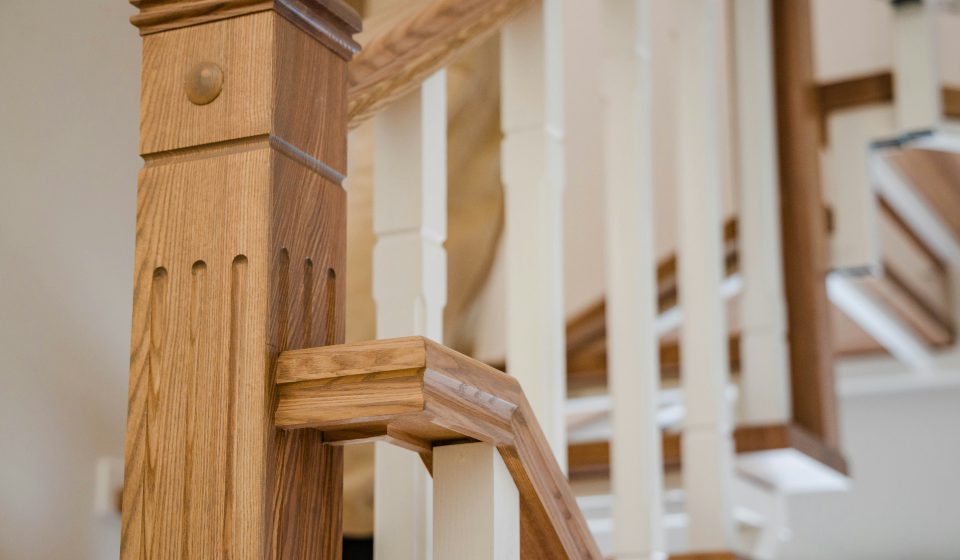
One of the white balusters looked different from all the others.
I stared at it for a few seconds, convinced I was imagining things.
But the longer I looked, the more obvious it became.
The decorative pattern didn’t match.
It almost looked as though one baluster had been installed upside down.
After spending so much time and money on the renovation, I was frustrated.
How had nobody noticed?
I called the carpenter expecting him to apologize and arrange a repair.
Instead, he surprised me.
He said the difference was intentional.
And that sent me down an unexpected rabbit hole about an old idea sometimes associated with craftsmanship: the deliberately imperfect detail.
At First, I Thought It Was Simply a Mistake
Once you notice something that’s out of place, it can become almost impossible to stop looking at it.
Every other baluster followed the same visual pattern.
Then there was that one.
Different.
My immediate assumption was obvious.
Someone had made a mistake during installation.
Perhaps a worker had picked up the piece, installed it in the wrong orientation and never noticed.
That explanation seemed far more believable than someone intentionally disrupting a carefully repeated staircase design.
But when I contacted the carpenter, he didn’t react the way I’d expected.
According to him, it wasn’t necessarily an accident.
Why Would Anyone Intentionally Make One Baluster Different?
There are several stories and traditions associated with intentionally imperfect details in architecture, woodworking, quilting and other crafts.
One popular explanation is that craftspeople sometimes left a small imperfection in their work as a reminder that human creations are not perfect.
Another interpretation treats the unusual piece almost like a maker’s signature—a tiny detail that distinguishes handmade work from something completely uniform.
And then there are decorative traditions in which one intentionally different element is simply meant to attract the eye.
But there’s an important catch.
There is no universal carpentry rule requiring one staircase baluster to be installed upside down.
So seeing one doesn’t automatically prove that you’re looking at an ancient tradition.
Sometimes an Upside-Down Baluster Really Is Just a Mistake
This is where viral explanations can become misleading.
An unusual baluster might have been intentional.
It might also have been installed incorrectly.
Or perhaps it isn’t upside down at all.
Some turned balusters have designs that can look surprisingly different depending on their orientation, spacing and the surrounding pieces.
Manufacturing differences can also make one piece stand out.
Without knowing who built the staircase and why, appearance alone cannot establish the explanation.
In my case, what mattered was that the carpenter said the difference had been deliberate.
That made me curious about why craftspeople sometimes choose imperfection on purpose.
The Idea of the “Perfect Imperfection”
Perfect repetition is everywhere in modern manufacturing.
Machines can produce hundreds or thousands of nearly identical components.
Handmade work is different.
Small variations can reveal that human hands were involved.
That doesn’t mean poor workmanship should be celebrated.
A loose railing isn’t charming.
Unsafe spacing isn’t artistic.
A structurally defective staircase isn’t an example of craftsmanship.
But a harmless visual variation can be something entirely different.
It may be decorative rather than functional.
There’s a Big Difference Between Imperfect and Unsafe
This distinction is especially important with staircases.
Balusters aren’t merely decoration.
Together with the railing system, they can form part of a safety barrier intended to help prevent falls.
That means an unusual-looking baluster should never automatically be dismissed with:
“Oh, that’s just an old tradition.”
If something appears loose, improperly secured, unusually spaced or structurally questionable, it should be evaluated appropriately.
Aesthetic irregularity and construction defects aren’t the same thing.
Why Balusters Are So Noticeable
A staircase naturally creates repetition.
Baluster.
Gap.
Baluster.
Gap.
Baluster.
Your eyes quickly learn the pattern.
That’s why even a small difference can become surprisingly obvious.
It’s similar to looking at a row of identical windows and discovering that one is slightly different.
Your brain notices interruptions in patterns.
On a long staircase railing, one reversed or differently shaped spindle can immediately become the focal point.
Sometimes you won’t notice it for days.
Then, once you see it, you can’t unsee it.
Could It Be a Craftsman’s Signature?
Possibly—but don’t assume so without evidence.
Throughout craft traditions, makers have used signatures, marks, dates, symbols and distinctive design choices to identify their work.
A deliberately different component could theoretically serve a similar purpose.
But that doesn’t mean every odd baluster is a hidden signature.
If you’re dealing with an older home and want to know whether a particular detail has historical significance, documentation about the house or evaluation by someone familiar with local architectural history may be more reliable than an internet legend.
Another Explanation: Breaking Up Repetition
Designers sometimes introduce variation simply because complete repetition can feel too rigid.
One unexpected feature can create visual interest.
You see the same concept in many forms of design.
A contrasting tile.
A different cabinet handle.
One unusual brick.
An accent chair.
A differently patterned piece of trim.
In those situations, the variation doesn’t need a mystical meaning.
It’s simply design.
But Why Put It Near the End?
That was another question that bothered me.
If you’re going to intentionally make one baluster different, why not place it in the middle where everyone can see it?
Perhaps that’s exactly why some people wouldn’t.
A subtle imperfection can function almost like an Easter egg.
It’s there for the person who eventually notices.
It doesn’t dominate the staircase.
It rewards observation.
Of course, that’s an interpretation—not a universal rule.
The actual reason depends on the person who designed or installed the railing.
The Internet Has Plenty of Explanations
Once you start searching for deliberately imperfect architecture, you’ll encounter all kinds of stories.
Some are associated with humility.
Some with religious beliefs.
Some with superstition.
Some with craftsmen leaving personal marks.
Others are repeated so often that they begin to sound like established historical facts even when the evidence is uncertain.
That’s why it’s worth separating an interesting tradition from a proven explanation for a particular house.
A good story isn’t automatically a documented fact.
Old Houses Are Full of Details Like This
One reason people become fascinated with older homes is that they often contain features that don’t feel completely standardized.
Trim may vary slightly from room to room.
Floorboards can have unusual repairs.
A staircase may contain a small decorative difference.
Hardware may have been replaced during different decades.
Sometimes those details reveal genuine history.
Other times they’re simply the result of generations of repairs and renovations.
The mystery is part of the appeal.
Renovations Can Erase Those Details
Modern renovation often emphasizes consistency.
Everything matches.
Every line is straight.
Every component is selected from the same catalog.
There’s nothing wrong with that.
But sometimes an older handmade detail disappears in the process.
That’s why homeowners renovating historic properties often face a decision:
Should everything be made perfectly uniform?
Or should some of the home’s unusual character remain?
There’s no single correct answer.
In a New Renovation, You Should Still Ask Questions
If you’ve just paid for a new staircase and discover something that looks wrong, you’re completely justified in asking the contractor about it.
Don’t assume you’re supposed to appreciate an “intentional imperfection.”
Ask.
Was this specified in the design?
Was the piece intentionally oriented differently?
Is it structurally installed correctly?
Can it be changed if you don’t want it?
Those are reasonable questions.
After all, an intentional design decision should ideally be something the homeowner understands and accepts.
“Traditional” Doesn’t Automatically Mean You Have to Like It
Even if a carpenter deliberately installed a different baluster as a nod to an old craft tradition, that doesn’t mean every homeowner has to keep it.
It’s your staircase.
If the visual inconsistency bothers you every time you walk past it, discuss the options with the contractor.
Tradition can explain a choice.
It doesn’t automatically override personal preference.
Before Changing It, Look Carefully
There is one thing I’d recommend before immediately replacing an unusual feature.
Take a photograph.
Then step back.
Look at the entire staircase rather than focusing on the single baluster.
Ask whether the difference affects function or only appearance.
And if the home has historical significance, consider whether the detail might be original before removing it.
Sometimes what initially looks like an annoying mistake becomes one of the features you eventually appreciate most.
Other times, you’ll still want it fixed.
Both reactions are reasonable.
Safety Comes Before the Story
Whatever explanation you hear, staircase safety is more important than folklore.
If a railing moves unexpectedly, a baluster is loose, openings appear unsafe, or anything about the installation seems structurally questionable, have it checked by an appropriately qualified professional.
Building requirements vary by location, so don’t rely on a viral post to determine whether a railing system is compliant.
An interesting story about craftsmanship cannot make an unsafe staircase safe.
I Looked at the Staircase Differently Afterward
Initially, I saw an error.
One annoying piece ruining an otherwise consistent pattern.
After hearing that it had been intentional, I started seeing it differently.
Not necessarily as some mysterious ancient symbol.
Not as proof of a universal carpenter’s tradition.
Just as a reminder that handmade work doesn’t always have to look as though it came off an automated production line.
There can be personality in a tiny irregularity.
Now It’s the First Thing I Show People
Ironically, the baluster that initially irritated me became the most interesting part of the staircase.
Most visitors don’t notice it immediately.
Then I point toward the railing.
“See anything unusual?”
Their eyes move across the row.
One.
Two.
Three.
Then they stop.
“Wait—is that one upside down?”
And suddenly an ordinary staircase becomes a conversation.
The Real Answer May Be Simpler Than the Legend
If you discover one unusual baluster in your own home, there are several possibilities.
It could be intentional.
It could be decorative.
It could reflect a particular craft tradition.
It could be a replacement from another period.
Or someone might simply have installed it differently by mistake.
Without documentation or information from the person who installed it, you may never know for certain.
And that’s important whenever photographs like this circulate online.
A different-looking baluster is real. The story explaining why it’s different still needs evidence.
The Bottom Line
If you notice what appears to be an upside-down baluster on a staircase, don’t immediately assume the contractor made a mistake—but don’t automatically believe an elaborate historical explanation either.
Ask who installed it.
Check whether the difference is intentional.
Make sure the railing is structurally sound.
And if someone tells you it’s part of an old tradition, treat that as something worth investigating rather than unquestionable fact.
Sometimes craftspeople intentionally include small variations.
Sometimes homeowners preserve unusual details because they add character.
And sometimes a baluster really was installed the wrong way around.
The interesting part is finding out which explanation applies to your staircase.
Because after weeks of renovation, the tiny detail that initially looks like the most frustrating mistake in the house might eventually become the one feature everyone remembers.
Editor’s note: The photograph and scenario should not be treated as proof of a universal carpentry tradition. There is no general rule that stair builders must install one baluster upside down. Explanations involving intentional imperfections, craft traditions or symbolism can vary and should not be attributed to a specific staircase without supporting evidence. Any concern involving railing or staircase safety should be evaluated according to applicable local requirements and, when appropriate, by a qualified professional.