My Dad Charged Me $250 a Month for Five Years—After His Funeral, His Best Friend Gave Me a Box That Changed Everything

For five years, I gave my father $250 every month.
It didn’t sound like an enormous amount to everyone else.
To me, it was.
There were months when that $250 meant counting every dollar left for groceries.
Months when I postponed buying clothes I genuinely needed.
Months when I looked at my worn-out work shoes and told myself they could survive a little longer.
Still, Dad expected the rent.
And every month, I paid it.
What made it harder wasn’t simply the money.
It was the feeling that I was struggling beneath my own father’s roof while he watched without saying much at all.
Our relationship had never been particularly warm.
Dad wasn’t the type to ask how I was feeling.
He rarely said he was proud of me.
And I couldn’t remember the last time he’d simply said, “I love you.”
So I came to believe something painful:
Maybe having me in his house really was just a financial arrangement to him.
Then my father died.
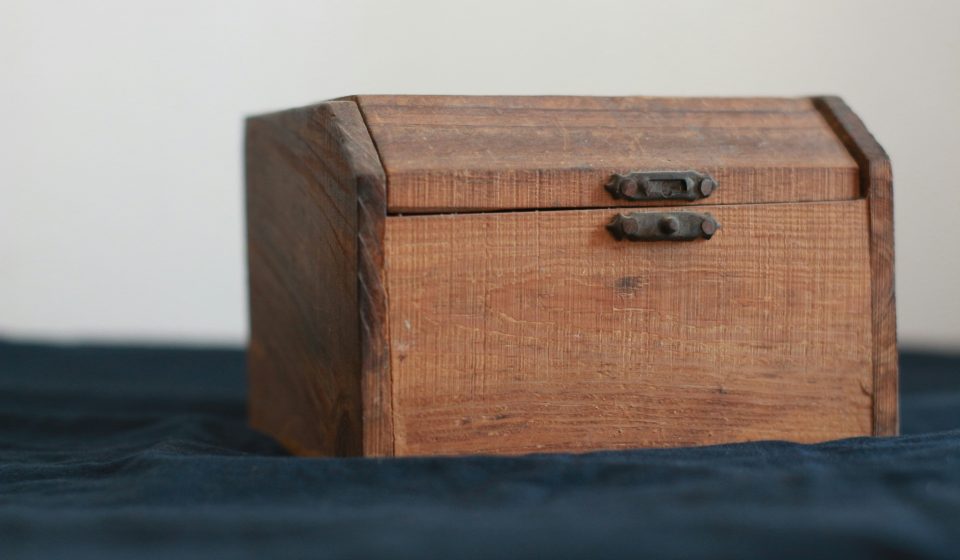
Three days after his funeral, his oldest friend arrived at my door carrying a heavy wooden box.
What I found inside forced me to reconsider everything I thought I understood about my father.
But it didn’t erase the years that had hurt.
$250 Every Month, No Exceptions
Dad introduced the rent arrangement as part of being an adult.
If I was going to live under his roof, I was expected to contribute.
There was nothing inherently unreasonable about that idea.
Plenty of adult children contribute toward household expenses.
The problem was how difficult those payments sometimes became for me.
My finances were already stretched thin.
After transportation, food, utilities and other basic expenses, there often wasn’t much left.
But the rent was fixed.
$250.
Every month.
For five years.
I made sure Dad got it.
Some Months Were Harder Than Others
I learned how to stretch groceries.
I learned which purchases could wait another week.
Then another month.
Clothing became something I replaced only when absolutely necessary.
My work shoes were probably the clearest example.
They were worn.
I knew they needed replacing.
But when you’re counting money carefully, even something necessary can begin to feel like a luxury.
I’d look at them and think:
Next paycheck.
Then another expense would appear.
So the shoes stayed.
And Dad still got his $250.
What Hurt Was That He Seemed Not to Notice
If he’d acknowledged that I was struggling, perhaps things would have felt different.
But Dad rarely talked about emotions.
He didn’t sit beside me and explain why he thought the arrangement was important.
He didn’t reassure me that he believed in me.
At least from my perspective, there was only the expectation.
Pay your rent.
Handle your responsibilities.
Keep moving.
That was how Dad seemed to approach life.
And gradually, I started interpreting his silence as indifference.
We Lived Together, but Sometimes Felt Like Strangers
There’s a particular kind of loneliness that comes from being physically close to someone while feeling emotionally distant from them.
Dad could be in the next room.
I could hear him moving around the house.
We could share the same roof and the same ordinary routines.
Yet there were times when I felt as though there were miles between us.
Our conversations were often practical.
Bills.
Schedules.
Things around the house.
The kinds of subjects that allow two people to speak without ever discussing what they actually feel.
I wanted more.
I just didn’t know how to ask for it.
And Dad apparently didn’t know how to offer it.
Eventually, Resentment Crept In
I didn’t wake up one morning suddenly angry at my father.
It happened gradually.
Another rent payment.
Another difficult month.
Another conversation that never became the conversation I actually wanted.
I’d hear other people talk about parents helping their adult children save money.
Helping with deposits.
Helping them get established.
Giving them a little breathing room while they figured out adulthood.
Then I’d think about my own situation.
I was paying Dad while struggling to stay afloat.
I began wondering whether he understood how difficult things were for me.
Eventually, I wondered something worse.
Maybe he understood perfectly well and simply didn’t care.
Then He Was Gone
Death has a cruel way of ending conversations that haven’t happened yet.
After Dad died, grief came mixed with questions.
I wasn’t only mourning him.
I was mourning the possibility that someday we might finally understand each other.
I had always imagined there would be more time.
Maybe one day he’d soften.
Maybe one day I’d ask him why he’d been so distant.
Maybe one day he’d tell me what he had never been able to say.
Then suddenly there was no “one day.”
There was only the funeral.
And silence.
Three Days Later, Someone Knocked on My Door
It was Arthur.
He had been one of Dad’s oldest and most trusted friends.
Seeing him so soon after the funeral immediately brought everything back.
But Arthur hadn’t come simply to check on me.
He was carrying something.
A heavy wooden box.
It was sealed.
He handed it to me carefully.
Dad, he explained, had left something important for me.
I was supposed to open it when I felt ready.
Then the box was mine.
I Didn’t Know Whether I Wanted to Open It
For a while, I simply looked at it.
What could possibly be inside?
Documents?
Old photographs?
Something Dad had kept from years ago?
Part of me wanted answers.
Another part was afraid of what those answers might be.
Grief can make ordinary objects feel impossibly heavy.
That box seemed to contain the last conversation I would ever have with my father.
Eventually, I opened it.
The First Thing I Saw Was Paperwork
Inside were neatly arranged financial documents.
There was also a worn leather-bound notebook.
I recognized Dad’s handwriting almost immediately.
And then I saw the letter.
It was addressed to me.
My hands began trembling.
But before reading the letter, I started looking through the financial records.
At first, I didn’t understand what I was seeing.
Then I noticed the deposits.
$250
There it was.
Again.
And again.
And again.
The amount was painfully familiar.
$250.
My rent.
I kept looking through the statements.
Month after month, the payments matched what I had given Dad.
The money hadn’t simply disappeared into household expenses.
According to the records he’d left behind, Dad had been depositing those payments into a savings account intended for me.
I stared at the paperwork.
Then I started over from the beginning.
He Had Been Saving My Rent
The realization was difficult to process.
Every month when I had handed Dad $250, I assumed it was gone.
Rent.
His money.
Payment for living in his house.
Instead, he’d been putting it away.
But there was more.
The records indicated that Dad had also been contributing his own money.
He had been matching what I paid.
Quietly.
Without telling me.
For five years.
I Didn’t Know Whether to Cry or Get Angry
My first reaction wasn’t simple gratitude.
How could it be?
I thought about all those months.
The groceries I’d stretched.
The clothes I hadn’t bought.
Those worn-out shoes.
The stress of making sure Dad got his money.
The resentment.
The nights when I’d wondered whether my own father cared that I was struggling.
Now I was looking at evidence that he’d been planning for my future the entire time.
Part of me wanted to hug him.
Part of me wanted to demand an explanation.
But he wasn’t there anymore.
Why Didn’t He Just Tell Me?
That question hurt almost as much as everything else.
If Dad had said:
“I’m making you save.”
Would I have understood?
If he’d explained that he was trying to build a financial foundation for me, would those five years have felt different?
Almost certainly.
I might still have complained.
I might still have wanted the $250 for something else.
But I wouldn’t have spent years believing the money represented emotional distance.
Dad’s plan may have been financially thoughtful.
His communication had been devastatingly poor.
Then I Opened His Notebook
The financial statements explained the money.
The notebook began explaining the man.
Dad had written things he apparently couldn’t say aloud.
As I read, a pattern emerged.
He knew there was distance between us.
He knew I didn’t always feel loved.
That realization stopped me.
I’d spent years assuming he simply didn’t notice.
But he had noticed.
He just hadn’t known how to fix it.
Dad Had His Own History
According to what he’d written, emotional warmth hadn’t been something he’d grown up with either.
He understood responsibility.
Work.
Providing.
Keeping a roof over your family’s head.
Making sure practical needs were met.
Those were things he could measure.
Feelings were different.
He didn’t know how to say what he felt.
And somewhere along the way, he had convinced himself that providing was enough.
If the house was there, that meant love.
If the bills were handled, that meant love.
If he was quietly saving money for my future, surely that meant love too.
To him, perhaps it did.
To me, it hadn’t felt that way.
Children Can’t Read Their Parents’ Minds
That became one of the hardest truths in the box.
Good intentions aren’t automatically visible.
A parent can sacrifice quietly and believe the sacrifice speaks for itself.
But a child—even an adult child—may experience only the silence.
Dad knew what was in his heart.
I didn’t.
I could only judge what I experienced.
And what I experienced was distance.
Then I Read His Letter
I’d saved it for last.
Maybe because I knew it would be the hardest part.
The handwriting was unmistakably his.
Suddenly Dad didn’t feel quite as far away.
I began reading.
And there, on paper, were the things I’d wanted from him for years.
He loved me.
He regretted making me question that love.
He understood, too late, that a home should have been more than a place where I struggled to meet another financial obligation.
It should have felt safe.
Comforting.
Like somewhere I belonged.
Those Were the Words I’d Waited Years to Hear
I cried.
Not because everything had suddenly become perfect.
It hadn’t.
I cried because the person I’d spent years trying to understand had finally explained himself when I could no longer answer him.
There was relief.
Anger.
Gratitude.
Grief.
All of it arrived together.
I finally had the reassurance I’d wanted.
But I couldn’t hear Dad say it.
I couldn’t ask him why he’d waited.
I couldn’t tell him what those years had felt like.
I couldn’t hug him.
The letter gave me closure.
It also reminded me why some things shouldn’t be left until the end.
The Money Changed My Circumstances
For years, financial independence had felt distant.
Suddenly, there was a foundation.
The savings meant I could seriously consider getting my own apartment.
I could finally replace those worn-out shoes without calculating what essential expense I’d have to sacrifice.
For the first time in a long time, I could imagine taking a step forward without immediately worrying that one unexpected bill would knock me backward.
Dad had wanted that for me.
I could finally see it.
But Money Couldn’t Rewrite the Past
This mattered.
It would have been easy to turn Dad’s secret savings into a perfect ending.
He wasn’t cruel after all.
Everything was wonderful.
The pain disappeared.
But that wouldn’t have been true.
Dad’s generosity was real.
So was my loneliness.
His intentions were loving.
So was the damage caused by never communicating them.
Both things could exist at once.
Understanding someone doesn’t require pretending they never hurt you.
A Financial Gift and an Emotional Failure Can Exist Together
Dad had done something extraordinary with the money.
He had also failed to give me something that cost nothing.
Reassurance.
Encouragement.
Open affection.
A simple explanation.
The strange thing was that he’d apparently spent years planning how to support my future while never realizing how badly I needed emotional support in the present.
That contradiction became the part of his story I thought about most.
Maybe Dad Thought Actions Were Enough
Many people are raised to believe love is something you demonstrate rather than discuss.
You work.
You provide.
You repair things.
You show up.
You save money.
You make sacrifices nobody sees.
Those actions can absolutely express love.
But relationships become fragile when one person believes their actions are obvious and the other person has no idea what those actions mean.
Love may be present.
Communication is what makes it understandable.
Silence Creates Its Own Explanation
When people don’t tell us what they mean, we often create explanations ourselves.
Dad was distant.
So I assumed he didn’t care.
Dad charged me rent while I struggled.
So I assumed the money mattered more to him than my comfort.
Dad rarely said he loved me.
So I questioned whether he did.
Those conclusions weren’t necessarily what Dad intended.
But his silence left room for them.
That’s one of the dangers of leaving important emotions unspoken.
Eventually, someone else fills in the blanks.
The Box Didn’t Give Me a Perfect Father
It gave me a more complete one.
That distinction matters.
After reading everything, I didn’t suddenly rewrite my childhood and adulthood into something they weren’t.
Dad still had flaws.
He still made choices I wish he’d made differently.
I still wished he’d talked to me.
But I could finally see something that had been invisible before.
He had cared.
Deeply.
He simply hadn’t known how to translate that care into the language I needed.
I Wish He Had Told Me While He Was Alive
That’s probably the thought that stayed with me most.
Not:
I wish he’d saved more.
Not:
I wish the account had been bigger.
I wished we’d talked.
I wished he’d sat across from me one evening and explained the $250.
I wished he’d told me what he was trying to teach me.
I wished he’d said he was proud of me.
Most of all, I wished I’d heard “I love you” from him instead of reading it after his funeral.
The Greatest Gift Wasn’t Inside the Account
The savings mattered enormously.
They gave me options.
They gave me breathing room.
They represented years of planning.
But the most valuable thing inside that wooden box wasn’t a bank statement.
It was understanding.
For the first time, I understood that Dad’s silence hadn’t meant what I’d always believed it meant.
He had loved me.
Imperfectly.
Quietly.
Sometimes frustratingly.
But genuinely.
His Plan Taught Me Something He Probably Never Intended
Dad wanted to teach me financial independence.
In the end, he taught me something about relationships too.
Don’t make the people you love guess whether you love them.
Don’t assume they’ll understand your sacrifice.
Don’t assume providing replaces affection.
Don’t assume there will always be time to explain later.
Say it.
Show it.
And when possible, do both.
I Still Think About Those $250 Payments
For five years, that number represented frustration.
Every month it felt like another reminder that I was on my own.
After opening Dad’s box, the meaning changed.
Now I knew each payment had been part of a plan I couldn’t see.
But I don’t romanticize the hardship.
If Dad had communicated with me, perhaps the same financial lesson could have existed without so much resentment.
That’s something I’ll always wonder about.
Love Shouldn’t Require a Final Letter to Be Understood
Dad’s letter meant more to me than I can easily explain.
I’m grateful he wrote it.
I’m grateful Arthur delivered the box.
I’m grateful I finally learned the truth.
But I also wish none of it had needed to be a surprise.
The people closest to us shouldn’t have to wait until we’re gone to discover what they meant to us.
Some words are worth saying while there’s still time for someone to answer.
The Box Changed Everything—But Not in the Way I Expected
Yes, it changed my financial future.
But more importantly, it changed the story I’d been telling myself about my father.
For years, I thought his distance meant rejection.
After his death, I learned that beneath that silence had been planning, sacrifice and love.
That knowledge brought peace.
It also brought sadness.
Because love that remains hidden can still hurt the person it’s meant for.
Final Thoughts
My father charged me $250 a month for five years.
I resented him for it.
After he died, I discovered he’d saved every payment and matched my contributions with his own money.
It was an extraordinary gift.
But the deeper lesson wasn’t financial.
Dad had spent years trying to prepare me for independence while failing to tell me something far simpler:
That I mattered to him.
His final letter finally gave me those words.
I’m grateful for them.
I only wish I’d heard them while he was still here.
Because sometimes love isn’t absent at all.
Sometimes it’s buried beneath pride, fear, old habits and years of silence.
And sometimes the greatest thing we can give the people we love isn’t money waiting for them someday.
It’s making sure they know, today, that they’re loved.
Editor’s note: This should be treated as an unverified or fictionalized personal narrative rather than documented reporting. Financial arrangements involving savings accounts, ownership, taxes and access to funds can vary by jurisdiction and account structure. The story’s broader message should not be interpreted as universal financial advice.