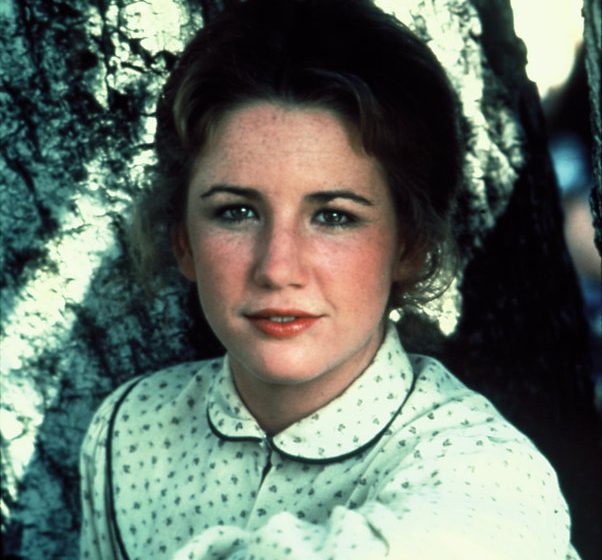

Long before millions of viewers knew her as Laura Ingalls Wilder, Melissa Gilbert was a newborn whose future changed almost immediately after she entered the world.
She was born in Los Angeles on May 8, 1964, and placed for adoption shortly after birth.
The couple who became her parents were already connected to the entertainment industry: actor and comedian Paul Gilbert and actress and dancer Barbara Crane.
But years later, Melissa learned something surprising about the beginning of their life together.
According to her own memoir, her adoptive parents hadn’t been planning to adopt a baby at all.
They weren’t searching.
They weren’t waiting for a child.
Then a telephone call came.
A baby was going to be available.
And suddenly, their lives—and Melissa’s—headed in an entirely different direction.
Her Adoptive Mother Said They Had “No Plans” to Adopt
Melissa described the unexpected revelation in her memoir, Prairie Tale.
The subject came up during a family gathering years later.
Her mother explained that she and Paul hadn’t been actively looking to adopt when they learned that a baby was available.
Barbara contacted her husband, who was away at the time.
His response was immediate.
They would take the child.
That child was Melissa.
The story surprised her even as an adult because it added another layer to an already complicated understanding of her beginnings.
What had seemed like an established family history kept changing as she learned more.
Melissa Was Adopted Almost Immediately
Melissa Ellen Gilbert was born May 8, 1964, in Los Angeles.
She was placed for adoption at birth and was taken in by Paul Gilbert and Barbara Crane almost immediately afterward.
Her new home was already immersed in entertainment.
Paul was an actor and comedian.
Barbara was an actress and dancer and the daughter of television writer Harry Crane.
Melissa therefore grew up surrounded by show business long before she understood that she would eventually become famous herself.
And she wouldn’t be the only child in the family to become recognizable to television audiences.
Her Brother Jonathan Was Adopted Too
Paul and Barbara later adopted Jonathan Gilbert.
Like Melissa, Jonathan eventually became a child actor.
In an extraordinary coincidence of television history, the siblings would later appear together on one of the most famous family dramas of the 1970s.
Melissa played Laura Ingalls Wilder on Little House on the Prairie.
Jonathan played Willie Oleson.
The children who had become brother and sister through adoption ended up growing up together both at home and, for years, on television.
Their younger sister Sara Gilbert would also eventually become an actor, best known to millions of viewers as Darlene Conner on Roseanne.
Melissa Started Acting When She Was Very Young
Melissa’s childhood was far from ordinary.
She began working as a child actor, appearing in commercials and television roles before receiving the part that would define her early career.
In 1974, Little House on the Prairie began its television run.
The series was inspired by Laura Ingalls Wilder’s books and starred Michael Landon as Charles Ingalls.
Melissa was cast as Laura.
She was only a child.
But the role would make her one of the most recognizable young performers in America.
Laura Ingalls Changed Everything
For viewers, Laura was the spirited young girl at the center of a family story filled with hardship, love, responsibility and resilience.
For Melissa, it became both a career-making opportunity and an enormous part of her identity.
She grew up in front of the country.
Viewers watched Laura mature.
At the same time, Melissa herself was moving through childhood and adolescence behind the scenes.
The boundary between the actress and the character became unusually strong.
Even decades later, people would continue to recognize her as Laura.
Her biological father apparently did too.
But Melissa wouldn’t learn that until much later.
Her Childhood Family Life Was Changing Behind the Scenes
While her professional life was taking off, her family life became increasingly complicated.
Paul and Barbara’s marriage ended when Melissa was young.
Barbara later remarried and had another daughter, Sara.
Then came an event that deeply affected Melissa.
Paul Gilbert died while she was still a child.
For years, Melissa’s understanding of his death wasn’t complete.
She later wrote and spoke about learning as an adult that the circumstances were different from what she had originally been told.
It was another example of a recurring pattern in her life:
Important truths about her family sometimes arrived years after the events themselves.
Questions About Her Biological Family Remained
Adoption gave Melissa a family she has repeatedly described with gratitude.
But being loved by her adoptive family didn’t eliminate questions about where she came from biologically.
Who did she resemble?
What traits had she inherited?
Who were the people whose DNA she carried?
Those questions became particularly powerful when Melissa became a mother herself.
Her son Dakota was born in 1989.
Seeing him changed something.
Her Son Made Her Want to Search
Gilbert later explained that looking at her newborn son was an extraordinary experience because she suddenly saw physical features that resembled her own.
For an adopted person who had grown up without that biological mirror, the experience was significant.
She began searching for her birth family.
And what she discovered was considerably more complicated than the story she’d grown up hearing.
The Story She Had Been Told Wasn’t Accurate
Gilbert has discussed being given an embellished account of her biological parents when she was younger.
The reality she later uncovered was different.
Her biological mother was Kathy Wood, whom Gilbert has described as an exotic dancer.
Her biological father, David Darlington, was involved in stock-car racing and music; accounts of his life have also described other work over the years.
For Melissa, discovering who they actually were meant reconsidering a story that had helped shape her sense of identity.
That didn’t necessarily make the new truth simpler.
It made it more human.
Her Biological Parents Had Complicated Lives of Their Own
In later interviews, Gilbert offered more detail about the circumstances surrounding her conception and adoption.
She said her biological parents were each involved in other family situations and had children from previous relationships.
According to Gilbert, they left their spouses, came together and combined a household that already included several children.
Another baby would make the family even larger.
Melissa was placed for adoption.
An older biographical account similarly reports that her biological parents believed they wouldn’t be able to financially provide for another child and placed her for adoption when she was born.
It’s an important detail because it changes the emotional framing.
Adoption stories are rarely captured accurately by a simple phrase like “they didn’t want her.”
Family circumstances can be far more complicated.
She Never Got to Meet Her Biological Mother
By the time Melissa began seriously searching for her biological family, her birth mother had died.
That meant some questions could never be asked directly.
She did, however, eventually connect with her biological father.
And that encounter produced an extraordinary connection between her private history and the television role that had made her famous.
Her Biological Father Had Seen Her on Television
Imagine discovering that the daughter you gave up for adoption had grown into one of America’s most recognizable child stars.
According to Gilbert, when she finally contacted David Darlington, she asked whether he watched Little House on the Prairie.
His response stunned her.
He recognized who she was.
He knew her as Laura.
Gilbert later recalled him indicating that he had already suspected she was his daughter after seeing her on television.
It was a remarkable collision between two parts of her identity.
The little girl millions of strangers had watched on television had also been seen by the biological father she had never known.
Family Resemblance Provided Another Connection
After meeting members of her biological family, Gilbert noticed similarities.
That mattered.
People who grow up with biological relatives may take family resemblance for granted.
A parent’s eyes.
A sibling’s smile.
A grandparent’s hands.
For someone adopted at birth, seeing those similarities for the first time as an adult can carry a different emotional weight.
Gilbert has described seeing herself reflected in biological relatives in ways she hadn’t experienced growing up.
And her family discoveries didn’t end there.
In 2026, Her Biological Family Story Changed Again
More than six decades after her birth, Gilbert revealed another remarkable development.
In 2026, she said she had connected through genetic genealogy with relatives on her biological mother’s side and discovered older biological brothers she had not previously known.
She described the discovery publicly and indicated that she intended to share more about the experience.
That development is important because it demonstrates something unusual about Gilbert’s story.
Her understanding of her own origins has never been completely static.
New information has continued to emerge.
Even Her Memoir Reflected Uncertainty
Gilbert’s Prairie Tale doesn’t present her family history as a perfectly tidy story.
Instead, the memoir reveals how confusing the search could become.
At one point, new information from her adoptive mother led Gilbert to reconsider aspects of what she believed about her biological parentage.
She openly acknowledged uncertainties rather than pretending every question had been permanently resolved.
That nuance matters.
Family history isn’t always a straight line.
Memories conflict.
Stories change.
Documents reveal surprises.
DNA testing can reopen questions decades later.
For Gilbert, identity became something she had to revisit repeatedly.
Meanwhile, the Child Who Had Been Adopted Became a Star
While those questions remained unresolved in the background, Melissa Gilbert built an extraordinary career.
Her portrayal of Laura Ingalls Wilder became one of the defining performances of her generation of child actors.
She continued acting beyond Little House on the Prairie, appearing in numerous television productions and films.
In 1985, she received a star on the Hollywood Walk of Fame.
She was only 21, making her one of the youngest people ever honored there at the time.
But acting wasn’t the only significant chapter of her professional life.
She Eventually Became President of the Screen Actors Guild
The former child star went on to hold one of the most prominent leadership positions in the American acting profession.
Gilbert was elected president of the Screen Actors Guild in 2001 and served until 2005.
It was a striking evolution.
The child who had entered entertainment before she was old enough to understand the business eventually represented professional actors at an institutional level.
Her life could easily have been summarized simply as “the girl who played Laura.”
Instead, it kept expanding.
But Fame Didn’t Answer the Personal Questions
Professional success and personal identity aren’t the same thing.
A person can be recognized by millions and still have unanswered questions about where they came from.
That’s one of the most compelling aspects of Gilbert’s story.
America knew her face.
Fans knew her character.
Magazines knew her career.
But some of the most basic information about her biological history remained complicated even to her.
Celebrity couldn’t solve that.
Only time, family conversations, research and later discoveries could begin filling in those spaces.
Adoption Wasn’t a Rejection of the Family Who Raised Her
Gilbert’s story also resists another simplistic interpretation.
Searching for biological relatives doesn’t necessarily mean rejecting adoptive parents.
She has spoken with gratitude about having been adopted.
In 2026, while discussing newly discovered biological relatives, she again described herself as eternally grateful for her adoption.
Those ideas can exist simultaneously.
Someone can deeply love the family who raised them while still wanting to understand the people they came from.
Curiosity doesn’t erase loyalty.
Biology doesn’t erase parenting.
And discovering difficult truths doesn’t automatically invalidate the love that existed before those truths were known.
Paul and Barbara Became Her Parents Unexpectedly
That brings the story back to the remarkable revelation from her memoir.
Barbara and Paul hadn’t been planning to adopt.
Then came the call.
A baby was available.
They made the decision.
And an entirely new family story began.
There’s something striking about knowing what happened afterward.
That newborn would grow into Laura Ingalls Wilder in millions of American living rooms.
Her adopted brother would appear beside her on the same television series.
Her younger sister would eventually become a television star too.
And decades later, Melissa would still be uncovering pieces of the story that began before she could possibly remember it.
Success Didn’t Make Her Past Simpler
It’s tempting to tell celebrity stories as neat transformations.
An unwanted baby became a star.
An adopted child overcame the odds.
A difficult beginning led to success.
But real lives are rarely that simple.
Gilbert wasn’t merely “given away” and then rewarded with fame.
Her biological parents had their own complicated circumstances.
Her adoptive parents had their own struggles.
Her father’s death left deep questions.
Her biological search produced both answers and uncertainty.
And even after writing a memoir about her life, additional family discoveries continued to emerge.
The interesting part isn’t that everything worked out perfectly.
It’s that her understanding of herself kept evolving.
She Eventually Chose a Quieter Life
After decades in the entertainment industry, Gilbert also began distancing herself from the pressures of Hollywood.
In recent years, she has spoken openly about embracing aging and preferring a different pace of life.
She moved away from Los Angeles and eventually settled with her husband, actor and director Timothy Busfield, in the Catskills in New York.
She has described feeling increasingly comfortable with getting older rather than trying to maintain the image Hollywood once expected from her.
It’s another transformation in a life that has contained many of them.
Child actor.
Television star.
Mother.
Union president.
Author.
And a woman still discovering pieces of her biological family well into adulthood.
The Girl America Thought It Knew
For years, millions of viewers felt they knew Melissa Gilbert.
They watched her grow up.
They associated her with Laura Ingalls.
They knew the braids, the prairie dresses and the Ingalls family.
But the person behind the character was simultaneously trying to understand a family story far more complicated than anything viewers could see on television.
That contrast makes her journey especially compelling.
Publicly, she had one of the most recognizable childhoods in America.
Privately, parts of her own beginning remained unknown.
Her Story Is Ultimately About More Than Adoption
It’s about the stories families tell.
Why they tell them.
What children believe.
What happens when adults discover that those stories weren’t completely accurate.
And how identity changes when new information arrives.
Sometimes learning the truth brings closure.
Sometimes it creates new questions.
For Gilbert, it appears to have done both.
Her search connected her with biological relatives.
It helped explain physical similarities she’d never understood.
It revealed details about her parents.
And decades later, it was still producing surprises.
Final Thoughts
Melissa Gilbert entered the world on May 8, 1964, and was placed for adoption almost immediately.
Paul Gilbert and Barbara Crane became her parents despite, as Barbara later revealed, having had no plans to adopt a child at the time.
The little girl they brought home eventually became one of America’s most recognizable child stars as Laura Ingalls Wilder on Little House on the Prairie.
But fame didn’t eliminate the questions surrounding her beginnings.
As an adult, Gilbert searched for her biological family and learned that parts of the story she’d grown up believing weren’t accurate.
She discovered who her biological parents were.
She connected with her biological father.
She saw herself reflected in relatives she’d never known.
And more than 60 years after her birth, she was still discovering new members of her biological family.
Perhaps that’s the most revealing part of her story.
Identity isn’t always something we’re handed once and carry unchanged forever.
Sometimes it has to be revisited as new truths emerge.
And sometimes a person can know exactly who raised and loved them while still needing to understand where the rest of their story began.