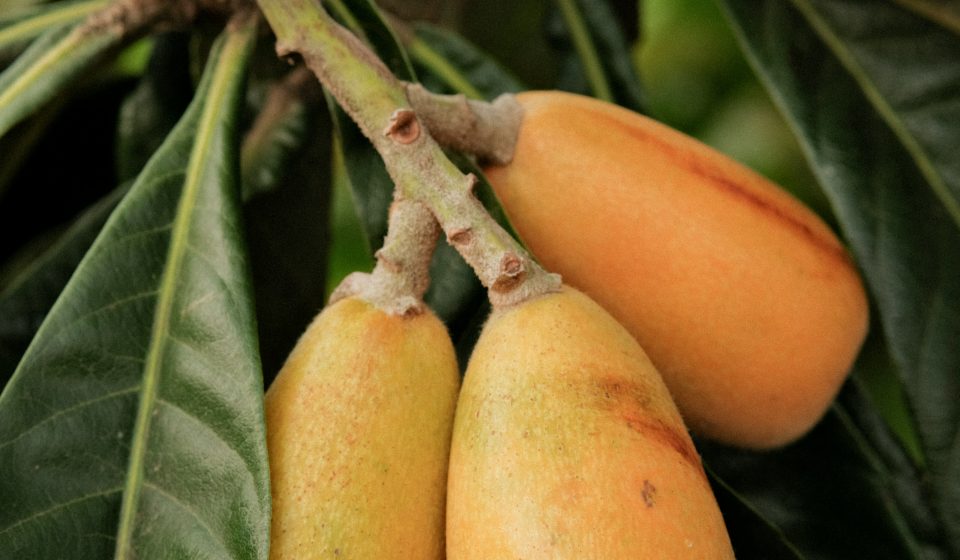

At first glance, you might mistake it for a small apricot.
Its skin can be yellow, golden or deep orange. Its flesh is soft and juicy. And when you cut one open, you’ll discover surprisingly large, glossy brown seeds occupying much of the center.
But this isn’t an apricot.
It’s a loquat, a fruit that has been enjoyed for generations in parts of Asia, the Mediterranean and other warm regions of the world, yet remains unfamiliar to many Americans.
Known scientifically as Eriobotrya japonica, the loquat offers a refreshing combination of sweetness and acidity that can be difficult to compare with just one familiar fruit.
Some people detect hints of peach.
Others think of apricot, apple or citrus.
And when the fruit is perfectly ripe, it can be remarkably juicy.
But before you bite into one, there’s something important to know:
The flesh is the part you want to eat. The large seeds should be removed and not chewed or consumed.
Here’s what makes this lesser-known golden fruit so interesting.
What Exactly Is a Loquat?
Loquat is the fruit of Eriobotrya japonica, an evergreen tree belonging to the Rosaceae, or rose, family.
That puts it in the same broad botanical family as many familiar fruits, including apples, pears, peaches, plums, cherries and strawberries.
The tree produces clusters of relatively small fruits that can be round, oval or somewhat pear-shaped depending on the variety.
As they mature, their color generally progresses toward shades of yellow and orange.
Cut one open and you’ll find soft golden flesh surrounding several large brown seeds.
The contrast is striking.
Those oversized seeds are also one of the easiest features to notice when trying to distinguish a loquat from some other small orange fruits.
Despite Its Scientific Name, Its Origins Point to China
The scientific name Eriobotrya japonica might lead you to assume the loquat originated in Japan.
Its history is more complicated.
The plant is generally considered native to southeastern China and has been cultivated in Japan for many centuries.
From there, cultivation expanded into other suitable climates.
Today, loquat trees can be found in numerous warm-temperate and subtropical regions.
They have become familiar sights in parts of southern Europe and around the Mediterranean, as well as across areas of Asia and elsewhere.
Depending on where you live, the fruit may be a childhood staple—or something you’ve never encountered at a supermarket.
Why Aren’t Loquats More Common in American Grocery Stores?
One reason may simply be familiarity.
Apples, bananas, oranges, grapes, peaches and strawberries dominate produce sections because consumers recognize them and supply chains are built around them.
Loquats are more niche.
The fruit is also relatively delicate once ripe, which can make handling and distribution more challenging than with some tougher commercial fruits.
In areas where loquat trees grow locally, however, people may know them very well.
You might encounter them at farmers’ markets, specialty markets or even growing in residential yards in climates where the trees thrive.
What Does a Loquat Taste Like?
This is where descriptions become subjective.
There isn’t one perfect comparison.
A ripe loquat is generally sweet, juicy and slightly tart.
People sometimes compare the flavor to combinations of:
- apricot,
- peach,
- apple,
- pear,
- plum,
- and citrus.
But a loquat still has its own character.
The exact balance depends on the cultivar and how ripe the fruit is.
An underripe loquat may be noticeably firmer and more acidic.
A ripe one generally becomes softer, sweeter and more aromatic.
If your first experience with loquat is extremely sour, you may simply have eaten it too early.
How Can You Tell When a Loquat Is Ready to Eat?
Color is one useful clue, although varieties differ.
Look for fruit that has developed its characteristic yellow-to-orange color rather than remaining predominantly green.
Ripe fruit should generally have a pleasant aroma and some tenderness without being badly bruised or mushy.
Avoid fruit showing obvious mold, extensive damage, leaking liquid or signs of spoilage.
Because loquats can be delicate, handle ripe fruit carefully.
How Do You Eat a Loquat?
Eating one is straightforward.
First, rinse the fruit thoroughly under clean running water.
Then you can cut it open with a knife or gently separate it with your fingers.
Inside, you’ll find the large brown seeds.
Remove those seeds before eating.
The flesh can then be eaten fresh.
The skin is also edible, although some people prefer to peel it because they don’t enjoy the texture.
That’s largely a matter of preference.
The Large Brown Seeds Should Not Be Eaten
This is the most important safety point.
Loquat seeds contain cyanogenic compounds.
Cyanogenic compounds can release hydrogen cyanide when plant material containing them is damaged and metabolized.
For that reason, loquat seeds should not be treated like edible nuts or ground into homemade powders.
Don’t chew them.
Don’t crush them into smoothies.
Don’t grind them into supplements.
And don’t assume that because the fruit itself is edible, every part of it must be edible too.
Enjoy the flesh and discard the seeds.
Keep the Seeds Away From Young Children
The seeds are large enough to be immediately noticeable when an adult opens the fruit, but that doesn’t mean they should be ignored around children.
Prepare loquats for young children rather than handing over whole fruits without supervision.
Remove the seeds first.
There is also an obvious physical concern with hard seeds: depending on the child’s age and size of the seed, they can present a choking hazard.
The simplest approach is to prepare the edible flesh before serving.
What Nutrition Does Loquat Provide?
Loquat isn’t a magical food.
It doesn’t need to be.
Like many fruits, it provides a mixture of water, carbohydrates, fiber, vitamins, minerals and naturally occurring plant compounds.
Among the nutrients associated with loquat are:
Dietary fiber
Fiber supports normal digestive function and contributes to a healthy overall eating pattern.
Vitamin C
Vitamin C has several established roles in the body, including supporting normal immune function, collagen formation and helping the body absorb non-heme iron.
That doesn’t mean eating loquats will prevent you from catching a cold.
It means vitamin C is an essential nutrient and loquat can contribute to dietary intake.
Carotenoids
The fruit’s orange coloration reflects the presence of carotenoid compounds. Some carotenoids can serve as precursors to vitamin A.
Vitamin A is important for normal vision, immune function and other physiological processes.
Potassium
Potassium is an essential mineral involved in normal nerve and muscle function and fluid balance.
The exact nutrient content will vary according to the fruit’s variety, ripeness and serving size.
Don’t Turn a Nutritious Fruit Into a Miracle Cure
This distinction is especially important with lesser-known fruits.
When an unfamiliar fruit begins attracting attention online, exaggerated health claims often follow.
Suddenly it’s described as:
“detoxifying.”
“Fat burning.”
“A cancer killer.”
“A diabetes cure.”
Or a fruit that supposedly “boosts immunity” dramatically.
Those claims go far beyond what should be inferred from the fact that a fruit contains useful nutrients and plant compounds.
Loquat can be part of a nutritious diet.
That doesn’t make it medicine.
Can Loquats “Boost” Your Immune System?
It’s more accurate to say that nutrients found in fruits contribute to normal body functions.
Vitamin C, vitamin A and other nutrients are involved in normal immune function.
But the immune system is complex.
It isn’t something that can simply be supercharged by eating one particular fruit.
Overall dietary quality matters.
So do sleep, physical activity, age, underlying health conditions and many other factors.
Eating a variety of fruits and vegetables is a sensible nutritional habit.
Relying on one fruit to prevent disease isn’t.
Can Loquats Help You Lose Weight?
Loquats can certainly fit into an eating pattern designed around weight management.
Whole fruit provides water and fiber along with naturally occurring sugars.
Choosing fruit instead of a highly processed, heavily sweetened dessert can also be a useful dietary substitution for some people.
But loquats don’t specifically “burn belly fat.”
No fruit targets fat from one area of the body.
Long-term weight management is influenced by total dietary intake, physical activity, sleep, health conditions, medications, genetics and other individual factors.
So enjoy loquats because you like them—not because an online post promises they’ll melt fat away.
What If You Have Diabetes?
Having diabetes doesn’t automatically mean fruit is forbidden.
Fruit contains carbohydrates, including naturally occurring sugars, and portion size matters within an individual’s overall eating plan.
Someone managing diabetes may need to consider the amount eaten, other foods in the meal, medications and personal blood-glucose response.
Loquats shouldn’t be marketed as a diabetes treatment.
Likewise, people with diabetes don’t necessarily need to fear them simply because they taste sweet.
Individual dietary guidance should come from an appropriate healthcare professional when needed.
What About Loquat Leaf Tea?
This is another area where the fruit’s reputation can become confusing.
Loquat leaves have a history of traditional use, and teas or extracts made from the leaves are sold in some markets.
Researchers have also studied various compounds found in the plant.
But there’s an enormous difference between:
“Scientists are studying compounds in a plant”
and
“This plant treats disease.”
Those statements are not interchangeable.
Traditional use also doesn’t prove that a product can safely or effectively treat a medical condition.
Be Especially Careful With Concentrated Supplements
Eating the ordinary edible flesh of a fruit is different from consuming a concentrated extract.
Supplements may contain substantially different amounts of plant compounds than you’d encounter by eating the fruit normally.
Products can also vary in preparation, concentration and quality.
If you’re considering a concentrated loquat leaf product or another supplement because of a medical condition, discuss it with an appropriate healthcare professional—especially if you take prescription medications.
Don’t discontinue prescribed treatment in favor of an unproven plant remedy.
Loquat vs. Apricot: They Aren’t the Same Fruit
It’s easy to see why someone might confuse them.
Both can be small.
Both can have golden-orange skin.
Both have soft, juicy flesh when ripe.
But they’re different plants.
Loquat is Eriobotrya japonica.
Apricot is Prunus armeniaca.
The interior is one obvious clue.
Apricots generally contain a single central stone.
Loquats commonly contain multiple conspicuous, smooth brown seeds, although the exact number can vary.
Their flavors are also distinct.
Loquat Isn’t the Same as Kumquat Either
The names can cause confusion.
Loquat.
Kumquat.
They sound related.
Botanically, they’re very different.
Kumquats are citrus fruits.
Loquats belong to the rose family.
A kumquat is generally much smaller and has the recognizable characteristics of citrus, while a loquat has soft flesh surrounding large seeds.
So despite the similar-sounding English names, don’t treat them as versions of the same fruit.
Loquats Can Be Delicious Fresh
If you find perfectly ripe loquats, the easiest preparation may be the best.
Wash.
Open.
Remove the seeds.
Eat.
Fresh fruit allows you to experience its natural combination of sweetness, acidity and juiciness without covering it with additional flavors.
If you’re trying loquat for the first time, this is probably the best place to start.
They Also Work in Fruit Salads
The sweet-tart flavor can pair well with other fruits.
Remove the seeds, slice the flesh and add it to a fruit salad.
Because cut fruit can soften and discolor over time, prepare it reasonably close to serving when possible.
Citrus flavors can complement loquat particularly well.
Try Loquat With Plain Yogurt
Sliced loquat can add natural sweetness and texture to plain yogurt.
You can combine it with other fruit, nuts or seeds according to your preferences and dietary needs.
This provides a simple way to enjoy the fruit without turning it into a heavily sweetened dessert.
Or Add the Flesh to a Smoothie
Loquat flesh can also be blended.
But there’s one rule worth repeating:
Remove every seed first.
Don’t simply place whole loquats into a high-powered blender.
Open the fruits and inspect them.
Remove the large brown seeds.
Then use the edible flesh.
Jams and Preserves Are Another Traditional Option
Because loquats have a pleasant sweet-and-acidic character, they can work well in jams, jellies and preserves.
Just remember that the nutritional profile of a sweetened preserve can be quite different from fresh fruit.
A jam containing significant added sugar shouldn’t be nutritionally equated with eating the whole fresh fruit.
Both can be enjoyed.
They’re simply different foods.
Loquat Can Work in Savory Recipes Too
Fruit doesn’t always have to become dessert.
The acidity and sweetness of loquat can potentially complement sauces, chutneys and other savory preparations.
It can pair with herbs, spices and acidic ingredients.
For someone with a productive loquat tree, experimenting with recipes can also help use a seasonal harvest before ripe fruit deteriorates.
The Tree Is Interesting Even Without the Fruit
Loquat trees are evergreen and have large, distinctive dark-green leaves.
That makes them attractive landscape trees in suitable climates.
Their flowers can also be fragrant.
In some regions, people recognize the tree long before they know the fruit has a name.
They may have walked past one for years without realizing the small orange clusters were edible loquats.
The Fruit Has an Unusual Seasonal Pattern
Loquat trees can flower during cooler parts of the year and produce fruit afterward, giving them a harvest season that may differ from many familiar summer stone fruits.
The precise season varies according to climate and location.
That can make loquat feel particularly special in regions where it appears at a time when other locally grown fruits are less abundant.
If You Find a Loquat Tree, Don’t Assume Every Fruit Is Ready
Color and ripeness still matter.
Fruit picked too early may be unpleasantly acidic.
Allowing it to develop its mature yellow or orange coloration generally produces a sweeter experience.
But don’t eat fruit that appears spoiled simply because it came directly from a tree.
Inspect it just as you would produce purchased from a store.
Wash Fresh Fruit Before Eating
Whether a loquat comes from a supermarket, farmers’ market or backyard tree, wash it before eating.
Rinse it under running water.
There’s no need to wash fresh produce with household soap or detergent.
Then open the fruit and remove the seeds.
Basic produce hygiene still applies even when something appears perfectly clean.
Why Has Such a Delicious Fruit Stayed Relatively Unknown?
Food familiarity is surprisingly regional.
A fruit can be completely ordinary in one country and exotic in another.
Someone who grew up around the Mediterranean may recognize loquats immediately.
Someone elsewhere may see one and ask:
“What fruit is this?”
Neither reaction is unusual.
Global supermarkets have made many foods widely available, but countless regional fruits remain relatively unfamiliar outside the places where they’re traditionally grown.
Loquat is a good example.
Sometimes the Best Foods Don’t Need Extraordinary Claims
There’s a temptation to justify unfamiliar foods by giving them extraordinary powers.
We don’t need to do that with loquat.
It’s enough that the fruit is:
juicy,
refreshing,
naturally sweet,
slightly tangy,
and nutritionally useful as part of a varied diet.
A food doesn’t have to cure something to be worth eating.
Sometimes tasting something new is reason enough.
Final Thoughts
If you’ve ever spotted clusters of small golden-orange fruits and wondered whether they were tiny apricots or unusual plums, you may have been looking at loquats.
Known scientifically as Eriobotrya japonica, this fruit has long been enjoyed in parts of Asia and is now cultivated in numerous warm regions around the world.
Its soft flesh combines sweetness with a refreshing tartness.
It provides fiber and a range of useful nutrients and plant compounds.
And it can be eaten fresh or incorporated into everything from yogurt and fruit salads to preserves and savory recipes.
But remember the most important preparation rule:
Remove the large brown seeds and don’t chew, crush or consume them.
The edible golden flesh is the attraction.
No miracle claims are necessary.
Sometimes a delicious piece of fruit is interesting enough on its own.
Have you ever eaten a loquat, and what does its flavor remind you of?
Editor’s note: This article provides general food and nutrition information and is not medical advice. Loquat flesh is commonly eaten, while the seeds contain cyanogenic compounds and should not be chewed, crushed or consumed. Claims that loquat fruit, leaves, teas or supplements can treat serious diseases should not be inferred from traditional use or preliminary research.