My Daughter Asked Why I Needed a Wedding Dress at 72—My Answer Changed the Way She Saw Me

I never imagined I’d be planning another wedding at 72.
Yet here I am.
Choosing decorations.
Thinking about music.
Preparing for a ceremony.
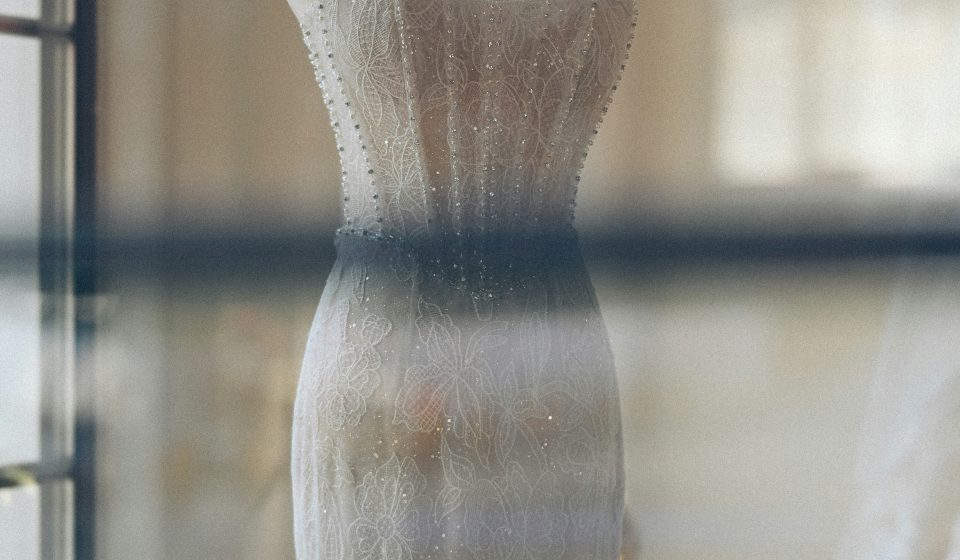
And sitting at my kitchen table, carefully sewing little blue details onto a white wedding dress that cost me about $100.
I’m not trying to look 22 again.
I’m not pretending the years haven’t passed.
And I’m certainly not trying to erase the life I’ve already lived.
I’m getting married because, unexpectedly, I found love again.
And this time, I want to celebrate it.
My daughter didn’t understand that at first.
When she saw my wedding dress, she looked at me with genuine surprise.
Then she asked the question that stayed with me.
“Mom, why spend money on a wedding dress at your age? This is your third marriage. Why not wear something you already own?”
I understood what she meant.
But that didn’t stop the words from hurting.
Because she saw a dress.
I saw something entirely different.
My First Wedding Happened When I Was 19
I was young.
Very young.
I was expecting a baby, and like many 19-year-olds, I thought I understood far more about life than I actually did.
There wasn’t money for a new wedding gown.
So I wore my mother’s old dress.
At the time, that was simply what had to be done.
I walked into that marriage believing I knew what the future would look like.
Life eventually taught me otherwise.
Years passed.
I became a mother.
Responsibilities accumulated.
And the future I’d imagined at 19 didn’t unfold exactly as planned.
By My Second Marriage, I Saw Love Differently
By the time I reached my early 40s, I wasn’t the same woman.
Life had made me more cautious.
I understood disappointment.
I understood that relationships could fail despite our hopes for them.
When I married for the second time, there wasn’t a grand wedding.
There wasn’t a beautiful white gown.
I wore a simple beige suit.
We went to the courthouse.
And somewhere inside me was a quiet question I didn’t really want to confront:
Had I already missed my chance at romance?
Maybe elaborate celebrations simply weren’t part of my story.
Maybe that was fine.
So I continued with life.
Then the Years Kept Moving
I raised three children.
I worked.
I supported my family.
I dealt with difficult periods.
I made mistakes.
I learned.
I rebuilt.
Like so many women, I spent a large part of adulthood thinking about what everyone else needed.
Children need things.
Families need things.
Work demands things.
Responsibilities don’t care whether you’re tired.
You keep moving because people depend on you.
And somewhere in all of that, your own little dreams can become very quiet.
Not necessarily gone.
Just postponed.
Getting Older Didn’t Mean My Story Was Finished
That was something I gradually began to understand.
A birthday doesn’t close the door on everything that came before it.
Life doesn’t suddenly become a waiting room because you’ve reached a certain age.
I was still myself.
I could still laugh.
I could still change my mind.
I could still enjoy new experiences.
And apparently, I could still fall in love.
Then I Met Him
He made me laugh.
That mattered.
He listened to me.
That mattered even more.
He respected the independence I’d spent years building.
He didn’t expect me to become someone else to make him comfortable.
Our relationship wasn’t some perfect fairy tale.
I don’t believe in those anymore.
It was something better.
Honest.
Comfortable.
Kind.
We could enjoy each other’s company without pretending either of us had arrived without a past.
At 72, you don’t need someone to convince you that life has always been perfect.
You need someone who understands that it hasn’t been—and wants to share what comes next anyway.
When he asked me to marry him, I said yes.
This Time, I Wanted a Wedding
Not an extravagant one.
I didn’t need a ballroom.
I didn’t need an expensive designer gown.
I didn’t need hundreds of guests.
But I didn’t want to simply sign some papers and continue with the rest of the week as though nothing important had happened.
I’d done the quiet courthouse wedding.
This time, I wanted to celebrate.
So I started looking for a dress.
I Found One for Around $100
I searched online until I found an affordable white wedding dress.
It wasn’t extravagant.
It wasn’t custom-made.
It wasn’t something you’d see displayed behind glass in an expensive bridal boutique.
It cost around $100.
I ordered it.
Then I waited.
When the package finally arrived, I took the dress out and tried it on at home.
I stood in front of the mirror.
The fit wasn’t perfect.
There were things I wanted to change.
The design was simpler than what I’d pictured in my mind.
But I smiled.
I Didn’t See an Old Woman Trying to Look Young
That’s not what I saw in the mirror.
I saw the woman who’d made it to 72.
A woman who’d survived difficult years.
A woman who’d raised three children.
A woman who’d loved and been disappointed.
A woman who’d made mistakes and continued forward.
A woman who had reached an age when some people expect you to stop beginning things.
And there I was, beginning something.
Again.
I liked that woman.
She deserved a dress that made her happy.
So I Decided to Make It Mine
I didn’t return the gown.
Instead, I began changing it.
I added delicate blue decorations.
Then small embroidered details.
I worked at my kitchen table, carefully deciding where everything should go.
Sometimes I’d finish a section, stare at it and decide I didn’t like it.
Out came the stitches.
Then I’d begin again.
My hands weren’t as quick as they once were.
That didn’t bother me.
There was nowhere I needed to rush.
I enjoyed the process.
The Dress Didn’t Need to Be Perfect
That realization felt strangely familiar.
Neither did I.
Neither did my life.
The white fabric made me think about fresh beginnings.
The blue details reminded me of peaceful skies after a storm.
And the little imperfections?
I decided I could live with those.
I’d spent enough years learning that beautiful and perfect aren’t the same thing.
Why should a wedding dress be any different?
Then My Daughter Saw Me Sewing
She came to visit and found me at the kitchen table.
The dress was there.
So were the decorations.
Needles.
Thread.
The little pieces I’d been carefully arranging.
She still didn’t quite understand.
Why did this dress matter so much?
That was when I realized I needed to explain something I’d probably never explained properly before.
So I put down the needle.
“I’ve Spent Most of My Life Thinking About What Everyone Else Needed”
I told her I’d been many things during my life.
A mother.
A wife.
A worker.
Someone the family could depend on.
Those roles mattered enormously to me.
I didn’t resent them.
My children were among the most important parts of my life.
But being needed by other people doesn’t erase your own desires.
I had dreams too.
Some I’d pursued.
Some I’d postponed.
Some I’d abandoned.
And now, at 72, I didn’t want to dismiss something that made me happy simply because someone else thought I was too old for it.
I Didn’t Need Anyone’s Approval
I explained that I wasn’t asking for a lavish wedding.
I didn’t need an expensive dress.
I didn’t expect anyone to pretend this was my first experience with marriage.
I simply wanted to enjoy the moment.
I wanted to wear something that made me feel special.
I wanted to stand beside the person I’d chosen and celebrate the fact that we’d found each other.
That was it.
Not an attempt to turn back time.
Not an attempt to pretend I was a young bride.
A celebration of the woman I am now.
My Daughter Became Quiet
She listened.
Really listened.
Then her expression changed.
“I never thought about it that way,” she admitted.
That sentence meant a lot to me.
Because I didn’t need her to feel guilty.
I didn’t need an apology that lasted an hour.
I simply wanted her to understand.
To her, the practical question was obvious:
Why buy another dress?
To me, the emotional question was different:
Why shouldn’t I allow myself one?
We Started Talking About the Wedding
Once the tension disappeared, the conversation became easier.
I told her what I actually wanted.
A relaxed celebration.
Music.
Laughter.
Photographs.
People I cared about.
I didn’t want to spend the day worrying about whether everything looked expensive enough.
And I certainly didn’t want to spend it wondering whether other people considered my choices “appropriate” for a 72-year-old woman.
I wanted memories.
That’s all.
Confidence Looks Different to Me Now
At 22, I probably thought confidence meant looking beautiful enough that other people noticed.
At 72, it means something else.
I don’t need to look like the woman I was 50 years ago.
Why would I?
That young woman hadn’t lived my life yet.
She hadn’t raised my children.
She hadn’t survived my disappointments.
She hadn’t learned my lessons.
She hadn’t rebuilt herself.
I don’t want to become her again.
I’m grateful for who she eventually became.
Aging Isn’t a Competition With Your Younger Self
We hear so much about looking younger.
Feeling younger.
Dressing younger.
Turning back the clock.
But I don’t want to turn back the clock.
There are parts of my past I cherish.
There are parts I wouldn’t repeat.
Both belong to me.
Confidence at my age isn’t pretending those decades didn’t happen.
It’s being able to look at them and say:
Yes.
That was my life.
And I’m still here.
My Previous Marriages Are Part of My Story
I don’t need to erase them to celebrate this relationship.
Those experiences shaped me.
The good moments.
The painful ones.
The mistakes.
The lessons.
They helped me understand what I value now.
Respect.
Honesty.
Kindness.
Independence.
Companionship.
Maybe I recognize those things more clearly precisely because I’ve lived long enough to understand what happens when they’re missing.
A Third Marriage Doesn’t Make This One Meaningless
That seemed important too.
People sometimes treat later marriages as though the number somehow reduces the importance of the commitment.
“You’ve already done this.”
Yes.
I have.
But I’ve also had hundreds of birthdays.
I still celebrate being alive.
I’ve watched thousands of sunsets.
A beautiful one still makes me stop.
Experiencing something before doesn’t automatically make the next experience worthless.
This relationship exists now.
This happiness exists now.
Why shouldn’t I honor it?
A Few Days Later, My Daughter Came Back
She brought coffee.
I was at the table again with the dress.
The blue embellishments were scattered around me.
This time, she didn’t question why I was doing it.
She picked up one of the decorations and examined it.
Then she pointed toward the dress.
“This one might look nice over here,” she suggested.
I looked at her.
Then I handed her the needle.
“Then help me sew it on.”
She smiled.
And she did.
That Moment Was Worth More Than an Expensive Gift
We sat beside each other working on my wedding dress.
One stitch at a time.
No argument.
No debate about my age.
No discussion about whether spending $100 on a dress was sensible.
Just a mother and daughter sharing an afternoon.
I don’t know whether she’ll remember every decoration we attached.
I probably won’t either.
But I’ll remember sitting there with her.
I’ll remember that she’d stopped seeing the dress as an unnecessary purchase.
She finally understood what it represented.
The Dress Became More Than Clothing
It became a reminder.
I’m still allowed to choose things for myself.
I’m still allowed to discover something new.
I’m still allowed to get excited.
I’m still allowed to look forward to something.
I’m still allowed to celebrate.
None of those rights disappeared when my hair changed or another birthday arrived.
Who Decided White Wedding Dresses Belong Only to Young Women?
Certainly not me.
When my wedding day comes, I won’t be thinking about whether I’m “too old” to wear white.
I’m 72.
Everyone there will know I’m 72.
The dress isn’t going to fool anybody.
That’s not its purpose.
Its purpose is to make me feel beautiful on a day that matters to me.
And that’s enough.
I’m Not Competing With My Previous Weddings
I don’t want to compare them.
At 19, I wore my mother’s old gown.
In my early 40s, I wore a beige suit to the courthouse.
At 72, I’ll wear the white dress I’ve personalized myself.
Three different women.
Three different moments.
Three different chapters of one life.
I don’t need to decide which version was the “real” bride.
They were all me.
Time Feels More Precious Now
At 72, I understand something I couldn’t fully appreciate at 19.
Time isn’t unlimited.
That doesn’t make me sad every morning.
It makes certain choices easier.
If something harmless makes you happy, why spend so much energy worrying whether strangers consider it age-appropriate?
Wear the dress.
Play the music.
Take the photograph.
Dance if you want to dance.
Celebrate the people you love while they’re here.
There are enough serious things in life without manufacturing rules that prevent us from enjoying the good ones.
Happiness Doesn’t Belong Exclusively to the Young
Neither does romance.
Neither does excitement.
Neither does anticipation.
We sometimes speak about older adulthood as though it’s only a period for looking backward.
Remembering.
Reflecting.
Watching younger generations begin their lives.
But older people still have futures too.
Maybe those futures look different.
They’re futures nonetheless.
There are still mornings we haven’t experienced.
Conversations we haven’t had.
Places we haven’t visited.
People we haven’t met.
And sometimes, weddings we haven’t celebrated.
Love Doesn’t Follow a Schedule
I didn’t plan to be preparing for marriage at 72.
Life didn’t ask whether that fit the timeline I’d imagined decades earlier.
It simply happened.
I met someone.
We became important to each other.
He asked.
I said yes.
Sometimes that’s how life works.
The chapter you thought belonged near the beginning arrives much later.
That doesn’t make it less meaningful.
Sometimes arriving later is precisely what allows you to appreciate it.
The Blue Stitches Mean Something to Me
Someone else might look at the dress and see inexpensive decorations.
I’ll see afternoons at my kitchen table.
I’ll see mistakes I carefully removed.
I’ll see places where my hands moved more slowly than they once did.
I’ll see my daughter sitting beside me.
I’ll see the moment she picked up a decoration and suggested where it should go.
None of those things can be measured by the original price of the dress.
That’s why her question—“Why spend money on a wedding dress at your age?”—eventually became so easy to answer.
Because the dress isn’t really about money.
It’s about permission.
My permission to myself.
I Don’t Need to Be 22 Again
When I walk toward the person I’m marrying, I won’t be pretending to be a young bride.
I’ll be exactly who I am.
Seventy-two.
A mother of three.
A woman who’s been married before.
A woman who has experienced disappointment.
A woman who has rebuilt.
A woman who still believes there are moments worth celebrating.
And I’ll be wearing the dress that makes me happy.
Final Thoughts
For most of my life, I tried to be the person other people could rely on.
I raised my children.
I worked.
I supported my family.
I learned how to continue when life didn’t go according to plan.
Now I’m preparing for another wedding.
Not because I’ve forgotten my past.
Because I’ve lived through it.
My daughter initially wondered why a 72-year-old woman entering her third marriage needed a wedding dress.
I understood her practical concern.
But what looked unnecessary to her meant something very different to me.
The dress represented a fresh beginning.
Not the erasure of everything that came before.
A continuation.
I bought it for around $100.
I added my own blue decorations.
I changed it until it felt like mine.
And eventually, my daughter sat beside me and helped sew one of those decorations into place.
That may become one of my favorite memories of the entire wedding.
When the day finally arrives, I won’t worry about whether I’m too old to wear white.
I’ll walk toward someone I love.
I’ll wear something I helped create.
I’ll be surrounded by people who matter to me.
And I’ll celebrate the fact that life surprised me again.
I’m 72.
I’m getting married.
And my dreams still belong to me.
Because new beginnings don’t come with an expiration date.
Editor’s note: This article is based on the supplied first-person narrative. The source does not provide independently verifiable information about the narrator, her family, previous marriages or upcoming wedding, so those elements are presented as part of the personal narrative rather than as independently confirmed events.