Take a Look Inside This Tudor-Inspired Cape Cod in Belleville With a Surprisingly Deep Backyard

Some homes catch your attention because they’re enormous.
Others do it with location, dramatic renovations or unusual architecture.
Then there are houses like this one in Belleville, Illinois—a home whose appeal comes from a combination of traditional character, practical updates and something that’s increasingly valuable to many homeowners:
space outside.
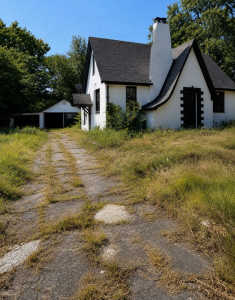
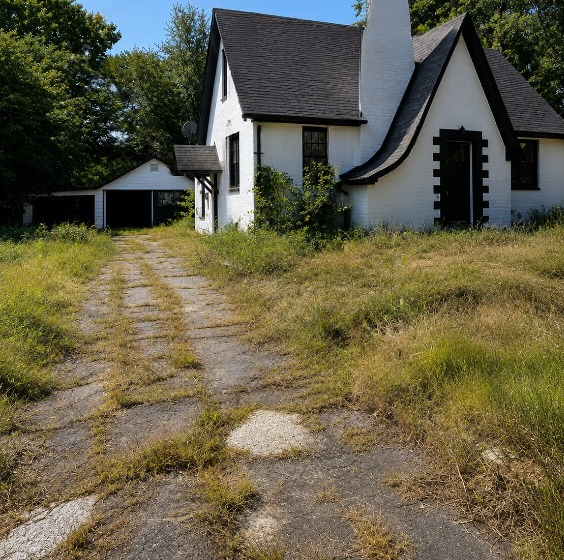
Located at 414 N 74th St in Belleville, this Tudor-inspired Cape Cod combines an older architectural style with updated interior spaces, a detached garage and a notably deep lot behind the house.
From the street, it looks like the kind of established home you might drive past without realizing just how much property extends behind it.
Step inside—and especially once you see the backyard—and the picture becomes much more interesting.
The Exterior Immediately Gives the House Character
The first thing that stands out is the architecture.
Rather than presenting the simple rectangular façade common to many newer houses, this home incorporates Tudor-inspired details into a Cape Cod-style structure.
That combination gives the exterior a distinctly traditional appearance.
It’s not trying to look like a brand-new suburban build.
Instead, the house retains the visual personality associated with an older home while interior updates bring parts of the property closer to contemporary expectations.
For buyers who prefer character over uniformity, that’s often part of the attraction.
Older Homes Can Offer Something New Construction Doesn’t
New construction has obvious advantages.
Modern layouts.
New systems.
Current materials.
Energy-efficiency improvements.
But older homes can offer something that’s much harder to reproduce:
architectural personality.
Rooflines, proportions and exterior details from earlier periods often give houses an identity that newer developments sometimes lack.
The challenge is finding a property where that character hasn’t come at the expense of everyday comfort.
That’s where thoughtful updating matters.
This Belleville house appears intended to bridge those two worlds.
Step Inside and the Mood Changes
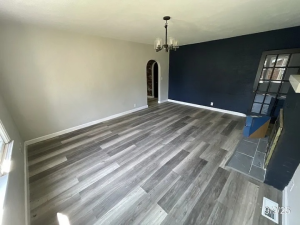
The interior feels brighter and more contemporary than the traditional exterior might suggest.
One of the notable features described for the home is its wide-plank flooring.
Wide flooring boards can visually simplify a room, especially when they continue across multiple spaces.
Instead of making each room feel completely separate, consistent flooring can help create a sense of flow.
That becomes particularly useful in an older house where the original floor plan may be more compartmentalized than the open layouts found in modern construction.
The Living Spaces Offer Flexibility
Not every room needs a permanent label.
A spare room can become an office.
A quiet corner can become a reading space.
An underused area can become storage, a hobby room or a place for children to play.
That flexibility matters more now than it did for many homeowners a generation ago.
Working from home has changed what people expect from residential space.
So has the growing interest in dedicated hobby areas, workout rooms and multipurpose spaces.
A house doesn’t necessarily need an enormous footprint if its existing rooms can serve more than one purpose.
The Kitchen Has Been Updated
The kitchen is another area where the traditional character of the property meets more contemporary styling.
Updated cabinetry and a cleaner layout give the room a refreshed appearance while keeping it connected with the rest of the house.
For many buyers considering an older property, the kitchen becomes one of the first places they look.
That’s understandable.
A dated bedroom can often be changed relatively easily.
A kitchen renovation can be considerably more complicated and expensive.
Seeing that work has already been done—or at least that the space has received meaningful updates—can therefore change how a buyer evaluates a home.
But “Updated” Doesn’t Mean Buyers Should Skip Inspection
Photographs tell only part of a property’s story.
Fresh finishes can make a home attractive, but they don’t reveal the condition of everything behind the walls.
Anyone seriously considering an older property should still investigate the major systems.
Roof.
Electrical.
Plumbing.
Heating and cooling.
Foundation.
Drainage.
Windows.
Insulation.
And any renovations that may have required permits.
A beautiful kitchen is valuable.
So is knowing what’s underneath it.
Upstairs Offers More Privacy
The upper level includes the primary sleeping area described in the listing material as a private suite.
That separation can be particularly appealing in a Cape Cod-style home.
Rather than placing every bedroom directly alongside the primary living areas, an upstairs retreat can create a greater sense of privacy.
For some homeowners, that becomes one of the most attractive parts of the floor plan.
It provides physical separation between active common spaces and the place intended for rest.
The Bathroom Continues the Updated Feel
The accompanying bathroom has also been presented as part of the home’s improvements.
Clean finishes and updated fixtures help the upstairs area feel more current.
Bathrooms, like kitchens, have an outsized influence on how buyers perceive an older home.
They’re also spaces where practical considerations matter as much as appearance.
Storage.
Ventilation.
Water pressure.
Waterproofing.
Fixture condition.
Those details may not be obvious from listing photographs, but they’re worth evaluating during an in-person visit and inspection.
Then You Reach the Backyard
This is where the property begins to distinguish itself.
The lot extends well behind the house.
A deep backyard can dramatically change how a property functions.
Even if the house itself isn’t enormous, substantial outdoor space can create possibilities that a larger house on a smaller lot simply doesn’t provide.
For someone who enjoys gardening, that may mean planting beds or landscaping.
For a family, it may mean more room for outdoor activities.
For a dog owner, it may provide space for pets.
For someone who enjoys entertaining, it can potentially accommodate seating and gathering areas.
The important word, however, is potentially.
A Large Yard Is a Blank Canvas
It’s tempting to look at a deep lot and immediately imagine everything that could be built there.
A patio.
Garden.
Play area.
Fire pit.
Outdoor kitchen.
Pool.
Shed.
Workshop.
But buyers should remember that property boundaries, easements, zoning regulations, drainage conditions and local permitting requirements can limit what can actually be added.
A large yard provides opportunity.
It doesn’t automatically provide permission.
Before planning major structures or improvements, local rules should always be checked.
The Detached Garage Adds Practical Space
The property also includes a detached garage.
That’s another feature that can serve more than one purpose.
The obvious use is vehicle parking.
But garages are frequently valuable for storage as well.
Lawn equipment.
Tools.
Bicycles.
Seasonal decorations.
Outdoor furniture.
Automotive supplies.
For homeowners who enjoy hands-on projects, a garage may also provide useful workspace, depending on its condition and configuration.
Again, any conversion to living space or major workshop use would need to comply with applicable local rules.
But simply having a separate structure adds flexibility.
Detached Garages Have Their Own Advantages
An attached garage is convenient, particularly during bad weather.
A detached garage offers different benefits.
Noise from projects or equipment is physically separated from the house.
Storage can remain outside the primary living structure.
And the garage can function as a distinct work zone.
For someone who doesn’t need to walk directly from the car into the kitchen, that tradeoff can be worthwhile.
Its usefulness ultimately depends on the buyer’s priorities.
The Lot May Be as Important as the House
Houses can be renovated.
Kitchens can be replaced.
Bathrooms can be remodeled.
Flooring can be changed.
But the dimensions of a residential lot are much harder to alter.
That’s why land can be an overlooked part of evaluating a property.
A modest house on a generous lot may offer opportunities that don’t immediately appear in the interior photographs.
Conversely, buyers should consider whether they actually want the responsibility that comes with more land.
A large yard needs maintenance.
Grass grows.
Leaves fall.
Trees need attention.
Snow and storms can create additional work.
Outdoor space is valuable only if it fits the way someone wants to live.
Belleville Offers a Different Setting From Central St. Louis
Belleville is located in southwestern Illinois, within the broader St. Louis metropolitan region.
That gives the community a distinctive position.
Residents can live on the Illinois side of the metro area while remaining connected to the larger economic and cultural region centered around St. Louis.
For potential buyers, however, location should be evaluated much more specifically than simply looking at the city name.
Commute times matter.
So do property taxes.
Insurance costs.
Nearby services.
Road access.
Transit needs.
And the specific characteristics of the immediate neighborhood.
Buyers With Children Should Verify School Information Directly
Real-estate listings often display school information.
Those details can be useful as a starting point, but school boundaries and assignments can change.
Families considering a purchase because of a particular school should verify attendance boundaries directly with the appropriate school district rather than relying solely on a property portal.
The same principle applies to other location-based assumptions.
Don’t buy a house because a listing page appears to promise something important.
Verify it.
Online Photos Are the Beginning, Not the Inspection
Property photography has become extremely effective.
Wide-angle lenses can make rooms feel larger.
Bright exposure can make interiors appear more open.
Careful staging can make spaces easier to imagine living in.
None of that necessarily means photographs are misleading.
It simply means photographs have a purpose:
to present a property attractively.
A buyer’s job is different.
The buyer needs to determine what the house is actually like.
That requires seeing it in person when possible.
Look Beyond the Renovations
When touring an updated older house, it’s useful to separate cosmetic improvements from structural or mechanical improvements.
Cosmetic work includes things such as:
new paint, flooring, cabinet finishes and decorative fixtures.
Mechanical or structural improvements can include:
roofing, electrical service, plumbing, HVAC, windows, foundation repairs and drainage work.
Both have value.
But they’re not financially equivalent.
A home that looks newly renovated may still contain older major systems.
That’s why documentation matters.
Ask When the Work Was Completed
If renovations are a major selling point, buyers can ask several basic questions.
When was the kitchen renovated?
When was the bathroom updated?
Who performed the work?
Were permits required?
Were permits obtained?
How old is the roof?
How old are the HVAC components?
Has the electrical system been upgraded?
Has the basement or foundation experienced water intrusion?
These aren’t accusations.
They’re ordinary due diligence.
Pay Attention to Drainage on a Deep Lot
A large backyard is attractive, but it also makes drainage worth examining.
Where does rainwater travel?
Does the yard slope toward or away from the house?
Are there areas where water collects?
Are neighboring properties higher or lower?
Are gutters and downspouts directing water appropriately?
A sunny afternoon viewing may not reveal what happens during a heavy storm.
If possible, buyers should look for evidence rather than assuming the yard performs perfectly in every season.
The Garage Deserves Its Own Inspection
Detached structures shouldn’t be ignored simply because they aren’t part of the main house.
Check the roof.
Foundation or slab.
Doors.
Electrical service.
Signs of moisture.
Wood deterioration.
Pest activity.
And general structural condition.
If the garage is a major reason you’re interested in the property, its condition matters.
A useful outbuilding can add real value.
A structure needing substantial repair can add another project.
Think About How You Would Actually Use the Yard
It’s easy to fall in love with possibilities.
The better question is:
What would you realistically do with the space?
If you enjoy gardening, a deep yard could be excellent.
If you have children or pets, outdoor room may be a priority.
If you regularly host friends and family, an outdoor gathering area may make sense.
But if you dislike yard maintenance and spend little time outside, the same feature could become an obligation.
There is no universally perfect property feature.
There are only features that fit—or don’t fit—the buyer.
Cape Cod Homes Have Their Own Considerations
Cape Cod-style homes are popular partly because of their recognizable form and efficient use of space.
But upper floors beneath sloped roofs can create practical considerations.
Ceiling height can vary.
Furniture placement may require more thought.
Temperature differences between floors can occur depending on insulation and HVAC design.
Storage areas beneath roof slopes may be useful but should be inspected.
Those aren’t reasons to avoid the style.
They’re simply things worth understanding before buying one.
Character Comes With Responsibility
That’s true of most older homes.
The details people love are often the same details that require maintenance.
Older trim.
Distinctive windows.
Traditional masonry.
Original architectural features.
Mature landscaping.
They create character precisely because they aren’t brand-new.
Preserving them may require time and money.
For the right homeowner, that’s worthwhile.
For someone wanting virtually maintenance-free living, it may not be.
The Updated Interior Makes the Combination Interesting
What makes this Belleville property worth a closer look isn’t any single feature.
It’s the combination.
Traditional exterior character.
Refreshed interior spaces.
An upstairs primary area.
A detached garage.
And substantial outdoor depth.
Together, those elements create a property that could appeal to buyers who want an older house without wanting every room to feel untouched for decades.
It Isn’t Necessary to Call It a “Dream Home”
Real-estate descriptions often rely heavily on superlatives.
Stunning.
Perfect.
Rare.
Incredible.
Dream home.
Must-see.
But houses don’t need exaggerated language to be interesting.
This one has identifiable characteristics that buyers can evaluate for themselves.
The Tudor-inspired façade has personality.
The interior has received updates.
The lot provides meaningful outdoor space.
The garage adds utility.
Those are concrete reasons to look closer.
Whether the house is “perfect” depends entirely on the buyer.
Price and Listing Status Can Change
One important caution applies whenever an older property article circulates online.
Real-estate listings are temporary.
A house may be listed one week and pending the next.
A price can be reduced.
An offer can fall through.
A property can sell and later return to market.
Because this home was originally highlighted in May 2026, readers should not assume that the original price or availability remains current.
The live property listing should always be checked for the latest status.
Property Taxes Matter Too
Purchase price is only one component of housing cost.
Buyers should investigate current property taxes and understand how those taxes may change after a sale.
Insurance should also be considered.
So should estimated utilities, maintenance and any immediate repairs identified during inspection.
A house that fits a purchase budget isn’t necessarily affordable if ongoing ownership costs aren’t included.
Don’t Skip Independent Inspection
Renovated homes can create a strong first impression.
That’s exactly when buyers need to remain disciplined.
A professional home inspection can identify issues that aren’t visible in photographs or during a short showing.
No inspection can guarantee a problem-free property.
But it provides significantly more information than appearance alone.
For an older home, that information can be especially valuable.
Who Might Appreciate a Property Like This?
Rather than claiming the home is ideal for everyone, it’s easier to identify the kinds of features it offers.
Someone who values traditional architecture may appreciate the exterior.
Someone who prefers updated finishes may like the interior changes.
Someone who gardens or spends significant time outdoors may value the deep lot.
Someone needing vehicle or equipment storage may appreciate the detached garage.
And someone comfortable maintaining an older home may find the combination particularly appealing.
That’s a much more realistic way to evaluate a property than simply calling it perfect.
Final Thoughts
At 414 N 74th St in Belleville, Illinois, this Tudor-inspired Cape Cod offers an interesting combination of traditional residential character and more contemporary updates.
Inside, wide-plank flooring and refreshed living spaces give the house a more current feel.
The kitchen has been updated.
The upstairs area provides additional privacy.
Outside, the unusually deep lot creates significant usable space behind the house, while the detached garage adds parking and storage potential.
But as with any property—particularly an older home—the photographs are only the beginning.
Potential buyers should verify current listing information, property boundaries, taxes, school assignments, permits and major system conditions independently.
They should also arrange appropriate inspections before making a purchase decision.
The strongest feature of this Belleville property may ultimately be its balance.
It doesn’t abandon the character of an older home in an attempt to look completely new.
Instead, it combines that character with practical updates and an amount of outdoor space that could be difficult to replicate on a smaller lot.
For buyers who appreciate that combination, it’s certainly a property worth looking at more closely.
Editor’s note: This article is based on a real-estate listing originally highlighted in May 2026. Property prices, availability, listing details, taxes and other information can change. Readers should consult the current listing and appropriate local records before relying on any property information or making a purchasing decision.