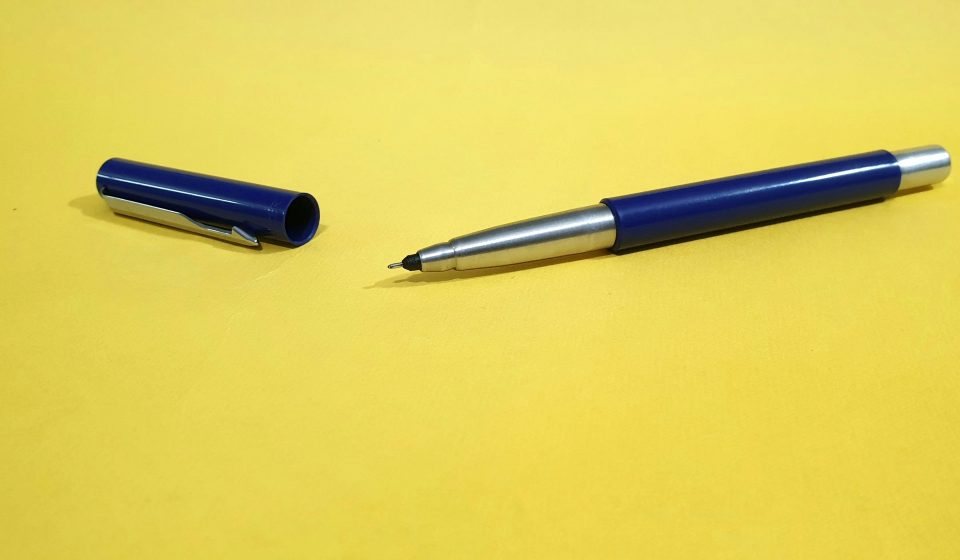

You’ve probably held one thousands of times.
At school.
At work.
At the kitchen table.
Maybe there’s one sitting in a drawer beside you right now.
Pick up an ordinary ballpoint pen with a removable plastic cap and look closely at the top.
On many designs, you’ll notice something that seems almost unnecessary:
a hole.
It’s small enough that most people never give it a second thought.
Maybe you assumed it was part of the manufacturing process.
Maybe you thought it helped the ink.
Or perhaps you’ve used pens like this for decades without ever wondering why the cap wasn’t simply sealed.
But on many pens, that tiny opening serves a much more important purpose.
It’s a safety feature designed to reduce the risk of asphyxiation if a pen cap is accidentally inhaled.
And there is an international safety standard specifically addressing this problem.
Look at the Top of Your Pen Cap
Not every pen cap is identical.
Some are completely different shapes.
Some are large.
Some are ventilated through openings that aren’t immediately obvious.
Retractable pens don’t need removable caps at all.
But many familiar plastic pen caps have an opening that allows air to pass through.
At first, it might seem strange.
After all, a cap’s obvious job is to cover the writing tip.
So why intentionally put a hole through it?
The answer becomes clearer when you think about what can happen to a small removable object.
Especially around children.
Children Put Small Objects in Their Mouths
Parents know how quickly it can happen.
A child picks something up.
Before an adult can react, it’s in the child’s mouth.
Coins.
Toy pieces.
Buttons.
Small batteries.
Caps.
Anything small enough can become a potential choking or airway hazard.
Pen caps present an obvious concern because they’re common, portable and often used by school-age children.
There’s another behavior almost everyone has seen:
chewing on a pen.
People place pens and caps near their mouths without consciously thinking about it.
If a small cap is accidentally inhaled rather than swallowed normally, it can become lodged in the airway.
That’s where ventilation becomes important.
The Hole Is Designed to Let Air Pass
Imagine a solid cap blocking an airway.
If it forms a tight obstruction, airflow can be severely restricted.
A properly designed ventilated cap provides a passage through which air can move.
That doesn’t mean the person is suddenly safe.
It doesn’t mean choking is harmless.
And it certainly doesn’t mean someone should intentionally put a pen cap in their mouth.
The purpose is to reduce the risk of asphyxiation and potentially provide additional time for medical intervention.
That’s a very different claim from saying:
“The hole prevents choking.”
It doesn’t.
It’s an additional layer of safety.
There’s Actually an International Standard for This
This isn’t simply an internet explanation that became popular because it sounds plausible.
The International Organization for Standardization has a standard specifically addressing caps for writing and marking instruments.
It’s called:
ISO 11540:2021 — Writing and marking instruments — Specification for caps to reduce the risk of asphyxiation.
The standard applies to writing and marking instruments that, under normal or foreseeable circumstances, are likely to be used by children up to age 14.
Its purpose is explicit:
reduce the risk of asphyxiation from caps.
That’s strong evidence that the opening found in many pen caps isn’t a meaningless manufacturing quirk.
A Cap Can Meet Safety Requirements in Different Ways
An interesting detail is that the standard doesn’t simply say:
“Every pen cap must have a hole.”
Design matters.
A cap can reduce the hazard by being sufficiently large that it doesn’t present the same inhalation risk.
Alternatively, a smaller cap can incorporate ventilation designed to allow adequate airflow.
So if you find a pen without the familiar hole, that doesn’t automatically mean the manufacturer forgot about safety.
Different cap designs can address the hazard differently.
The Airflow Isn’t Arbitrary
The engineering behind these caps goes further than simply drilling a random opening into plastic.
ISO requirements include testing for ventilated caps.
The point is to establish that sufficient air can actually move through the design under specified conditions.
That’s important because a tiny decorative opening wouldn’t necessarily accomplish the intended safety function.
The ventilation has to work.
In other words, what looks like an incredibly simple piece of plastic can actually be subject to specific design and performance requirements.
BIC Explains the Hole Directly
One of the best-known examples comes from BIC.
The company addresses the question in its stationery information for its Cristal pens.
BIC says its vented caps comply with the international ISO 11540 safety standard intended to minimize risks to children from accidental inhalation of pen caps.
The company also notes that the ventilation allows additional air circulation around the pen point while the pen is capped.
So in this particular case, there can be an additional design benefit.
But the safety role is the important reason that has attracted so much attention.
Does the Hole Keep the Ink From Drying?
This is where explanations online can become confusing.
You’ll sometimes see people confidently claim that the hole exists only to prevent ink from drying.
Others claim it’s primarily there to regulate pressure.
Some say it’s simply cheaper to manufacture.
Those explanations shouldn’t automatically be applied to every pen design.
Different pens can use different cap structures for different reasons.
And BIC itself notes an additional performance effect from air circulation.
But when discussing ventilated caps designed under ISO 11540, the safety function is well established.
That’s the part we can state confidently.
The Cap Still Protects the Pen Tip
Long before people started asking about the hole, pen caps had an obvious practical job.
They cover the writing end.
Depending on the pen design, the cap can help protect the tip from damage and prevent ink from getting onto clothing, bags, desks and other surfaces.
Anyone who has accidentally carried an uncapped pen in a pocket knows why that matters.
The cap is therefore doing more than one job.
Its basic purpose concerns the pen.
Its safety-oriented design can concern the person using it.
Why Not Just Make Every Pen Retractable?
That’s another reasonable question.
If removable caps can become hazards, why use them at all?
Retractable pens solve the cap problem by allowing the writing tip to move inside the body.
But not every writing instrument is designed that way.
Markers, certain pens and other writing tools may still require or benefit from caps.
International safety guidance recognizes this reality.
Where caps are necessary, their design can reduce risk.
It’s a classic engineering principle:
If a potential hazard can’t be completely removed, design the product to reduce the danger.
The Hole Doesn’t Make Chewing Pen Caps Safe
This needs to be emphasized.
Once people learn why the hole exists, they may draw the wrong conclusion:
“So if there’s a hole, the cap can’t suffocate someone.”
That’s not what the feature means.
A cap lodged in the airway remains a medical emergency.
The ventilation is intended to reduce risk and potentially delay asphyxiation.
It doesn’t guarantee that enough air will always pass.
It doesn’t guarantee that the cap will remain positioned correctly.
And it doesn’t eliminate the possibility of serious injury.
Children should still be discouraged from sucking, chewing or placing pen caps in their mouths.
Don’t Deliberately Test It
This should also go without saying, but viral “life hacks” sometimes encourage dangerous experiments.
Don’t place a pen cap in your mouth to see how much air passes through it.
Don’t encourage a child to try it.
Don’t attempt to demonstrate the safety feature by putting the cap near someone’s airway.
The feature exists for accidental emergencies.
It isn’t intended to be tested by consumers in that way.
What If Someone Actually Chokes on a Pen Cap?
Treat a suspected airway obstruction seriously.
Don’t assume the ventilation hole means you have plenty of time.
A person with a severe airway obstruction may be unable to speak, breathe or cough effectively.
Emergency response procedures depend on the person’s age and condition.
Contact emergency medical services and follow appropriate first-aid guidance for choking.
If you’re regularly responsible for children, learning recognized choking first aid from a qualified organization is far more useful than trying to remember instructions for the first time during an emergency.
The Design Is Especially Relevant to Children
The international standard specifically considers writing instruments likely to be used by children up to age 14.
That makes sense.
Pens and markers are everywhere in childhood.
School desks.
Backpacks.
Homework areas.
Art supplies.
Libraries.
Homes.
A removable cap can easily end up in a child’s hand.
And because mouthing objects is common among younger children, manufacturers have reason to consider what happens if a cap accidentally enters the airway.
It’s an Example of Invisible Safety Engineering
We tend to notice safety features when they’re large.
Seat belts.
Airbags.
Smoke detectors.
Guardrails.
Emergency exits.
But many safety features are almost invisible.
A small change in shape.
A rounded edge.
A pressure-release mechanism.
A material chosen because it breaks in a particular way.
Or, in this case, an opening in a tiny plastic cap.
Good safety engineering often disappears into everyday life.
You don’t think about it because, most of the time, nothing goes wrong.
You’ve Probably Seen the Feature for Years
That’s perhaps the most interesting part.
The hole isn’t hidden.
It’s right there.
Millions of people have looked directly at it.
They’ve put the cap back on after writing a note.
They’ve carried it through school.
They’ve signed checks and forms.
They’ve used pens at offices, banks, hotels and restaurants.
Yet unless someone asks:
“Why is there a hole in this?”
there’s little reason to investigate.
It becomes part of the background.
Small Objects Can Contain Serious Engineering
A pen cap looks simple because it needs to look simple.
But manufacturing everyday consumer products requires thinking about situations most users never consider.
What happens if the cap breaks?
What happens if a child gets it?
Can it be inhaled?
If inhaled, can air pass through it?
Is the opening large enough to provide meaningful airflow?
Those aren’t questions consumers normally ask when buying a 50-cent pen.
Someone designing the product has to.
That’s What Makes Everyday Objects Interesting
The modern world is filled with features like this.
Tiny holes.
Tabs.
Grooves.
Notches.
Symbols.
Raised bumps.
Different textures.
Many exist for specific reasons that aren’t obvious until someone explains them.
Some improve manufacturing.
Some improve usability.
Some help people with disabilities.
Some prevent damage.
And some are designed around accidents that manufacturers hope will never happen.
The pen-cap opening belongs to that last category.
A Safety Feature Is Not a Safety Guarantee
This distinction applies far beyond pens.
Safety features reduce risk.
They rarely eliminate it completely.
A seat belt doesn’t make crashes harmless.
A smoke alarm doesn’t prevent fires.
A child-resistant container doesn’t mean children can safely play with medication.
And a ventilated pen cap doesn’t make it safe to put the cap in your mouth.
The feature is there because accidents can happen despite precautions.
Parents Should Still Treat Loose Caps as Small Objects
If young children are around, ordinary common sense remains important.
Keep small removable objects away from children who may put them in their mouths.
Discourage chewing on pens and caps.
Replace damaged writing instruments.
And don’t rely on a ventilation opening as a substitute for supervision.
The best airway obstruction is the one that never happens.
Not Every Hole Has the Same Purpose
One final caution is useful when talking about product design.
You shouldn’t assume every opening on every writing instrument exists for exactly the same reason.
Pen designs vary.
Manufacturers vary.
Products intended only for adults can fall outside the scope of standards aimed at children’s foreseeable use.
Some openings can have multiple functions.
That’s why it’s better to say:
Many ventilated pen caps are designed to reduce the risk of asphyxiation if accidentally inhaled.
That’s accurate.
Saying every pen cap hole ever manufactured exists exclusively for one reason would go beyond what the evidence supports.
The Tiny Detail You May Never Look at the Same Way Again
Pick up a familiar capped pen after learning this and the design suddenly looks different.
What previously seemed like a meaningless hole becomes evidence of someone considering a worst-case scenario.
A child puts the cap in their mouth.
The cap is accidentally inhaled.
It becomes lodged.
What can the product itself do to reduce the danger while emergency help is sought?
One answer is remarkably simple:
Let air through.
Final Thoughts
The small opening found in many pen caps isn’t merely decorative.
Ventilated caps are an established safety design intended to reduce the risk of asphyxiation if a cap is accidentally inhaled.
The international ISO 11540:2021 standard specifically sets requirements for writing and marking instrument caps intended to reduce this hazard, particularly for products likely to be used by children.
BIC also confirms that its vented Cristal pen caps comply with this standard and explains that the design helps minimize risks associated with accidental inhalation.
But the opening should never be interpreted as complete protection.
A pen cap can still be dangerous.
Children should not chew or suck on them, and a suspected airway obstruction requires immediate attention.
It’s a tiny feature on an object most of us barely notice.
But once you understand why it’s there, an ordinary pen cap becomes a surprisingly good example of how thoughtful design can hide in plain sight.
Sometimes the smallest details have the biggest reasons behind them.