Halfway Down the Wedding Aisle, Grandpa Stopped—and Asked My Mother Where My College Fund Had Gone

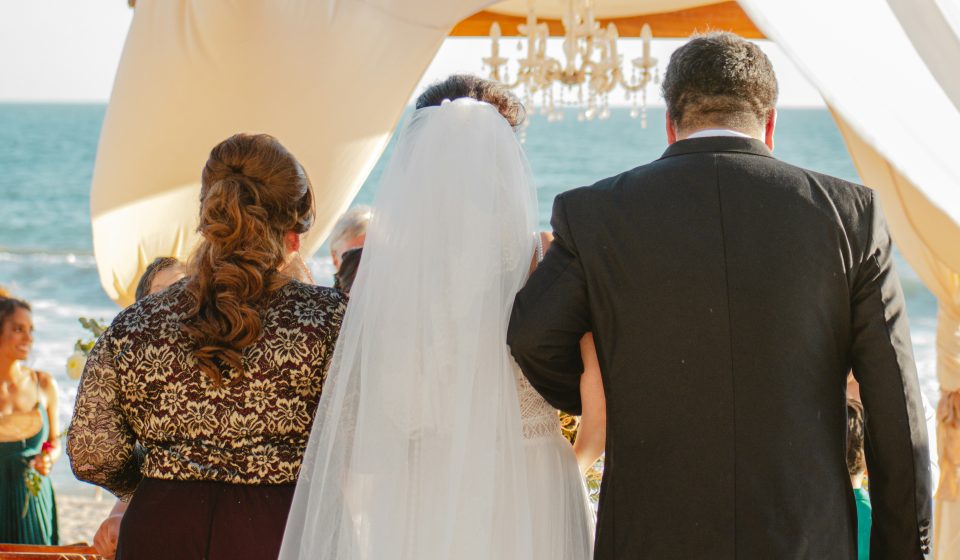
Halfway down the aisle, Grandpa stopped.
Not stumbled.
Not hesitated because his knee hurt.
Stopped.
The organ continued for another few notes before the music seemed to falter with the rest of the room.
I felt Grandpa’s arm stiffen beneath mine.
His black cane was planted firmly against the church floor.
Every face had been turned toward me only seconds earlier.
Now everyone was looking at him.
Grandpa turned slowly toward the front pew.
Toward my mother.
“Diane,” he said, “tell them where Hannah’s college fund went.”
For one impossible second, nobody moved.
Then the church seemed to inhale all at once.
Dad’s smile disappeared.
Mom went pale.
“Walter,” she whispered. “Please. Not here.”
Grandpa looked at her for a long moment.
He had spent years being quiet.
Years trusting people who told him everything was fine.
Years believing that the promises he had made to me were being honored.
He wasn’t going to be hurried now.
And neither was I.
Because I already knew the answer.
I had spent twenty-two months finding it.
I Hadn’t Planned to Expose Anyone at My Wedding
People would later remember that moment as though Grandpa and I had planned some dramatic confrontation.
We hadn’t.
I didn’t walk into the church dreaming of revenge.
I didn’t want my wedding to become a courtroom.
I didn’t want Owen’s family sitting on one side of the church while mine collapsed on the other.
Most of all, I didn’t want the day to become another chapter in a family story I had spent years trying to escape.
I wanted to marry Owen.
That was all.
But sometimes truth doesn’t wait for the convenient moment people keep promising will eventually arrive.
Sometimes “later” is simply another word for never.
Grandpa apparently understood that better than I did.
The College Fund Had Been His Promise to Me
Grandpa had established the fund years earlier.
To him, education wasn’t simply about earning a degree.
It was independence.
A door.
A choice.
He wanted me to have options.
That mattered because I had grown up learning that some children in a family can receive everything loudly while another learns to need things quietly.
My sisters had celebrations.
Plans.
Attention.
I learned how to make myself easy.
Easy children don’t ask too many questions.
They don’t complain when plans change.
They don’t point out when something feels unfair.
They become grateful for whatever remains.
For a long time, I thought that was maturity.
Eventually, I realized it was survival.
I Was Supposed to Have Money for College
When the time came for me to use the fund, the answers were vague.
There were delays.
Explanations.
Paperwork.
Misunderstandings.
Mom always seemed to have another reason why things couldn’t be settled immediately.
Dad told me not to create conflict over money.
That sentence stayed with me.
Don’t create conflict over money.
As though I were creating the problem by asking where the money had gone.
As though silence were somehow more honorable than an answer.
I began working my way through school instead.
And I started asking questions.
Quietly.
Twenty-Two Months
That’s how long it took.
Twenty-two months.
Not because the truth was impossibly complicated.
Because families can become very good at hiding simple truths beneath layers of emotion.
I followed numbers.
Dates.
Withdrawals.
Transfers.
Expenses.
I compared what I knew with what I had been told.
One piece led to another.
The fund hadn’t vanished in one dramatic act.
It had disappeared gradually.
A little here.
More there.
Money intended for my education had been redirected into other parts of the family’s life.
My sisters’ weddings.
Stacy’s diamond bracelet.
Birthday trips to Rome.
Things that had photographs afterward.
Things people celebrated.
Things everyone could point to and remember.
Meanwhile, I slept in the attic and tried to convince myself that needing less made me stronger.
Numbers Don’t Need to Shout
I never confronted my family with screaming accusations.
Maybe part of me wanted to.
But anger would have made things easier for them.
They could have talked about my tone.
My behavior.
My disrespect.
My timing.
Anything except the numbers.
So I stayed quiet.
I documented everything.
Line by line.
Date by date.
Numbers have an advantage people don’t.
They don’t care who the favorite daughter is.
They don’t care who cries first.
They don’t care who says, “After everything we’ve done for you.”
They simply remain what they are.
I learned to trust that.
Then I Discovered the Letters
The money hurt.
The letters hurt differently.
For years, I had wondered why Grandpa seemed to disappear from my life.
We had once written to each other.
Real letters.
Paper.
Ink.
Envelopes.
He had always believed handwritten words carried more weight because someone had to sit still long enough to write them.
Then the letters stopped.
At least, that’s what I believed.
During those twenty-two months, I learned they hadn’t stopped.
Mom had been collecting them from the mailbox before I ever saw them.
I don’t know which discovery made me feel smaller.
That the money Grandpa intended for my future had been spent elsewhere.
Or that I had been allowed to believe he’d forgotten me.
Money can be replaced.
Years are harder.
Grandpa Hadn’t Forgotten
When we finally understood what had happened, there wasn’t a dramatic reunion.
Not at first.
There was too much to process.
Too many years between the truth and the version we’d each been living.
But one thing became clear.
Grandpa had not abandoned me.
I had not been forgotten.
Someone had simply stood between us.
That realization changed the shape of my childhood memories.
Moments I had interpreted one way suddenly meant something else.
Silence I had blamed on him belonged somewhere else.
That’s one of the cruelest things about discovering a family secret.
The truth doesn’t only change the present.
It reaches backward.
It edits memories you thought were already finished.
Owen Knew Everything
By the time our wedding arrived, Owen knew what I had found.
He knew about the fund.
The letters.
The records.
The months of quietly putting the pieces together.
He never told me what I should feel.
That was one of the reasons I loved him.
People often want pain to become simple.
“Cut them off.”
“Forgive them.”
“Move on.”
“Confront them.”
Owen didn’t do that.
He let me decide what belonged to me.
And on our wedding day, he carried the folder.
Not because we’d planned to expose anyone.
Because I was done being separated from the truth.
Then Grandpa Stopped Walking
The church had been beautiful moments earlier.
Now it felt unbearably small.
“Diane,” Grandpa repeated.
Mom’s hands were clasped tightly together.
Dad leaned toward her.
Brooke stared straight ahead.
Stacy wouldn’t look at me.
“Walter,” Mom said again, “this is Hannah’s wedding.”
Grandpa nodded.
“I know.”
His voice wasn’t loud.
That somehow made it worse.
There was no performance in him.
No rage.
No pleasure.
Just a man who had realized that silence had protected the wrong people for too long.
I Didn’t Make a Speech
I could have.
I had twenty-two months’ worth of things to say.
I could have described every transaction.
Every excuse.
Every letter I never received.
Every time I’d wondered why Grandpa had stopped writing.
Every moment I’d believed there must have been something about me that made people decide I needed less.
But I didn’t.
I released Grandpa’s arm.
Owen stepped toward me with the folder.
I took it.
Then I walked toward the woman who chaired the foundation’s board.
She had known our family for thirty years.
I handed it to her.
The room remained completely still.
“I didn’t bring this here to ruin anyone’s day,” I said.
“I brought it because I’m done carrying something that was never mine.”
That was enough.
I Went Back to Grandpa
No one stopped me.
No one demanded the folder.
No one tried to explain.
Perhaps there are moments when people finally understand that explanations have arrived too late.
I returned to Grandpa.
He offered me his hand.
I took it.
Brooke was staring at the floor.
Mom looked as though she wanted to speak.
Dad didn’t.
And somehow, despite everything, my mascara held.
It’s strange what you remember from moments that divide your life into before and after.
I remember Grandpa’s cane.
The silence.
The folder in my hand.
Owen’s face.
And the ridiculous thought that at least my mascara hadn’t run.
We Finished Walking Down the Aisle
Grandpa and I continued.
Slowly.
One step at a time.
The church felt different now.
Not ruined.
Just stripped of pretending.
When I reached Owen, his eyes were wet.
He took my hands.
There are many ways people imagine their wedding day.
Perfect flowers.
Perfect photographs.
Perfect speeches.
Nobody imagines family financial records entering the ceremony.
But standing there with Owen, I understood something.
I didn’t need a perfect wedding.
I needed a truthful beginning.
We had that.
The Ceremony Continued
Nobody ran out.
Nobody started screaming.
The wedding went on.
Quieter than before.
But somehow more real.
Words about trust sounded different after what had just happened.
Promises sounded heavier.
Maybe they should.
A promise is easy when nobody expects it to cost anything.
It’s harder when keeping it requires telling the truth.
Owen and I made ours anyway.
And when the ceremony ended, I was married.
That remained the most important thing that happened that day.
The Foundation Opened a Review
What happened afterward wasn’t immediate.
Real consequences rarely arrive as neatly as they do in stories.
The folder went where it needed to go.
The foundation opened a review.
Records were examined.
Questions were asked.
The family could no longer control the situation through private conversations.
That mattered.
For years, everything had existed inside our family’s version of events.
Now people outside the family were looking at the numbers.
The truth no longer depended on whether Mom admitted it.
Dad Stepped Down
Eventually, Dad stepped down.
I had complicated feelings about that.
Part of me had spent years wanting consequences.
When they arrived, they didn’t feel like victory.
They felt heavy.
That’s something nobody tells you about accountability.
You can believe consequences are necessary without enjoying them.
You can love someone and still believe they should answer for what they did.
You can mourn what happens to a family without pretending the truth caused the damage.
The choices caused the damage.
The truth only revealed it.
The Money Came Back
Eventually, the money was returned to the fund in my name.
For years, I’d imagined what that moment might feel like.
Relief?
Vindication?
Anger?
Instead, I looked at the number and realized I didn’t want it anymore.
Not for myself.
I had already worked my way through school.
I’d already learned what I could survive.
The money represented a promise that should have been kept years earlier.
Returning it couldn’t return those years.
So I decided to make it mean something else.
I Created a Scholarship
I gave the money to a scholarship for girls working their way through school.
Girls balancing classes with jobs.
Girls wondering whether exhaustion meant they weren’t good enough.
Girls who might need one person to say:
You don’t have to do all of this alone.
I didn’t do it because I’d suddenly stopped caring about what happened.
I did it because I wanted the money to finally accomplish something close to what Grandpa had intended.
He had wanted education to create possibility.
It still could.
Just not in the way we’d originally imagined.
Stacy Wrote First
Of all my family members, Stacy surprised me.
Her letter arrived first.
It wasn’t defensive.
She didn’t explain why she deserved the bracelet.
She didn’t tell me she’d been too young to understand.
She didn’t make herself the victim of someone else’s choices.
She wrote honestly.
That mattered.
Honesty doesn’t undo harm.
But without honesty, repair doesn’t even begin.
I read her letter more than once.
Then I put it away.
I wasn’t ready to answer immediately.
And for once, I didn’t force myself to be.
Mom’s Letter Came Last
Mom’s letter was shorter.
No polished language.
No grand explanation.
No attempt to make the past sound prettier.
I read it once.
Then again.
I didn’t call what I felt forgiveness.
Not yet.
People use that word too quickly.
As though forgiveness is a switch.
As though someone apologizes and the injured person is expected to become comfortable again.
I wasn’t comfortable.
But I wasn’t where I’d been either.
So I called it a beginning.
That was enough.
Grandpa and I Write Every Week Now
Not text messages.
Not emails.
Letters.
Every week.
By hand.
Sometimes they’re long.
Sometimes they’re ordinary.
Nothing dramatic.
That’s what I love most about them.
After so many years when our communication was controlled by someone else, ordinary letters feel extraordinary.
I know when he writes to me now.
He knows when I answer.
No intermediary.
No missing envelope.
No one deciding what either of us is allowed to know.
And no one collects them.
What Hurt Most Wasn’t the Money
People hear this story and naturally focus on the college fund.
Money is easy to understand.
There was supposed to be a certain amount.
It disappeared.
It was eventually returned.
But the deeper loss was trust.
Money can be counted.
Trust can’t.
There is no statement showing exactly when it was depleted.
No ledger explaining how much remains.
No transfer that restores it instantly.
Trust comes back differently.
A letter.
A truthful answer.
A boundary respected.
A promise kept.
Then another.
Slowly.
Families Can Confuse Silence With Peace
For years, our family looked peaceful.
We didn’t discuss certain things.
We avoided certain questions.
We knew which subjects changed Mom’s expression.
We knew when Dad wanted a conversation to end.
Nobody shouted.
From the outside, perhaps that looked healthy.
It wasn’t.
Silence isn’t automatically peace.
Sometimes silence is simply where unresolved things are stored.
And eventually, someone has to open the door.
Grandpa did it halfway down my wedding aisle.
The timing was terrible.
The truth was still necessary.
Honesty Has a Cost
That’s what I learned.
People love the idea of honesty until honesty requires something from them.
A position.
A reputation.
A relationship.
Money.
Comfort.
The version of themselves they’d rather believe.
Then truth suddenly feels cruel.
But hiding the truth has a cost too.
Someone always pays it.
For years, I did.
Grandpa did.
Even my sisters lived inside a family structure built partly on things they didn’t fully understand.
When the truth finally arrived, the bill simply stopped being mine alone.
I Didn’t Get My Old Family Back
That might be the most important part.
There was no magical return to normal.
Normal was part of the problem.
Some relationships changed permanently.
Some conversations became harder.
Some became more honest.
There were boundaries that hadn’t existed before.
There were silences too.
But they were different silences.
Not secrets.
Space.
There’s a difference.
I Also Stopped Measuring Myself by What I Was Given
For a long time, I believed my family’s choices said something about my worth.
My sisters received more.
Therefore, perhaps they deserved more.
Grandpa stopped writing.
Therefore, perhaps I mattered less.
The college money disappeared.
Therefore, perhaps my future was negotiable.
That logic feels ridiculous when written plainly.
But children don’t experience family patterns as accounting problems.
They experience them as information about themselves.
It took years to understand that someone else’s unfairness wasn’t evidence about my value.
My Wedding Wasn’t Ruined
People have asked whether I wish Grandpa had waited.
Sometimes I wonder.
There probably was a gentler place.
A more private moment.
A better day.
But I also know how long our family had survived by waiting for the “right time.”
The right time never came.
There was always another birthday.
Another holiday.
Another wedding.
Another reason not to say anything.
So no, I don’t think my wedding was ruined.
It became something I never expected.
A dividing line.
Before that aisle, I was still carrying a secret that belonged to other people.
After it, I wasn’t.
The Photographs Tell Only Half the Story
The wedding photographs look beautiful.
That’s almost funny.
You can’t photograph what happened inside that church.
You see Grandpa beside me.
His cane.
My dress.
Owen waiting.
My family in the pews.
If you didn’t know the story, you’d see an ordinary wedding.
Maybe that’s another lesson.
Photographs capture faces.
They don’t capture histories.
You never know what a family has carried into the room.
Grandpa Still Says He Would Do It Again
He doesn’t apologize for stopping.
He apologizes for not understanding sooner.
I tell him the same thing every time.
He trusted his family.
Trusting people you love shouldn’t be treated as stupidity.
What matters is what you do once the truth becomes impossible to ignore.
Grandpa chose me.
Not against everyone else.
For the truth.
There is a difference.
I Don’t Know Exactly What Forgiveness Will Look Like
Maybe that’s okay.
I used to think every painful story needed a final emotional destination.
Forgiven.
Estranged.
Reconciled.
Finished.
Real life isn’t always that clean.
Mom and I are somewhere between what we were and whatever we might become.
Stacy and I are rebuilding something.
Brooke has her own way of processing what happened.
Dad and I still have things that haven’t been said.
Grandpa and I write.
Owen and I live our life.
That’s where the story is now.
Not finished.
Just honest.
Final Thoughts
Halfway down the aisle on my wedding day, Grandpa stopped walking and asked my mother where my college fund had gone.
The question lasted only seconds.
The answer had taken me twenty-two months to uncover.
Money intended for my education had been redirected into other family expenses while letters from Grandpa had been intercepted before they reached me.
I could have turned that moment into a public accusation.
Instead, I handed the documentation to someone who could review it and returned to the man waiting to finish walking me down the aisle.
The foundation investigated.
Dad stepped down.
The money was eventually restored.
And I chose to turn it into a scholarship for girls working their way through school.
None of that erased what happened.
It didn’t return the missing letters.
It didn’t repair every relationship.
It didn’t instantly create forgiveness.
But it ended the silence.
Today, Grandpa and I write to each other every week.
By hand.
No missing letters.
No one standing between us.
And perhaps that’s what I’ve learned about honesty.
Truth doesn’t always repair what was broken.
Sometimes it simply gives you the first honest piece from which something new can finally be built.
If telling the truth would permanently change your family, would you still tell it—even on a day everyone expected you to stay silent?
Editor’s note: This is a dramatized family narrative presented for storytelling and reflection. It should not be interpreted as verified reporting about identifiable real people or a documented legal case.