An 8-Year-Old Boy Saw a Child Trapped in a Hot Car—and Made a Decision That Could Have Changed Everything

Liam knew he was going to be late for school.
He also knew what Mrs. Grant had said about tardiness.
There would be no excuses.
No wandering around before class.
No arriving after the lesson had started.
At eight years old, rules still felt simple to Liam.
Adults made them.
Children followed them.
But that morning, as he passed through a parking lot on his way to school, Liam encountered something no classroom rule had prepared him for.
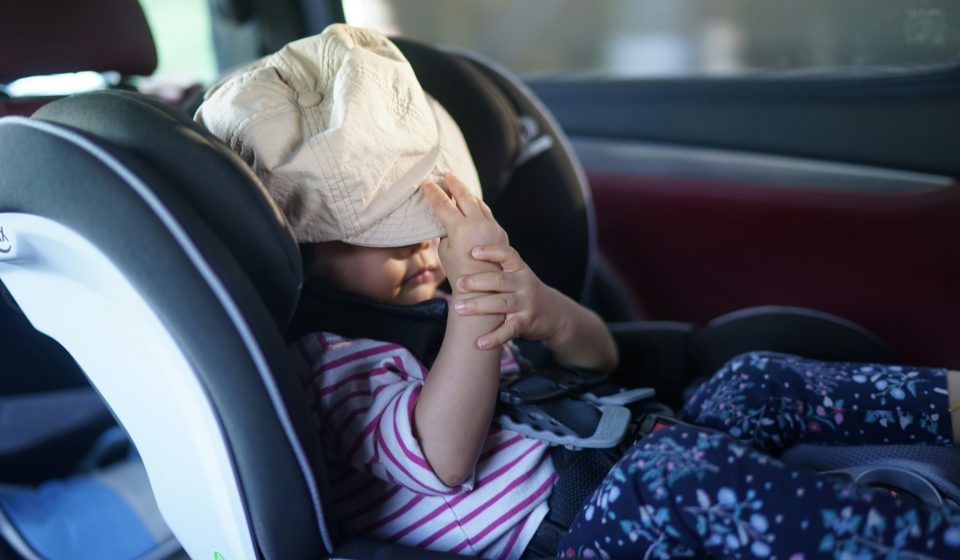
A baby was alone inside a parked car.
And she was crying.
At First, Liam Kept Walking
He had somewhere to be.
School.
He glanced toward the vehicle and continued for a few steps.
Then he stopped.
Something didn’t feel right.
The baby was still crying.
Liam looked around.
People were moving between cars and the nearby store.
Shopping carts rattled across the pavement.
Doors opened and closed.
But nobody appeared to be heading toward the vehicle.
Liam waited.
Still no parent.
No adult.
Nobody.
He moved closer.
The Child Was Alone
Through the window, Liam could see the little girl inside.
She looked uncomfortable.
Her crying wasn’t stopping.
The car was closed.
Liam looked toward the store again.
Maybe her mother would appear.
Maybe her father was only a few steps away.
Maybe an adult already knew.
But every second he stood there made him more nervous.
He was only eight.
He didn’t know how long the child had been inside.
He didn’t know how hot the vehicle had become.
He only knew that something seemed wrong.
And the baby couldn’t get herself out.
He Tried to Find Help
Liam looked around for an adult.
He wanted someone older to take over.
Someone who would know exactly what to do.
But the child continued crying.
The longer he waited, the more frightened he became.
He remembered hearing adults warn that cars could become dangerously hot.
He didn’t know the science.
He didn’t need to.
He could see the baby struggling.
At that moment, the rule about getting to school on time seemed very small.
Liam Made a Decision
It was the kind of decision an eight-year-old should never have to make.
He needed to get the child out.
Liam found something he believed could break the window.
He hesitated.
Breaking somebody else’s property was wrong.
He knew that.
He imagined the owner returning.
He imagined the police.
He imagined Mrs. Grant asking why he was late.
But then he looked through the glass again.
The baby was still inside.
Liam acted.
The Glass Shattered
The sound cut through the parking lot.
People turned.
Liam’s heart pounded.
Suddenly, the situation that had seemed invisible to everyone became impossible to ignore.
He carefully reached toward the child.
His only thought was getting her away from the enclosed vehicle.
Then he heard someone shouting.
A woman was running toward him.
Her shopping cart had been abandoned behind her.
Her expression showed panic, shock and anger all at once.
“My baby!”
The Mother Grabbed Her Child
She rushed forward and took the baby from Liam.
For a moment, nothing else seemed to matter.
She held the little girl tightly.
The baby’s crying gradually softened.
Relief crossed the woman’s face.
Her child was in her arms.
Then she looked at the broken window.
And at Liam.
“What were you thinking?” she demanded.
“You smashed my car window!”
Liam’s face burned.
Only moments earlier, he’d been terrified for the baby.
Now he wondered whether he’d made a terrible mistake.
“She Was Crying”
Liam struggled to explain himself.
“She was crying and overheating,” he said.
“I was afraid she’d get hurt.”
His voice was quiet.
He wasn’t trying to be a hero.
He wasn’t looking for attention.
He was an eight-year-old boy trying to explain why he’d broken an adult’s car window.
By then, other people had started gathering.
The sound of breaking glass had drawn attention from across the parking lot.
Among them was Mr. Thompson, the local store manager.
The Store Manager Looked at the Whole Situation
“Is everyone okay here?”
The mother nodded, still shaken.
She held the baby against her.
“He shattered my car window,” she said, pointing toward Liam.
Mr. Thompson looked at the broken glass.
Then at Liam.
Then at the child.
The situation appeared to him differently.
Rather than seeing only damaged property, he saw why the boy had acted.
“It sounds like this young man may have just rescued your child,” he said.
He reminded everyone that leaving a child unattended inside a vehicle can be extremely dangerous, particularly in warm conditions.
The crowd began murmuring.
One Woman Called Liam a Hero
Another shopper stepped forward.
She had apparently seen enough of what happened to understand why Liam acted.
“That boy is a hero,” she said.
“You should be thanking him.”
Liam wished everyone would stop looking at him.
He didn’t feel like a hero.
His hands were still shaking.
He was thinking about school.
About Mrs. Grant.
About the broken window.
About whether the baby was really okay.
He looked at the mother.
“I’m sorry about the window,” he said.
“I just wanted to make sure nothing happened to her.”
The Mother’s Anger Began to Fade
She looked down at the child in her arms.
Then back at Liam.
The first burst of anger had passed.
She took a breath.
“Thank you,” she said more quietly.
“You showed real courage.”
Then she acknowledged something more difficult.
She should have been more careful.
Liam didn’t need anything else.
The baby was out.
Her mother was there.
Adults had taken control of the situation.
Now another problem returned to his mind.
School.
He was very late.
Mr. Thompson Offered to Help With the Window
The store manager wanted to calm the situation.
According to the story, he offered to cover the cost of replacing the damaged window.
The crowd gradually began to disperse.
The emergency had passed.
Liam checked the time.
His stomach dropped.
Whatever happened next, Mrs. Grant wasn’t going to believe he’d simply lost track of time.
He waved goodbye.
Then he ran.
He Arrived at School Breathless
By the time Liam reached his classroom, the lesson had already started.
He paused outside.
This was the moment he’d been dreading.
Mrs. Grant had made her expectations clear.
And Liam had broken one of them.
He entered quietly, hoping he might reach his desk without attracting too much attention.
That hope lasted only a moment.
The principal appeared at the classroom door.
“Liam, could you step outside with me for a second?”
Liam froze.
He Thought He Was in Trouble
The walk into the hallway felt longer than it was.
Liam prepared himself.
He would explain.
There had been a baby.
The car was closed.
She was crying.
He couldn’t just leave.
Maybe the principal would understand.
Maybe he wouldn’t.
Then Mr. Turner crouched so he was closer to Liam’s eye level.
His expression wasn’t angry.
“I heard about what happened this morning.”
Liam waited.
The principal continued.
“That took an immense amount of bravery.”
Liam hadn’t expected those words.
The Store Manager Had Called the School
News of what happened had reached the principal before Liam could explain it himself.
Mr. Thompson had contacted the school.
The principal knew why Liam was late.
More importantly, he understood that the boy hadn’t been wandering around or deliberately ignoring school rules.
He had encountered a frightening situation and tried to help.
“You have every right to be proud,” Mr. Turner told him.
Liam felt the tension begin to disappear.
“Thank you,” he whispered.
Mrs. Grant Knew Too
When Liam returned to class, he expected everyone to stare.
Some did.
But Mrs. Grant smiled.
“It appears you had a very valid excuse for your tardiness today.”
The strict rule about being on time hadn’t disappeared.
What changed was the context.
Rules exist for reasons.
But sometimes circumstances matter.
Liam sat down.
For the first time all morning, he could breathe normally.
The Story Raises a Bigger Question
What would most adults do in Liam’s position?
A child is visibly distressed inside a vehicle.
No parent is immediately present.
The situation appears to be getting worse.
Do you wait?
Do you search for the owner?
Do you call emergency services?
When does property damage become secondary to protecting a life?
Those questions matter because hot-car emergencies are real.
But there is an important distinction between appreciating Liam’s motivation in this story and treating his exact actions as instructions for other children.
An eight-year-old should not normally be expected to manage an emergency alone.
A Parked Vehicle Can Become Dangerous Quickly
A closed vehicle can heat rapidly when exposed to the sun.
Opening a door moments later may reveal temperatures far hotter than the surrounding air suggests.
Young children are particularly vulnerable to heat.
They depend on adults to recognize danger and remove them from it.
That means a child alone in a hot vehicle should never simply be dismissed with:
“They’ll probably be fine.”
A visibly distressed or unresponsive child requires urgent attention.
But Children Should Get an Adult Immediately
If a child Liam’s age notices a baby or young child alone inside a vehicle, the safest general lesson isn’t:
Break the window yourself.
It’s:
Get help immediately.
Find a trusted adult.
Alert store employees or security.
Call emergency services or have an adult call.
Explain exactly where the vehicle is.
If the child appears to be in immediate medical danger, emergency dispatchers can provide instructions while responders are on the way.
That distinction matters.
Liam’s story is about compassion and refusing to ignore danger.
It shouldn’t become a do-it-yourself rescue guide for young children.
Adults Shouldn’t Assume “Just a Minute” Is Harmless
Many dangerous situations begin with an adult believing an errand will take almost no time.
Run inside.
Buy one thing.
Come straight back.
But delays happen.
A line is longer than expected.
Someone stops you.
A payment problem occurs.
You can’t find an item.
A few intended minutes become many.
A young child left behind doesn’t control any of those variables.
The safest choice is not to leave the child alone in the vehicle in the first place.
Property Can Be Repaired
That is one reason the broken window plays such a powerful role in the story.
A car window has a price.
It can be replaced.
Human life doesn’t work that way.
That doesn’t mean damaging property is automatically justified whenever someone feels worried.
Real emergencies require judgment, and laws can differ by location.
But when there is a genuine, immediate threat to life, priorities change.
The focus becomes preventing serious harm.
Liam Wasn’t Looking for Praise
Perhaps the most meaningful part of the story is that Liam never set out to impress anyone.
He didn’t know the crowd would call him a hero.
He didn’t know Mr. Thompson would contact his school.
He expected to be punished for being late.
He apologized for the window.
His reasoning was much simpler.
The baby appeared to need help.
So he stopped.
Courage Doesn’t Always Feel Brave
People often imagine courage as confidence.
It isn’t always.
Sometimes courage looks like fear followed by action.
Liam was frightened.
He worried about being late.
He worried about the damaged car.
He worried that adults would be angry.
He acted anyway because another concern seemed more important.
That is the moral center of the story.
Not that rules are meaningless.
Not that children should take unnecessary risks.
But that compassion sometimes requires us to notice when ordinary priorities suddenly become less important.
The Mother Faced a Difficult Truth Too
Her first reaction was understandable on an emotional level.
She saw broken glass.
A stranger holding her child.
Chaos around her vehicle.
She reacted before she had the entire picture.
Then she looked at what had actually happened.
Her baby was safe.
The boy had acted because he believed the child was in danger.
Her anger softened.
Admitting she’d made a mistake may have been uncomfortable.
But accountability matters.
The Adults Eventually Responded the Right Way
Once adults were involved, the situation became easier for Liam.
Mr. Thompson evaluated what had happened.
The mother focused on her child.
The school received an explanation.
The principal spoke to Liam.
Mrs. Grant recognized why he was late.
That’s how emergencies involving children should work.
Adults should take responsibility.
An eight-year-old shouldn’t have to carry the entire burden.
There Is Also a Lesson About Rules
Liam had been taught to arrive at school on time.
That’s a good rule.
He had been taught not to damage other people’s property.
Also a good rule.
But rules exist within a hierarchy.
Protecting someone from immediate serious harm can become more important than punctuality.
That doesn’t mean every child should decide independently when rules stop applying.
It means adults need to teach children something more sophisticated than blind obedience.
If something seems seriously wrong, seek help.
Tell an adult.
Call emergency services when appropriate.
Don’t ignore danger simply because you’re worried about being late.
Doing Nothing Is Also a Decision
One of the easiest responses to an uncomfortable situation is to assume someone else will handle it.
Someone else probably noticed.
The parent will return.
The store employee will see.
Another person will call.
Sometimes that’s true.
Sometimes everyone is thinking the same thing.
Liam’s story works because he refused to assume that another person would solve the problem.
He noticed.
He stopped.
He cared.
Those are qualities worth encouraging.
But Heroism Shouldn’t Require a Child to Become the Rescuer
There is another lesson adults should take from the story.
We shouldn’t romanticize situations in which children are forced to solve adult failures.
Liam’s compassion can be admired while still recognizing that he should never have been placed in that position.
The better world isn’t one with more eight-year-olds breaking windows to rescue babies.
It’s one in which children aren’t left in dangerous vehicles in the first place—and where adults nearby respond quickly when something goes wrong.
What Liam Remembered Was Simple
When the day finally settled down, Liam knew he’d broken rules.
He’d been late.
A car window had been smashed.
Adults had been upset.
But the child was safe.
For him, that was what mattered.
Years later, he might remember the principal’s words.
The crowd.
The mother’s expression.
Maybe even Mrs. Grant’s smile when he returned to class.
But the most important moment came before any praise.
It came when nobody was watching him.
When he had to decide whether to keep walking.
He stopped.
Final Thoughts
The story of eight-year-old Liam isn’t powerful because a child broke a window.
It’s powerful because he noticed someone who appeared to be in danger and refused to simply walk away.
His decision frightened him.
It made him late.
It brought angry questions.
But according to the story, the child was removed from the vehicle safely, and the adults around Liam eventually understood why he had acted.
There is an important real-world caution, however.
Children should not interpret this story as permission to smash vehicle windows whenever they see a child alone inside.
A real suspected hot-car emergency should be treated seriously: alert an adult immediately, contact emergency services, identify the vehicle and location, and follow the instructions of emergency professionals. If there is an immediate threat to life, responders can advise what action is necessary under the circumstances.
The larger lesson is simpler.
Rules matter.
Property matters.
Being on time matters.
But when someone may be in genuine danger, looking away because helping would be inconvenient can have far greater consequences.
Liam didn’t begin his morning expecting anyone to call him brave.
He simply saw a child who needed help.
And he stopped.
If you saw a child alone and visibly distressed inside a hot car, would you know what to do next?
Editor’s note: This is a dramatized narrative presented for storytelling and safety awareness, not verified reporting about an identifiable real incident. In a real hot-car emergency, contact local emergency services immediately and follow professional instructions rather than relying on this story as a rescue procedure.