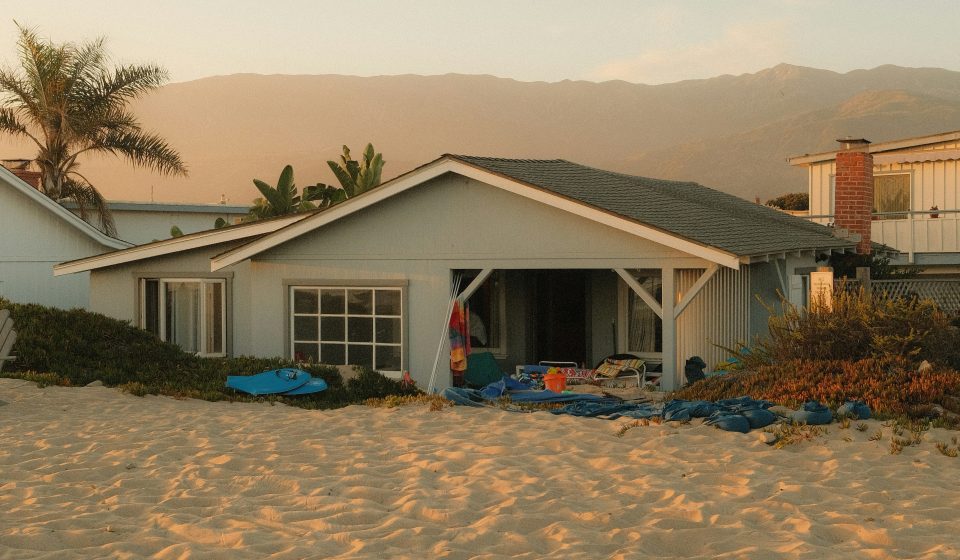
My Son Left Me Out of His “High-Status” Wedding—Then Expected Me to Hand Over My $1.94 Million Beach House

My son Cullen didn’t invite me to his wedding.
That alone was enough to break my heart.
But what happened afterward was worse.
By the time Cullen and his new wife arrived at my beach house following the ceremony, their relatives and friends were already gathered on my lawn.
Champagne was being poured.
Suitcases had been unloaded.
People were congratulating the newlyweds on their future.
And apparently, that future included my home.
There was only one problem.
I had never given it to them.
The house was worth approximately $1.94 million.
It had belonged to my late husband Nile and me.
And as I stood in front of strangers who had been told my property now belonged to my son, I realized Cullen hadn’t merely misunderstood my intentions.
He had built an entire future around an answer he’d been too afraid to ask me for.
“The House Is Still Mine”
I stood before the gathered guests with legal documents in my hands.
Nobody spoke.
“Fourteen years ago, my husband and I bought this property together,” I explained. “After his death, I became its sole legal owner.”
Cullen immediately tried to stop me.
“Mom, please. We’ve already gone over this.”
“No, Cullen. We haven’t.”
That was the problem.
We had never actually discussed any transfer.
He had simply behaved as though one existed.
Then a man named Miles stepped forward.
What he said changed everything.
“Your son told us the property handover was finalized back in June.”
I stared at him.
“He even showed us paperwork.”
“What paperwork?”
“The deed.”
Then Miles added the detail that made my stomach turn.
Cullen had apparently told everyone I’d signed it.
I Looked Straight at My Son
“Cullen, did you tell Miles that I signed this house over to you?”
Silence.
My son couldn’t answer.
Then his wife, Blythe, spoke.
Cullen had told her I wanted them to have the property.
According to him, I was getting older.
I supposedly wanted to downsize.
And I was thrilled that the newlyweds would be moving into the beach house.
None of it was true.
“I never said that, Blythe.”
She turned toward her husband.
“You told me she was thrilled about it.”
Cullen rubbed his temples.
“I was just trying to smooth things over.”
I asked the obvious question.
“For whose benefit?”
He looked at the ground.
This House Was More Than $1.94 Million to Me
Yes, the property had become valuable.
But its market price wasn’t why I cared about it.
Nile and I had rebuilt that home after a hurricane.
We spent six summers repairing it.
Walls.
Floors.
The porch.
The little details that eventually turned a damaged building back into our home.
Nile painted the blue front door himself.
After he died, returning through that door was painful.
But it was also comforting.
This was the last place where we’d truly been happy together.
And now my son had apparently promised it to himself without asking me.
Then I Noticed Nile’s Photograph Was Gone
His photograph had sat on the mantel for fourteen years.
Now it wasn’t there.
I asked Cullen what happened.
He denied moving it.
His eyes went toward Blythe.
She admitted she’d moved the photograph because she wanted the living room to look cleaner for guests.
She hadn’t known it mattered so much.
That explanation only reinforced the larger problem.
“You didn’t ask.”
They hadn’t asked before moving the photograph.
They hadn’t asked before packing their belongings.
They hadn’t asked before telling wedding guests that they’d be moving into my home.
They had simply assumed that once everything was arranged, I would cooperate.
Then I Opened an Envelope From My Late Husband
Inside my documents was something more personal.
A letter Nile had written shortly before his death.
Four months before he passed away, his illness had weakened his body considerably.
His mind remained sharp.
One evening, we sat together on the porch.
He took my hand.
Then he told me something about Cullen.
Our son had a good heart, he said.
But one day, I might have to teach him that loving someone didn’t mean giving them everything they wanted.
That night, Nile wrote me a letter.
He told me to keep it until I truly needed it.
Fourteen years later, surrounded by people expecting me to surrender our home, I finally did.
“You Do Not Owe Anyone Your Peace”
Nile’s message was simple.
If anyone ever made me feel guilty for protecting what we’d built, I should remember that loving someone didn’t mean surrendering my peace of mind.
He also wrote about Cullen.
Nile hoped our son would eventually understand that the greatest inheritance wasn’t property.
Not a house.
Not money.
Not land.
The real inheritance was understanding that people aren’t possessions.
The people who love you deserve to be asked.
Respected.
Heard.
When I finished reading, Cullen covered his face.
But I still wasn’t done.
I Explained the Legal Reality
My estate plan did not transfer the beach house to Cullen.
I remained its sole owner.
Nobody had permission to live there without my consent.
Any inheritance would happen according to properly executed estate documents.
Not promises Cullen made on my behalf.
He looked at me.
“So you’re cutting me out completely?”
“No.”
I wasn’t trying to disinherit my son in a burst of anger.
I was correcting something before it became even worse.
Then Cullen mentioned the locks.
Yes.
I had changed them.
His belongings?
I’d placed them securely on the covered porch.
He could arrange a time to collect them.
Then he said the sentence I had feared.
“You’re choosing a house over your own son.”
I shook my head.
“No, Cullen. I’m choosing not to erase myself inside my own life just to make yours more convenient.”
Then Cullen Admitted Something
As guests began realizing there would be no ceremonial handing over of keys, the mood changed.
Eventually Cullen said there was something I didn’t know.
The document he’d seen months earlier wasn’t actually a deed.
He’d spotted paperwork from my attorney.
My name was on it.
There was a reference to estate planning and the beach house.
Cullen assumed it involved transferring the property.
But he hadn’t read it properly.
He hadn’t asked me.
He had simply seen what he wanted to see.
That was bad enough.
What came next was worse.
He Knew He Hadn’t Received the House
Cullen admitted that Miles kept asking when they were getting the property.
Blythe and Cullen had already begun planning their future around it.
So Cullen told everyone the transfer was complete.
Why?
Because once everyone believed the house was theirs, he thought I wouldn’t change my mind.
Except there was no mind to change.
I’d never said yes.
He had deliberately created public expectations because he believed they would pressure me into agreeing.
This wasn’t an innocent misunderstanding anymore.
It was manipulation.
“So you knew I hadn’t given you permission?”
He didn’t answer.
He didn’t need to.
The Party Ended
I apologized to the guests for the disruption.
Then I made the situation unmistakably clear.
There would be no keys handed over.
The property wasn’t for sale.
And I’d never agreed to give it away.
People began leaving.
One woman muttered that I could have handled the situation with more grace.
I disagreed.
Grace would have been asking me before planning a future around my property.
Within about twenty minutes, nearly everyone was gone.
Only Cullen and Blythe remained.
Their luggage sat outside.
My son looked at the blue door.
“Where are we supposed to go?”
I reminded him they had a hotel reservation.
They had their belongings.
And Cullen had something else he needed to deal with.
A wife who deserved the truth.
Closing the Door Hurt
Part of me wanted to let him inside.
That’s the difficult thing about being a parent.
Your child can become an adult.
He can hurt you.
Lie to you.
Manipulate you.
And some part of you still remembers holding him when he was small.
I wanted to say everything was fine.
But it wasn’t.
And pretending otherwise would only teach Cullen that hurting me had no consequences.
I gave him the name of a nearby hotel.
I told him he could call me the next day.
Then I walked inside.
For the first time in fourteen years, I locked my front door without feeling guilty.
The Next Morning, I Had 17 Missed Calls
Nine were from Cullen.
Five were from Blythe.
Three came from numbers I didn’t recognize.
I didn’t immediately call anyone back.
I made breakfast.
Watered my plants.
Finished my coffee.
At 71, I’d learned that someone else’s panic didn’t automatically have to become my emergency.
Eventually, I called Cullen.
He answered immediately.
“Mom?”
“Yes.”
He wanted to talk.
So I listened.
His Marriage Was Already in Trouble
Blythe was furious.
She said Cullen had lied to her.
I asked him whether that was true.
“Yes.”
She said he’d humiliated her in front of her parents and friends.
Again, I asked:
Had he?
Another silence.
Cullen knew the answer.
Then he told me there was more.
He wanted to explain what had actually happened months earlier.
Cullen Had Become Ashamed of His Own Life
Blythe had grown up around wealth.
Her parents owned an impressive home in a gated community.
According to Cullen, she had always imagined herself eventually living somewhere equally impressive.
Their apartment was small.
Rent had increased twice.
Cullen worked in commercial sales, where income could vary.
Some months were good.
Others weren’t.
He began comparing himself with the people around Blythe.
And he felt inadequate.
Then he saw my attorney’s folder.
It referenced estate planning and the beach house.
He jumped to the conclusion he desperately wanted.
He told Blythe the house would eventually be theirs.
Blythe told her parents.
Her parents told other people.
A fantasy became a promise.
And every time Cullen repeated it, admitting the truth became harder.
“Why Didn’t You Ask Me?”
His answer was painfully simple.
“Because you might have said no.”
There it was.
The truth.
He hadn’t avoided asking because he thought he already knew the answer.
He avoided asking because he knew the answer belonged to me.
And he didn’t want to risk hearing it.
“Yes,” I told him. “I might have said no.”
He cried.
“I know.”
“And you decided my answer didn’t matter.”
There was no defense for that.
His Father and I Had Already Given Him Plenty
Nile and I worked hard.
When Cullen was growing up, we wanted him to have opportunities we hadn’t had.
We paid for college.
We helped him when he struggled.
We supported him after his first business venture failed.
We did those things because he was our son.
They weren’t transactions.
We weren’t buying the right to control his adulthood.
And those gifts certainly didn’t give Cullen the right to control mine.
For the first time, he seemed to understand the distinction.
But there was still another question.
Someone Had Opened My Private Envelope
Before the gathering, I’d noticed the envelope containing my estate papers and Nile’s letter had been disturbed.
I asked Cullen whether he knew anything about it.
At first, he said he hadn’t opened it.
That wasn’t what I’d asked.
I wanted to know whether he knew who had.
Finally, he told me.
Blythe.
Blythe Had Entered My Home While I Was Away
Two weeks before the gathering, Blythe had used a spare key I’d once given Cullen.
She entered my house while I was grocery shopping.
Her reason?
She wanted to measure the master bedroom to determine where their furniture would go.
Again:
My bedroom.
My house.
No permission.
While looking through a hallway cabinet, she found the envelope from my attorney.
She became nervous.
What if the documents didn’t match what Cullen had promised?
So she opened them.
She Learned the Truth Before the Party
Blythe discovered enough information to understand that ownership of my house had never been transferred.
She also saw Nile’s letter.
Then she taped the envelope closed.
Put it back.
And said nothing.
Even when plans for the gathering continued.
Why?
Cullen finally admitted it.
Blythe believed that if enough relatives and friends arrived expecting them to receive the house, I wouldn’t have the heart to disappoint everyone publicly.
That changed everything.
Both of them had mistaken kindness for weakness.
I Called My Attorney
Her name was Margaret Ellis.
She had handled my legal affairs for years.
I explained what happened.
Margaret asked two important questions.
Had any property transfer been officially recorded?
No.
Had I signed a deed transferring ownership?
Absolutely not.
Then the solution was straightforward.
She would review the title.
Verify ownership.
Document what happened.
And ensure my estate plan reflected exactly what I wanted.
I finally felt as though I could breathe again.
Then I Had Another Idea
For years, I’d volunteered at a local community center.
Many of the older people I met lived alone.
Some had adult children who rarely visited.
Others had relatives who appeared frequently—but mainly when they wanted money.
I’d heard stories about older adults being pressured to hand over savings.
Homes.
Control over finances.
Some were terrified that saying no would cost them relationships with their children or grandchildren.
Suddenly, those stories felt much more personal.
I wanted to help.
The Nile Bennett Independence Fund
I asked Margaret whether we could explore creating a fund.
Its purpose would be to help older adults obtain independent legal and financial guidance when family members pressured them to surrender homes or savings.
I wasn’t going to give away my own financial security.
I wasn’t emptying my retirement accounts.
The fund would be structured carefully.
But I could contribute a responsible amount.
And perhaps other people in the community would contribute too.
We eventually called it the Nile Bennett Independence Fund.
For the first time since the confrontation, something good seemed capable of growing from what had happened.
Cullen Returned Alone
One week later, he appeared on my porch.
No demands.
No argument.
No wife.
He was carrying a cardboard box.
Inside was Nile’s framed photograph.
It had accidentally ended up among Cullen and Blythe’s belongings.
I took it carefully.
“Thank you.”
Cullen looked at the floor.
He knew an apology couldn’t repair everything.
He also said something I’d been waiting to hear.
“I know you don’t owe me the house.”
That mattered.
But words were only the beginning.
“Understanding it today is a start,” I told him.
“Respecting it six months from now will mean far more.”
We Sat Together on the Porch
For nearly an hour, we talked.
Not about inheritance.
Not about property.
Not about what Cullen needed.
We talked about work.
Weather.
A new restaurant.
Ordinary things.
It was the first conversation we’d had in months that didn’t revolve around what he wanted from me.
As he prepared to leave, Cullen stopped.
“Mom?”
“Yes?”
“Would Dad have been disappointed in me?”
I looked at Nile’s photograph.
Then I answered carefully.
His father would have been disappointed by his choices.
But Nile would never have stopped believing Cullen could make better ones.
Cullen cried.
He missed his father.
So did I.
Then I hugged my son.
For once, the hug didn’t feel like surrendering anything.
It was simply a mother hugging her child.
But Forgiveness Wasn’t Enough
Over the next several weeks, Cullen kept calling.
He stopped mentioning the beach house.
Sometimes we talked for an hour.
Sometimes only ten minutes.
Once he called simply to check whether I was okay after a severe storm.
That might sound insignificant.
To me, it wasn’t.
Cullen was beginning to show interest in my life without immediately asking what my life could provide for him.
Blythe remained distant.
Their marriage was struggling.
And Cullen was finally beginning to admit his role in creating the disaster.
He Asked to Help With the Fund
When I showed Cullen the proposal for the Nile Bennett Independence Fund, he read it carefully.
Then he asked whether he could help.
I didn’t immediately agree.
I wanted to know why.
His answer surprised me.
He wanted to do something where there was nothing for him to gain.
So I gave him a starting point.
Volunteer at the community center.
No special treatment.
No publicity.
No social-media posts about what a wonderful person he was.
Show up.
Do the work.
He agreed.
Then, to my surprise, he actually did.
I Watched Instead of Praising Him
Cullen helped repair shelves.
He worked on a wheelchair ramp.
He drove an older woman to a medical appointment when her regular transportation failed.
He helped another resident move.
He didn’t constantly tell me about it.
I didn’t constantly congratulate him.
I watched.
Because change isn’t demonstrated through one apology.
It’s demonstrated through repeated behavior when nobody is applauding.
Then Cullen met Walter.
Walter Changed Something in My Son
Walter was a retired fisherman.
His daughter regularly asked him for money.
He was frightened to refuse because he feared she might stop allowing him to see his grandchildren.
Cullen listened.
He didn’t lecture.
He didn’t tell Walter what to do.
He helped connect him with people who could explain his options.
Later, while driving me home, Cullen became quiet.
Walter reminded him of me.
Both of us had been afraid that enforcing boundaries could cost us our children.
Then Cullen said something I hadn’t expected.
He finally understood how easily a person could convince themselves that love meant allowing someone else to walk over them.
I asked him what love meant now.
He thought about it.
“Caring about someone deeply without expecting them to fix every single problem in my life.”
That was the first time I thought my son might actually be changing.
Then Came the Final Confession
Cullen still had something to tell me.
Something about the wedding.
My body immediately tensed.
Then he admitted it.
He had told people I was sick.
That was why some wedding guests believed I hadn’t attended.
Not because I hadn’t been invited.
According to the story Cullen told them, my health was failing and I simply couldn’t come.
I stared at him.
He had allowed people to believe his 71-year-old mother was too ill to attend her own son’s wedding.
Why?
Because the truth embarrassed him.
He Didn’t Want People Asking Why I Wasn’t There
Cullen knew admitting that his own mother hadn’t been invited would make people uncomfortable.
It would raise questions.
So he invented a cleaner explanation.
Illness.
Nobody would question it.
And Cullen wouldn’t have to explain why his mother had been excluded.
Then he admitted something deeper.
He had become obsessed with appearing successful.
Bigger homes.
More money.
Higher social status.
He wanted to look as though he belonged among people he considered more impressive.
Instead of confronting his insecurity, he removed me from the story.
That confession hurt.
But it was also the first time Cullen stopped hiding behind convenient explanations.
I Could Have Survived Not Being Invited
That’s what I told him.
He was an adult.
It was his wedding.
Excluding me would have broken my heart.
But ultimately, it was his choice.
What I couldn’t accept was being lied about to protect his image.
Those were different things.
“You let people believe I was too ill to attend my own son’s wedding.”
“Yes.”
At least he didn’t deny it anymore.
Trust Doesn’t Return Because Someone Says Sorry
Cullen’s eyes filled with tears.
He said he understood the damage.
Then he corrected himself.
He could never fully understand it.
He hadn’t been the person erased.
I had.
That answer mattered to me.
Because for the first time, Cullen seemed to recognize the difference between wanting forgiveness and earning trust.
One asks the injured person to make you feel better.
The other requires you to behave differently whether they forgive you quickly or not.
I reached across the table.
And took my son’s hand.
The House Was Never the Real Inheritance
Nile had understood that before either of us.
A $1.94 million beach house is valuable.
So is money.
Land.
Savings.
Investments.
But none of those things can repair a relationship built on entitlement.
The greatest inheritance Nile wanted to leave our son was simpler.
Respect the people who love you.
Ask instead of assuming.
Listen instead of demanding.
And never confuse someone’s generosity with an obligation to surrender themselves.
Final Thoughts
My son excluded me from his wedding.
Then he told people I was too sick to attend.
He allowed his wife and her family to believe my $1.94 million beach house would become theirs.
He claimed paperwork existed that proved it.
And when the truth finally came out, I learned that he had never received permission at all.
He was simply afraid I might say no.
Worse, Blythe later discovered the truth in my private legal documents and still allowed a public gathering to proceed because she and Cullen believed I would be too embarrassed to refuse them in front of everyone.
I could have given in.
For a moment, the mother in me wanted to.
But doing so would not have saved my relationship with Cullen.
It would merely have taught him that manipulating me worked.
So I kept my home.
I protected my estate.
And I gave my son something far less comfortable than a beach house.
A boundary.
What happened afterward surprised me.
Cullen began taking responsibility.
Not all at once.
Not perfectly.
But through actions.
He volunteered.
He listened.
He stopped asking about the property.
Eventually, he admitted the most painful lie of all: he’d told people I was sick because he was ashamed to admit he’d excluded me from his wedding.
I still loved him.
That had never been the question.
The lesson was learning that I could love my son without handing him my home, my choices or my dignity.
Nile had been right.
The greatest inheritance isn’t always the property we leave behind.
Sometimes it’s teaching the people we love that love itself comes with something money can never replace:
Respect.
If your adult child tried to pressure you into giving up a home you had spent decades building, would you have handled it the same way Evelyn did?
Editor’s note: This is a dramatized family narrative presented for storytelling and reflection. The characters, property dispute, legal circumstances and related events should not be interpreted as verified reporting about identifiable real people. Estate and property laws vary by jurisdiction; readers facing a real dispute should seek qualified local legal advice.