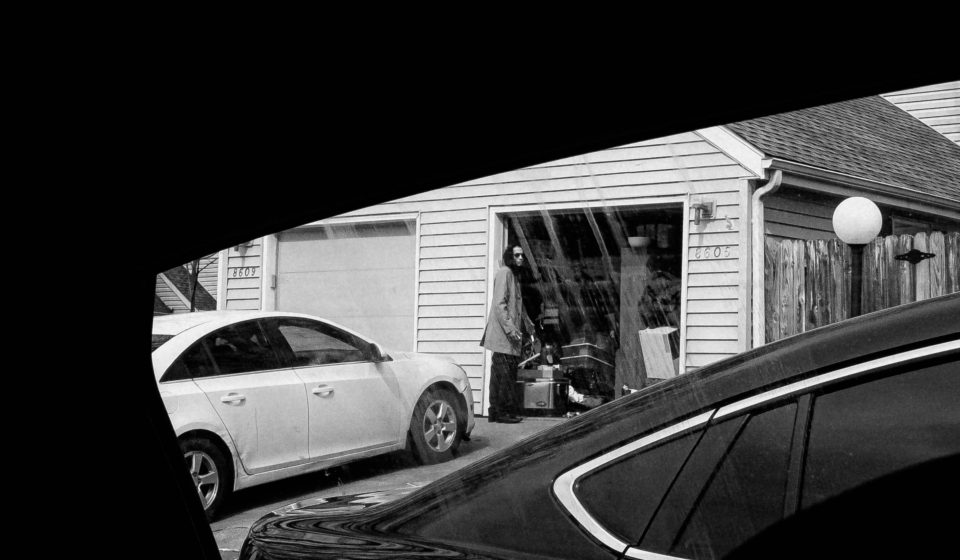
Food Kept Disappearing From My House—So I Set Up a Camera and Discovered My Mother-in-Law Was Letting Herself In

At first, it was just chocolate.
Then juice disappeared.
A few snacks went missing.
Nothing valuable enough to cause a family argument.
Nothing strange enough to make me believe someone was secretly entering our house.
I blamed myself.
Maybe I’d eaten something and forgotten.
Maybe my husband, Samuel, had taken it.
Maybe we’d simply misplaced things.
Then the caviar disappeared.
We had bought it specifically for Samuel’s birthday.
It wasn’t something either of us would casually open on a random afternoon.
Samuel insisted he hadn’t touched it.
I knew I hadn’t.
And suddenly, all those little missing items didn’t seem so little anymore.
Someone was coming into our house.
I just didn’t know who.
So I set up a camera.
When I finally watched the recording, I saw a familiar woman walk through our front door as though she lived there.
My mother-in-law.
Pamela.
And taking our food was only the beginning.
It Started With Little Things
Looking back, that’s probably why it took me so long to become suspicious.
Who launches an investigation over missing chocolate?
A carton of juice?
A snack you could have sworn was in the kitchen?
Life gets busy.
People forget things.
Samuel and I both worked.
There were plenty of innocent explanations.
So whenever something disappeared, I found one.
Maybe Samuel had taken it.
Maybe I’d finished it.
Maybe one of us had thrown something away and forgotten.
Then we bought something special for his birthday.
Caviar.
We put it aside.
When I went looking for it later, it was gone.
“Did You Eat It?”
I asked Samuel.
He hadn’t.
He asked me the same question.
I hadn’t either.
That should have been a minor conversation.
Instead, it introduced something uncomfortable into our home.
Doubt.
If neither of us was taking these things, who was?
I began mentally reviewing everything that had disappeared.
The chocolates.
Juice.
Snacks.
Now the caviar.
There was a pattern.
And for the first time, I considered a possibility that made me deeply uncomfortable.
Someone else had access to our house.
I Decided I Needed Proof
I didn’t want to accuse anyone without evidence.
So I positioned a camera where it could capture the main entrance and the hallway.
Then I went to work.
All day, I wondered whether I was overreacting.
Perhaps the camera would show nothing.
Honestly, I hoped it would.
I’d rather discover I was forgetful than learn that someone was entering my home without permission.
That evening, I checked the recording.
And almost immediately, my stomach dropped.
Pamela walked through the door.
My mother-in-law.
She Didn’t Behave Like a Visitor
That’s what struck me first.
There was no hesitation.
She didn’t knock.
She didn’t call.
She didn’t appear worried that Samuel or I might suddenly come home.
Pamela entered as though this were simply another place she was entitled to use.
She went into the kitchen.
Made herself tea.
Then she found the caviar.
There it was.
The mystery solved.
I watched my mother-in-law casually eat the food Samuel and I had been saving for his birthday.
Then she poured herself a glass of wine from our collection.
I was angry.
But if she’d stopped there, perhaps the story would have been very different.
She didn’t.
Then She Walked Toward Our Bedroom
I watched the screen.
Pamela moved down the hallway.
Toward my bedroom.
For a moment, I couldn’t understand why.
Then she entered.
And started going through my belongings.
That was the moment the missing food became almost irrelevant.
Food could be replaced.
This was different.
Pamela began looking through my clothes.
Then she started trying things on.
Including personal items I never imagined another person would touch without asking.
I felt humiliated watching it.
This wasn’t someone grabbing a snack.
This was someone treating my private space as though the concept of privacy didn’t apply to her.
I Watched the Recording Again
Part of me wanted to believe I’d misunderstood.
Maybe there was some explanation.
But there she was.
Entering.
Eating.
Drinking.
Walking into my bedroom.
Opening things.
Touching my belongings.
The evidence didn’t change because I wanted it to.
And that forced me to confront a much bigger question.
How long had this been happening?
The chocolates suddenly mattered again.
So did the juice.
So did every little moment I’d dismissed.
This probably wasn’t the first time Pamela had entered our house while we were away.
The Next Morning, I Didn’t Go to Work
I called in sick.
I was too angry to pretend everything was normal.
But I also wanted to know something.
Would Pamela come back?
The source of my anxiety was no longer mysterious.
I knew who had been entering.
What I didn’t know was how comfortable she’d become doing it.
So I stayed home.
And waited.
Eventually, I heard her.
She came inside.
Again.
She Had No Idea I Was There
Pamela behaved exactly as she had on the recording.
She made herself comfortable.
Prepared food.
Poured herself wine.
Took off her shoes.
Then she started moving toward my closet.
That was enough.
I followed.
She was going through my wardrobe when I stepped into the room.
I folded my arms.
“Enjoying yourself?”
Pamela spun around.
The expression on her face told me everything.
She hadn’t expected to see me.
Because in her mind, I wasn’t supposed to be there.
Suddenly She Needed an Explanation
I wanted to know why she was in my house.
Why she had been eating our food.
Why she’d entered my bedroom.
And why she believed she had any right to touch my personal belongings.
Pamela tried to explain.
But nothing she said addressed the fundamental problem.
She had entered our home without our knowledge.
Repeatedly.
And once inside, she behaved as though nothing was off-limits.
That wasn’t a misunderstanding about a snack.
It wasn’t a mother visiting her son.
It was a boundary violation.
“But We’re Family” Doesn’t Answer Everything
Family relationships can create strange assumptions about access.
A parent may have had unlimited access to a child’s bedroom when that child was ten.
That doesn’t mean the same parent has unlimited access to the adult child’s marital home decades later.
A spare key doesn’t automatically mean:
Come whenever you want.
Eat whatever you want.
Open whatever you want.
Enter our bedroom.
Try on private clothing.
Those boundaries don’t disappear because the person crossing them is related to you.
In some ways, the violation can hurt more precisely because it’s family.
I Was Angry With Samuel Too
Pamela’s behavior wasn’t the only issue.
I also had to confront my husband.
I needed to know how much he understood about his mother’s behavior.
Had he known she was coming over?
Had he given her permission?
Had he noticed things disappearing?
And if he knew she had a habit of ignoring boundaries, why hadn’t we addressed it earlier?
The source describes Samuel as passive in dealing with the situation, and that added another layer to my frustration.
I didn’t want a husband who simply stood between two angry women and hoped the problem disappeared.
This was our home.
We needed to decide together who had access to it.
Marriage Changes the Family Dynamic
When two people build a household together, relatives remain important.
Parents remain parents.
Siblings remain siblings.
But the home belongs to the people living there.
That means decisions about access should be shared.
One partner shouldn’t have to wonder whether a parent or in-law might appear unexpectedly.
And one spouse shouldn’t be expected to tolerate behavior they’d never accept from anyone else simply because the person doing it is family.
Samuel and I needed to be united on that.
Not against Pamela as a person.
For our household.
We Changed the Rules
After the confrontation, I decided the existing arrangement couldn’t continue.
Access to our home had to become intentional.
Visitors needed permission.
Private rooms were private.
Our belongings were not communal property.
And nobody could simply let themselves in because they’d once been trusted with access.
We also reviewed our home security.
The purpose wasn’t revenge.
I wasn’t interested in humiliating Pamela.
I wanted to restore the basic feeling I’d had before all of this began:
That when I closed my front door, my home was mine.
The Missing Food Wasn’t Really the Worst Part
Chocolate can be replaced.
Juice can be replaced.
Even expensive birthday food can be replaced.
What takes longer to restore is trust.
Once you discover someone has been inside your home without your knowledge, you begin looking at familiar rooms differently.
Was she in here?
Did she open that?
Did she touch this?
How many times?
What else don’t I know?
That’s why Pamela’s behavior affected me so deeply.
It wasn’t about the monetary value of what she’d taken.
It was about losing confidence in my own private space.
Privacy Isn’t Secrecy
Sometimes people hear the word “privacy” and assume it means someone has something to hide.
It doesn’t.
Privacy means being allowed to decide who has access to you and your belongings.
You can love your family and still want your bedroom to remain private.
You can adore your mother and still expect her to knock.
You can give someone a key for emergencies without giving them permission to enter whenever they feel like it.
Those are not contradictions.
They’re boundaries.
A Spare Key Should Have a Purpose
Many families give relatives keys.
There are perfectly sensible reasons.
Emergencies.
Pet care.
Watering plants during a vacation.
Helping when someone is sick.
But having physical access and having permission are two different things.
A key opens a lock.
It doesn’t answer the question:
“Am I welcome to enter right now?”
That still requires judgment and respect.
The Most Disturbing Part Was Her Comfort
If Pamela had accidentally crossed a boundary once, the situation might have been easier to repair.
What disturbed me was how natural everything looked.
She wasn’t nervous.
She wasn’t rushing.
She didn’t behave like someone who believed she was doing something questionable.
She made tea.
Ate.
Drank wine.
Walked into my room.
Went through my things.
That level of comfort suggested the behavior had become normalized in her own mind.
Which meant a vague request to “please stop” probably wouldn’t be enough.
The boundary needed to be explicit.
I Had to Stop Worrying About Looking Rude
That was harder than I expected.
Many of us are taught to keep family peace.
Don’t make a scene.
Don’t embarrass your spouse.
Don’t upset the in-laws.
Be flexible.
Be understanding.
Those instincts can be useful.
But they become dangerous when “keeping the peace” means repeatedly accepting behavior that makes you feel unsafe or disrespected.
Sometimes saying no creates temporary conflict.
That doesn’t automatically make the boundary wrong.
Samuel Had a Role to Play
I also made it clear to my husband that I couldn’t be the only person enforcing the new rules.
Pamela was his mother.
This wasn’t a problem I should have to manage alone.
If our marriage was going to feel secure again, Samuel needed to communicate the same message.
Our home was not an extension of anyone else’s home.
Visits required agreement.
Private belongings remained private.
And entering while we were away without permission was unacceptable.
There couldn’t be one set of rules when I was speaking and another when Samuel was alone with his mother.
The Goal Wasn’t to Destroy a Family
Boundaries are often mistaken for punishment.
They aren’t necessarily the same thing.
I wasn’t trying to erase Pamela from our lives.
I wasn’t asking Samuel to stop loving his mother.
I wasn’t demanding that every family relationship end because someone behaved badly.
I wanted one thing:
Respect.
If Pamela could respect our home, there was a path forward.
If she couldn’t, then access would have to remain limited.
The choice wasn’t between accepting everything and cutting someone off forever.
There was room in between.
Trust Would Have to Be Rebuilt
An apology alone couldn’t immediately restore what had been lost.
I had seen Pamela inside my bedroom.
I had watched her handle my belongings.
Those images weren’t going to disappear because somebody said sorry.
Trust is often rebuilt in boring ways.
Knocking.
Calling first.
Waiting for permission.
Respecting a closed door.
Not asking for the spare key back.
Accepting “no” without turning it into a family argument.
Those small behaviors would matter far more than dramatic promises.
The Camera Gave Me an Answer—but It Wasn’t the Real Solution
Without the recording, I might have continued doubting myself.
The footage showed what had been happening.
But surveillance wasn’t what repaired the problem.
Conversation did.
Clear limits did.
Changing access did.
Samuel and I agreeing on household boundaries did.
And there is an important real-world caution here: laws governing recording and surveillance vary significantly depending on location, whether audio is recorded, and where a camera is placed.
A story about a hidden camera shouldn’t be treated as universal legal advice to secretly record people.
The broader principle is much simpler.
If you believe someone is entering your home without permission, protect yourself using lawful measures appropriate where you live.
Family Doesn’t Cancel Consent
That became the lesson I carried forward.
Pamela was my mother-in-law.
That relationship mattered.
But it didn’t give her ownership over my space.
Being family didn’t entitle her to my food.
My bedroom.
My clothes.
My privacy.
And loving Samuel didn’t require me to tolerate behavior from his mother that made me uncomfortable inside my own home.
Respect has to travel in both directions.
I Eventually Felt Comfortable at Home Again
It didn’t happen immediately.
For a while, every small thing made me suspicious.
A misplaced object.
A cupboard door I didn’t remember leaving open.
A missing snack.
But slowly, the house began to feel normal again.
The important difference was that Samuel and I had finally discussed something we’d left undefined for too long.
Who gets access?
Under what circumstances?
What counts as private?
What happens when someone ignores those rules?
Those conversations aren’t always comfortable.
But they’re far easier to have before a boundary is repeatedly violated.
Final Thoughts
It began with missing chocolate.
Then juice.
Then snacks.
When the caviar we’d saved for Samuel’s birthday disappeared, I finally stopped dismissing what was happening.
The camera showed Pamela entering our home while we were away, helping herself to food and wine, then walking into my bedroom and going through personal belongings.
The next day, I stayed home.
When she returned and once again began going through my wardrobe, I confronted her directly.
The confrontation wasn’t really about groceries.
It was about something much more basic.
Permission.
Privacy.
Respect.
Afterward, we tightened access to the house, established clearer rules for visitors and had a serious conversation about presenting a united front when relatives crossed household boundaries.
Family relationships can survive boundaries.
In healthy relationships, they often become stronger because of them.
What they cannot survive indefinitely is the assumption that love gives one person unlimited access to another person’s life.
My home eventually felt like mine again.
But I never forgot what the experience taught me:
A person doesn’t stop deserving privacy simply because the person crossing the line happens to be family.
If you discovered a relative had been secretly entering your home and going through your personal belongings, would you confront them immediately—or change the locks first?
Editor’s note: This is a dramatized family narrative presented for storytelling and reflection, not verified reporting about identifiable real people. Laws concerning surveillance, recording and access to private property vary by jurisdiction; this story should not be treated as legal advice.