
Old closets, flea markets and secondhand stores are full of objects that can leave younger shoppers scratching their heads.
Sometimes the object is obviously old but its purpose isn’t.
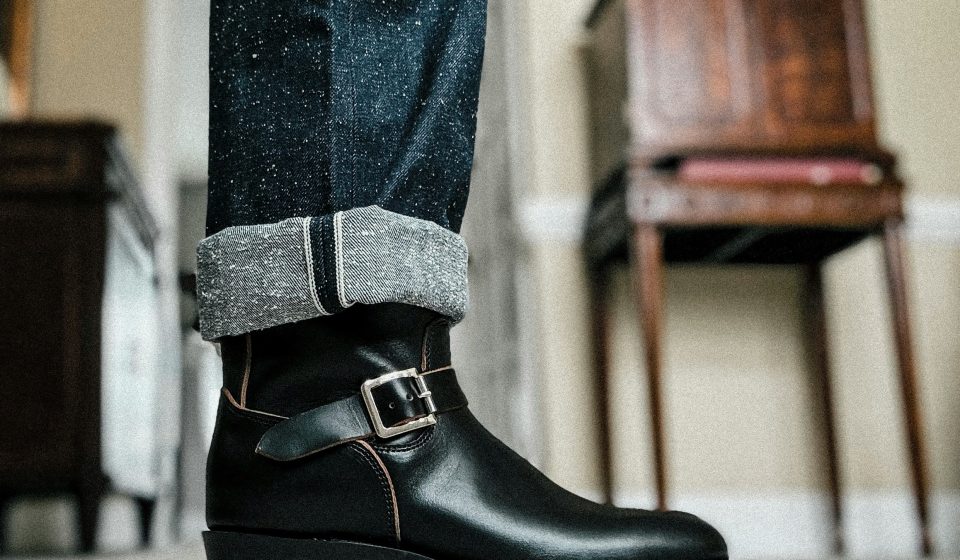
A leather strap wrapped around a boot is a good example.
At first glance, it may look like nothing more than decoration—a buckle, a strip of leather or a small chain positioned around the ankle or lower part of the boot.
But depending on the design, what you’re looking at may belong to a much broader family of boot straps, harnesses and decorative boot accessories that combine practical design with fashion.
And there’s an important distinction to make:
Not every strap attached to a boot serves the same purpose.
What Exactly Is a Boot Strap?
The term “boot strap” can describe several different things.
Some straps are functional.
Others are primarily decorative.
And some designs combine both purposes.
For example, many boots have small loops or tabs near the top of the shaft that help the wearer pull the boot onto the foot.
Those are commonly known as pull straps or pull tabs.
They’re the feature behind the familiar expression about “pulling yourself up by your bootstraps.”
But that’s not necessarily what people mean when they encounter a removable leather-and-metal strap wrapped around the outside of an older boot.
Those accessories may be better described as boot harnesses, decorative boot straps or ankle straps.
The Harness Look Is Easy to Recognize
Picture a sturdy leather strap circling a boot.
It may include:
- metal rings,
- buckles,
- chains,
- studs,
- decorative hardware,
- or additional leather sections.
Some are understated.
Others immediately give the boot a rugged Western, biker or rock-inspired appearance.
Instead of replacing the boot itself, the accessory changes its personality.
A relatively simple pair of leather boots can suddenly look much more distinctive after adding a harness.
That’s one reason these accessories continue to attract attention.
Some Boot Details Started With Practical Purposes
Footwear has always had to solve practical problems.
A boot has to stay secure.
It has to withstand movement.
Depending on its intended use, it may need to protect the foot and ankle from weather, debris or demanding work conditions.
Straps, buckles and loops are therefore not unusual in historical footwear.
But fashion has a habit of taking practical details and turning them into visual signatures.
A buckle that once served an obvious mechanical purpose can become decoration.
A rugged piece of hardware can become part of a style.
That’s why looking at an old pair of boots and assuming every strap has one universal function can be misleading.
The specific construction matters.
Pull Straps Are Different
This is probably the most useful distinction for anyone trying to identify an old boot.
A pull strap is normally positioned where it can help you physically pull the boot onto your foot.
You’ll often see one on either side near the top of a cowboy boot.
Put your fingers through the loops, pull upward, and the foot slides into the boot.
Simple.
A removable strap or harness around the ankle is different.
That piece may have much more to do with appearance than with putting the boot on.
So if someone shows you an old leather accessory and calls it a “boot strap,” don’t automatically assume it was designed to pull the boot onto the foot.
Look at where it attaches.
Why Add a Harness to a Boot?
For many wearers, the answer is straightforward:
Style.
Boots already carry strong visual associations.
Cowboy boots can suggest Western style.
Heavy black leather boots may evoke motorcycle culture.
Work boots communicate something different again.
Adding leather, chains, buckles or rings exaggerates those characteristics.
It’s a relatively small modification that can dramatically change how the footwear looks.
And unlike permanently altering a boot, many removable accessories can simply be taken off.
That gives the wearer two looks from one pair.
Why Vintage Versions Can Be Interesting
Older leather accessories often develop something modern manufacturing deliberately tries to imitate:
Patina.
Leather changes as it ages.
It can soften.
Darken.
Crease.
Develop variations in texture.
Metal hardware can also change appearance over time.
For collectors and vintage-fashion enthusiasts, those signs of age aren’t necessarily defects.
They can be part of the appeal.
A genuinely older leather accessory may look imperfect in a way that feels more authentic than something manufactured yesterday to appear distressed.
But age alone doesn’t make an item valuable.
Condition, construction, maker, rarity and provenance all matter.
Don’t Assume Every Old Strap Has an Incredible Story
This is where vintage descriptions sometimes go too far.
It’s tempting to imagine an old boot accessory crossing deserts on a motorcycle, appearing in a Western saloon or belonging to someone involved in an important historical event.
Those stories sound wonderful.
But without documentation, they’re stories.
An old object can be interesting without inventing a dramatic past for it.
If you find a pair at a flea market, examine what is actually there.
Look for:
- maker’s marks,
- stamped names,
- logos,
- patent information,
- distinctive hardware,
- construction techniques,
- signs of genuine wear,
- and any documentation supplied with the item.
Those clues are much more useful than romantic speculation.
Leather Quality Can Tell You a Lot
Pick up an older leather accessory and examine it closely.
Does the material feel substantial?
Are the edges finished?
How are the buckles attached?
Is the stitching intact?
Does the hardware feel sturdy or flimsy?
These details can help distinguish a well-made accessory from a cheap decorative reproduction.
But don’t automatically assume “old” means “better.”
Vintage leather can dry out.
Crack.
Stretch.
Become brittle.
Stitching can deteriorate.
Metal components can corrode.
An accessory that survived decades may still need careful inspection before you actually wear it.
Condition Matters More Than Nostalgia
Suppose you find an attractive pair of old leather boot harnesses.
Before putting them on your favorite boots, inspect the leather around stress points.
Pay particular attention near:
- buckles,
- rivets,
- holes,
- bends,
- and stitched connections.
If the leather cracks sharply when flexed, forcing it into place may cause permanent damage.
The same applies to metal.
Check for sharp edges or damaged hardware that could scratch the boot beneath it.
Vintage fashion is more enjoyable when wearing it doesn’t destroy either the accessory or your footwear.
Can You Wear Them With Cowboy Boots?
Absolutely—provided the accessory fits properly and doesn’t damage the boot.
This is probably the most obvious combination.
A leather harness can complement the strong lines and traditional materials associated with Western footwear.
If the boots already have elaborate stitching, however, a very complicated harness may compete visually with the existing design.
Sometimes simpler works better.
A plain leather strap with understated metal hardware can add character without overwhelming the boot.
Motorcycle-Style Boots Are Another Natural Match
Heavy leather footwear and metal hardware work naturally together.
A harness featuring rings, buckles or chains can emphasize the rugged appearance of a motorcycle-style boot.
This is also where the accessory becomes useful for people who like vintage-inspired clothing without wanting to dress entirely according to one historical aesthetic.
You don’t need a complete biker outfit.
One distinctive detail can be enough.
What About Modern Casual Clothing?
This is where things become more interesting.
A vintage-inspired boot accessory doesn’t require the rest of your clothing to be vintage.
It can work as a contrast.
Simple jeans.
Plain shirt.
Leather boots.
Then one unusual strap or harness.
Instead of competing with ten other accessories, the boot detail becomes the focal point.
That’s often a more wearable approach than trying to reproduce an entire period costume.
Don’t Put Every “Vintage” Label at Face Value
Online marketplaces have made the word vintage extremely flexible.
Something described as vintage-inspired isn’t necessarily old.
Something described simply as vintage may or may not have a documented age.
If actual age matters to you, look beyond the title.
Ask the seller questions.
Can they identify the maker?
Do they know approximately when it was produced?
Are there photographs of stamps or labels?
Is there any provenance?
A seller’s description is a starting point, not proof.
What If You Find a Pair in a Family Closet?
Don’t clean it aggressively.
That’s especially important if you don’t yet know whether the item has collectible value.
Heavy polishing, harsh chemicals or excessive conditioning can change the appearance of old leather and metal.
Start by identifying the object.
Photograph it clearly.
Capture the front and back.
Take close-ups of markings and hardware.
If it appears unusual or potentially valuable, research those markings before doing major restoration work.
Sometimes preservation is better than making an old object look new.
The Details Can Help Identify Its Purpose
Ask several questions.
Where does the strap sit on the boot?
How does it fasten?
Does it appear to tighten something?
Is it removable?
Are there signs that a chain or ring once connected to another component?
Does the wear pattern suggest regular use?
Does it match a known style of footwear?
These clues can tell you much more than the generic term “boot strap.”
The answer may be functional.
Decorative.
Or somewhere in between.
Why These Accessories Still Get Attention
Modern fashion changes quickly.
But certain materials and design elements keep returning.
Leather.
Buckles.
Metal rings.
Chains.
Western details.
Motorcycle-inspired hardware.
None of these depends entirely on one trend cycle.
That’s why an old boot accessory can look surprisingly contemporary when paired with the right clothing.
It doesn’t necessarily need to be fashionable in the narrow sense.
It only needs to work with the wearer’s style.
Small Accessories Can Change an Entire Outfit
That’s perhaps the most interesting thing about boot harnesses and straps.
They’re small compared with the rest of an outfit.
Yet they sit in a visually prominent position.
A pair of ordinary leather boots can look substantially different after adding a harness.
Remove it, and the original boot returns.
That flexibility is useful for anyone who likes experimenting with clothing without buying an entirely new wardrobe.
Are Vintage Boot Straps Worth Money?
Possibly.
But there is no universal answer.
A generic old leather strap may have very little resale value.
A well-preserved accessory from a documented maker could be more desirable.
Something connected to a collectible footwear brand or with unusual craftsmanship could attract specialist buyers.
The important thing is not to assume that age automatically equals value.
Identification comes first.
Then condition.
Then comparable sales.
And Sometimes the Personal Value Is Greater
An old accessory doesn’t need to be expensive to matter.
Maybe it belonged to a parent.
A grandparent.
Someone who rode motorcycles.
Someone who loved Western clothing.
Someone whose boots were always sitting beside the door.
In those cases, the object may be worth far more to the family than a marketplace price could capture.
That’s one reason older everyday objects are so fascinating.
They survive people.
And sometimes they become tiny reminders of how those people lived.
Before You Throw Them Away, Take Another Look
That’s the real takeaway.
If you find strange leather straps, buckles or metal accessories attached to an old pair of boots, don’t immediately assume they’re useless.
Look at the construction.
Look for markings.
Determine whether they’re part of the boot or removable.
Try to establish whether they were functional, decorative or both.
You may have found nothing particularly rare.
Or you may have found an interesting piece of footwear history that deserves a little more investigation.
Either way, understanding the object is better than inventing a history for it.
Final Thoughts
Boot straps can refer to several different footwear features, and that’s why identifying an old one isn’t always as straightforward as it first appears.
Some are practical pull straps designed to help get boots on.
Others are removable harness-style accessories featuring leather, buckles, rings or chains.
Those decorative versions can transform an ordinary pair of boots into something with a much stronger Western, biker or vintage-inspired character.
And while it’s tempting to attach romantic stories to every old accessory, the real clues are usually much quieter:
The leather.
The stitching.
The hardware.
The markings.
The wear.
Those details can reveal far more than an imagined story ever could.
So if you discover one of these unusual accessories in an old closet, attic or flea-market box, don’t toss it aside immediately.
Take a closer look.
Have you ever found an old clothing or footwear accessory and had absolutely no idea what it was used for?
Editor’s note: Historical age, manufacturer and original use can vary significantly among objects commonly described as vintage boot straps or boot harnesses. Without identifying marks or documented provenance, a specific item’s age and history should not be assumed.