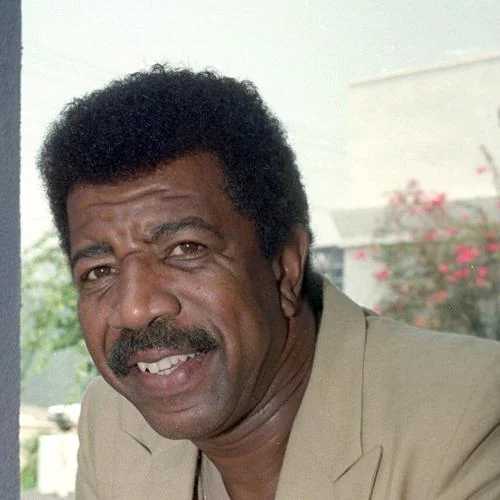

Hal Williams, the veteran actor whose familiar face and steady comic presence became part of some of American television’s most memorable sitcoms, has died.
He was 91.
Williams died on July 15, 2026, at his home in Rancho Mirage, California. His representative confirmed his death, while his manager, Zna Portlock Houston, said he died of natural causes.
For generations of television viewers, Williams will be remembered most immediately for two roles: Officer “Smitty” Smith on Sanford and Son and Lester Jenkins on 227.
But those performances represented only part of a remarkably durable acting career that stretched across decades of American television and film.
From The Waltons and Good Times to Night Court, Moesha and Parks and Recreation, Williams became the kind of character actor audiences might recognize before they even remembered his name.
And remarkably, he was still working late in life.
The Role That Changed Everything
Williams’ major television breakthrough arrived in 1972 when he began appearing on NBC’s Sanford and Son.
The sitcom starred Redd Foxx as Fred Sanford and Demond Wilson as his son, Lamont.
Williams played Officer “Smitty” Smith, one of the police officers who regularly crossed paths with the Sanfords.
Smitty was frequently paired with Officer “Hoppy” Hopkins, played by Howard Platt.
The pairing became memorable partly because of the contrast between them.
Williams’ controlled delivery and comic timing allowed him to play off the larger personalities surrounding him without needing to dominate a scene.
It was exactly the kind of performance that became a hallmark of his career.
He didn’t always need the loudest line.
His reactions could be enough.
Why ‘Sanford and Son’ Still Matters
Premiering in 1972, Sanford and Son became one of the defining American sitcoms of its era.
Built around the relationship between Fred and Lamont Sanford, the series mixed family conflict, generational differences and social observations with broad comedy.
Redd Foxx’s performance became iconic.
But shows like Sanford and Son also depended on recurring performers who could enter the Sanford world and immediately feel as though they belonged there.
Williams was one of them.
Decades later, viewers continued recognizing him as Smitty.
The role established Williams on television and helped begin a career that would ultimately stretch for more than half a century.
From Smitty to Harley Foster
Williams didn’t have to wait long for another significant television opportunity.
Beginning in the 1970s, he appeared on The Waltons as Harley Foster.
It demonstrated something that would become increasingly clear about Williams.
He wasn’t limited to one kind of television show.
He could move between comedy and drama.
He could play a police officer, a father, a working man or an authority figure without making each character feel identical.
That versatility kept him working as television itself changed around him.
Then Came Lester Jenkins
For another generation of viewers, however, Williams wasn’t Smitty at all.
He was Lester Jenkins.
Williams joined the NBC sitcom 227, starring Marla Gibbs as Mary Jenkins.
The series premiered in 1985 and ran for five seasons.
Williams played Mary’s husband, Lester, becoming an important part of the show’s central family.
Where Sanford and Son had established him as a recognizable television performer, 227 gave Williams another enduring character.
Lester provided a steady paternal presence in a series filled with strong personalities and neighborhood comedy.
The role also helped Williams become part of two different eras of Black television comedy.
Viewers who had known him in the 1970s could rediscover him in the 1980s.
Younger viewers could encounter him for the first time.
A Career That Went Far Beyond Two Sitcoms
Reducing Williams’ career to Sanford and Son and 227 would leave out an enormous amount of work.
Over the decades, he appeared across American television.
His credits included shows such as:
The Waltons
Good Times
Magnum, P.I.
Night Court
Hill Street Blues
L.A. Law
Moesha
The Sinbad Show
and Parks and Recreation.
That longevity is significant.
Television changed dramatically over the course of Williams’ career.
Styles of comedy changed.
Networks changed.
Audiences changed.
Entire generations of performers came and went.
Williams continued working.
He Wasn’t Limited to Television
Williams also built a substantial film résumé.
One of his notable movie appearances came in the 1980 comedy Private Benjamin, starring Goldie Hawn.
He would also be associated with the television adaptation.
His film work over the years included titles such as Hardcore, The Rookie, Guess Who and Flight.
The roles varied considerably, but together they demonstrated the same quality that defined much of his television career:
Reliability.
Williams could step into a supporting role and make the character feel as though he belonged in that world.
For a working actor, that ability can sustain a career far longer than a single moment of fame.
He Continued Acting Into His Later Years
Perhaps one of the clearest measures of Williams’ longevity is how late his career continued.
The Television Academy records his career as extending into his later years, and he appeared in the modern CBS reboot of Matlock.
That meant a performer whose breakthrough arrived during the era of Sanford and Son was still appearing on television more than five decades later.
Very few acting careers span that much change.
Williams had worked during an era when households gathered around a limited number of television networks.
He lived long enough to see streaming, on-demand television and classic sitcoms finding entirely new audiences decades after their original broadcasts.
A Reunion Just Days Before His Death
There was another poignant detail surrounding Williams’ final days.
According to his manager, Williams had recently returned from Ohio, where he participated in a reunion celebrating Sanford and Son alongside Howard Platt, who had played Officer “Hoppy” Hopkins.
The two men had formed a memorable television partnership more than half a century earlier.
Williams reportedly felt tired after returning home.
Days later, he died.
It means that shortly before his death, Williams had an opportunity to revisit one of the roles that helped establish his career and meet people who still remembered the show decades later.
More Than 50 Years of Television History
Williams’ career offers an interesting window into the history of American television.
Consider the distance between Sanford and Son and the modern Matlock reboot.
They belong to completely different television eras.
Yet Williams appeared in both.
That’s an extraordinary span for any performer.
It also helps explain why reactions to his death crossed generations.
Some viewers remembered Smitty.
Others remembered Lester Jenkins.
Others recognized him from The Waltons, Private Benjamin or one of his many guest appearances.
An actor doesn’t necessarily need to play the leading character to become part of people’s television memories.
Sometimes being consistently good—and consistently present—creates its own kind of legacy.
Why Lester Jenkins Still Resonates
His work on 227 deserves particular recognition.
Lester wasn’t built around constant spectacle.
He represented something steadier.
As Mary’s husband and part of the Jenkins household, he helped give the sitcom its family foundation.
That mattered.
The series wasn’t simply a collection of jokes. Its humor worked because viewers understood the relationships among the people living in its world.
Williams’ performance helped provide that stability.
For many viewers, Lester Jenkins became one of the television fathers they grew up watching.
Smitty Showed Another Side of His Comedy
Smitty worked differently.
On Sanford and Son, Williams had to exist in the orbit of Redd Foxx’s enormous comic personality.
Trying to overpower Foxx would have been unnecessary.
Williams instead understood the value of timing and reaction.
The contrast helped the comedy.
It’s one reason those scenes can still work decades later.
Great television comedy isn’t always about delivering the biggest punchline.
Sometimes it’s about knowing exactly what expression to make after somebody else delivers it.
Williams understood that.
His Performances Remain
Actors from classic television occupy an unusual place in American culture.
The original broadcasts end.
Sets are dismantled.
Cast members grow older.
Eventually, many of the people who created those shows are gone.
But the performances remain.
Episodes of Sanford and Son can still introduce Williams to someone who wasn’t alive when the show originally aired.
The same is true of 227.
That gives television performers a kind of cultural afterlife.
A scene filmed decades ago can suddenly become someone’s first encounter with an actor.
For Hal Williams, there are decades of those scenes waiting.
Remembering Hal Williams
Hal Williams didn’t need to be the loudest person in the room to be remembered.
That may be one of the most fitting ways to describe his career.
As Officer Smitty, he provided a steady counterweight to the chaos surrounding Fred Sanford.
As Lester Jenkins, he brought warmth and stability to the family at the center of 227.
Across countless other appearances, he became one of those dependable performers who made television worlds feel more complete.
Williams died at 91 after a career spanning generations.
But for viewers returning to those classic episodes, Smitty will still walk through the Sanford doorway.
Lester will still be there with Mary.
The jokes will still land.
And Hal Williams will still be on the screen.
Which Hal Williams role do you remember most—Officer Smitty on Sanford and Son, Lester Jenkins on 227, or another performance from his long career?