
What began as an ordinary walk with a small dog ended in a tragedy that horrified a Florida retirement community.
On February 20, 2023, 85-year-old Gloria Serge was walking her dog near a lake at Spanish Lakes Fairways in Fort Pierce, Florida, when a large alligator suddenly emerged from the water.
The animal initially moved toward her dog.
The dog escaped.
Serge did not.
Within moments, the alligator had grabbed her and pulled her toward the water as a neighbor desperately tried to help.
The horrifying attack became one of Florida’s most widely reported fatal alligator encounters of recent years—and a reminder that the calm surface of a neighborhood pond can still be wildlife habitat.
It Happened Inside a Retirement Community
Spanish Lakes Fairways is a residential community in St. Lucie County.
Like many developments in Florida, the community includes bodies of water where alligators may be present.
Serge was outside with her small dog when the attack occurred.
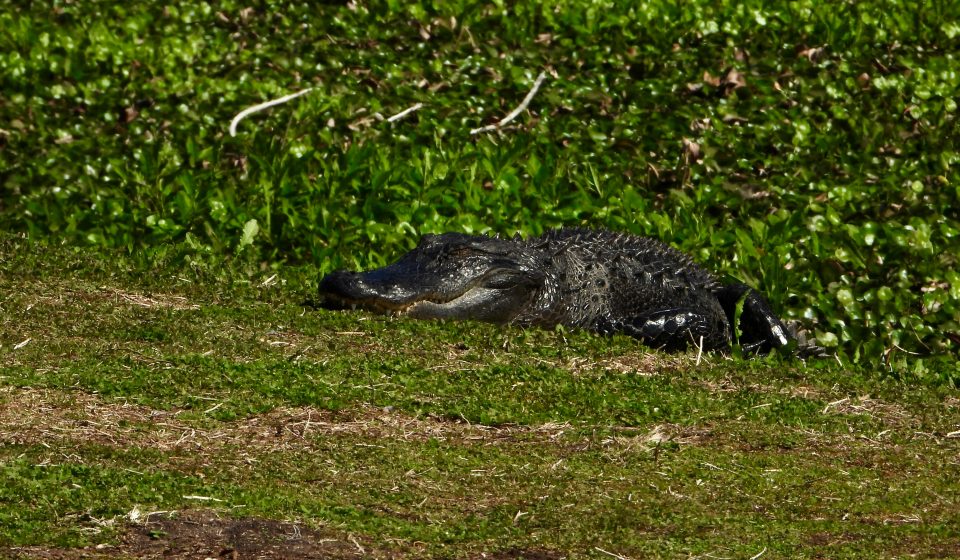
According to the Florida Fish and Wildlife Conservation Commission, the alligator was approximately 10 feet long.
Witness accounts indicated that it emerged suddenly from the water.
The dog managed to get away.
Serge was pulled into the lake.
A Neighbor Tried to Save Her
One of the most devastating aspects of the story was that another resident witnessed what was happening.
She attempted to help Serge as the attack unfolded.
But confronting an alligator of that size presented an almost impossible situation.
Emergency authorities were contacted, but Serge could not be saved.
Her body was later recovered.
The dog survived.
For the neighbor who witnessed the attack, however, surviving the event meant carrying the memory of having watched a friend in mortal danger while being unable to stop it.
Wildlife Officials Captured the Alligator
Authorities responded to the community after the attack.
The Florida Fish and Wildlife Conservation Commission confirmed at the time that a contracted nuisance-alligator trapper captured the animal believed to have been involved.
Images from the scene showed multiple people handling the enormous reptile before it was loaded into a truck.
The alligator was subsequently euthanized.
The response brought an end to the immediate danger.
It could not undo what had happened.
The Attack Later Led to a Lawsuit
Nearly a year later, Serge’s family filed a wrongful-death lawsuit against the company that owned and operated the retirement community.
The lawsuit alleged that management knew—or should have known—about the presence of the large alligator and failed to adequately address the danger.
Attorneys representing the family also made allegations concerning the animal being fed in the community.
The property owner disputed responsibility.
In a statement reported by CBS News, the company’s president emphasized that the community had existed for decades with thousands of residents and said this was its first alligator attack involving a resident.
Those claims became part of a legal dispute and should not be confused with the wildlife agency’s findings about the attack itself.
Feeding Alligators Can Create Serious Problems
Regardless of the allegations surrounding this particular case, wildlife officials have long warned people not to feed alligators.
There’s an important reason.
Wild alligators normally have reason to remain wary of humans.
Feeding can change that relationship.
An animal that begins associating people with food can become more likely to approach rather than retreat.
That’s dangerous for humans.
It’s also dangerous for the alligator, because animals that become a threat may ultimately have to be removed.
The safest alligator is one that remains wild and keeps its distance.
Small Dogs Can Be Particularly Vulnerable Near Water
Serge’s dog survived this attack, but the incident also illustrates an important concern for pet owners in alligator habitat.
A small animal walking near the edge of a pond or lake can attract the attention of a predator.
That’s why Florida wildlife guidance emphasizes keeping pets away from the water’s edge in areas where alligators may live.
Pets should be kept under close control.
Owners shouldn’t allow them to swim in waters where alligators could be present.
And the absence of a visible alligator doesn’t guarantee that one isn’t nearby.
A Quiet Pond Is Still Wildlife Habitat
This may be one of the hardest things for people unfamiliar with Florida to appreciate.
A lake doesn’t have to be deep in the wilderness to contain an alligator.
The water can sit behind homes.
Beside a golf course.
Inside a retirement community.
Near a walking path.
To residents, it may feel like part of the neighborhood.
To an alligator, it’s habitat.
That overlap between human development and wildlife is part of everyday life in many areas of Florida.
Most encounters do not result in attacks.
But familiarity should never become complacency.
Fatal Alligator Attacks Are Rare
Serge’s death was horrific precisely because events like it are unusual.
Florida has a large alligator population, yet fatal attacks remain rare relative to the enormous number of people who live and spend time around the state’s freshwater environments.
That doesn’t mean the risk should be ignored.
It means the risk should be understood.
People don’t need to panic every time they see an alligator.
They do need to give it space.
Distance Is One of the Simplest Safety Measures
If you encounter an alligator, don’t approach it for a photograph.
Don’t attempt to touch it.
Don’t feed it.
Don’t encourage children or pets to move closer.
Give the animal room.
Extra caution is appropriate around the edges of lakes, ponds, canals and other freshwater areas in alligator country.
An alligator partially submerged in water can also be much harder to see than people expect.
Sometimes only the eyes and upper portion of the head are visible.
Sometimes nothing obvious is visible at all.
Don’t Assume a Familiar Alligator Is a Safe One
Residents may see the same animal repeatedly and begin treating it almost like a neighborhood fixture.
That can create a false sense of security.
An alligator isn’t a domesticated animal because people have seen it before.
It remains a powerful wild predator.
Large individuals deserve particular respect.
The correct response isn’t to become fascinated enough to approach.
It’s to maintain distance and allow wildlife professionals to handle nuisance situations.
What Happened to Gloria Serge Remains Difficult to Comprehend
There is something particularly disturbing about the ordinary circumstances surrounding this tragedy.
Serge wasn’t exploring a remote swamp.
She wasn’t intentionally approaching an alligator.
She was walking her dog in the community where she lived.
Then, within moments, an ordinary morning became fatal.
Her dog escaped.
A neighbor tried to help.
Emergency responders arrived.
Wildlife officials captured the animal.
But none of those facts could change the outcome.
Serge’s family was left with a loss made even more painful by the circumstances of her death.
The Lesson Isn’t to Fear Every Florida Lake
Millions of people live around Florida’s waterways without ever experiencing an alligator attack.
The better lesson is respect.
Respect the distance between people and wildlife.
Keep pets away from the water’s edge.
Never feed alligators.
Don’t approach one because it appears calm.
And remember that a pond inside a residential development is still part of the natural environment.
Gloria Serge’s death was a rare event.
But for her family, her friend who witnessed the attack and the community around them, statistics offer little comfort.
An ordinary walk with a beloved dog became the last walk she would ever take.
And the tragedy remains a sobering reminder that when humans and powerful wildlife share the same environment, caution matters—even in the places that feel most familiar.
Would you feel comfortable walking a small dog beside a Florida lake if you knew alligators lived there?