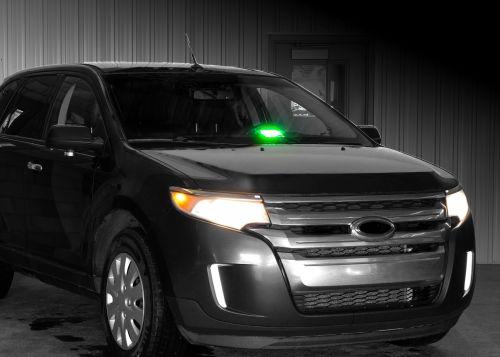
For example, a state may permit a volunteer firefighter to display a particular warning light while responding to a call.
That permission doesn’t necessarily mean every other motorist must stop immediately or that the volunteer can disregard ordinary traffic laws.
In other jurisdictions, the rules may be different.
The exact wording of the relevant statute determines the obligation.
I realized I couldn’t answer my question simply by looking at the color of the lights.
I needed to check the rules that applied where the incident happened.
I Reviewed the State’s Traffic Rules
After reading the community comments, I looked for official information.
I checked the state’s traffic regulations and provisions concerning authorized emergency responders.
The wording was more complicated than I expected.
There were distinctions between vehicles permitted to display certain warning lights and vehicles entitled to particular emergency-driving privileges.
I also learned that drivers should not assume that an unfamiliar flashing light authorizes another vehicle to demand an unsafe maneuver.
That didn’t mean I should ignore the lights.
It meant I needed to remain alert, drive predictably, and follow the applicable law.
I still wasn’t certain whether the officer who stopped me had correctly interpreted the situation.
So I decided to contact the police department.
I Called the Police Department the Next Morning
The following morning, I called the department’s non-emergency number.
I explained that I’d been stopped the previous day.
I said I wanted clarification about the green lights.
After being transferred, I spoke with an officer who listened to my description.
“I was driving normally,” I explained. “A vehicle with green lights approached from behind. I didn’t recognize it, and there was no siren. Another officer pulled me over afterward and told me I should have yielded.”
The officer asked which road I had been traveling on.
I told him.
Then he asked whether I’d received a citation.
“No. Just a warning.”
He asked whether I knew what kind of vehicle had been behind me.
“I checked my dashcam afterward. I think it was a volunteer firefighter’s personal vehicle.”
There was a pause.
Then he explained that green lights are treated differently under different state laws.
They don’t necessarily carry the same legal privileges as a marked emergency vehicle using authorized emergency signals.
“So Was I Required to Stop?”
That was the question I had been trying to answer since the traffic stop.
I asked:
“Was I automatically required to stop because the SUV had green lights?”
The officer answered carefully.
“Not necessarily. It depends on the specific rules that apply.”
He also emphasized that drivers should remain attentive when they see warning lights and make room when it is safe and legally appropriate.
I appreciated the explanation.
I wasn’t looking for permission to ignore emergency responders.
I simply wanted to know the law.
Before ending the call, I asked whether I could obtain information about the original traffic stop.
The officer explained how to request the relevant records.
I thanked him.
For the first time since the incident, I felt that someone had actually answered my question.
The Comment From a Firefighter’s Wife
Later that day, I returned to the community group.
I updated my post.
I explained that the SUV appeared to belong to a volunteer emergency responder.
I also shared what I had learned about differences in state traffic laws.
Several people thanked me.
Then one woman left a comment that stayed with me.
“My husband is a volunteer firefighter,” she wrote.
“He uses warning lights when responding to calls, but he’d never want someone to make a dangerous maneuver just to get out of his way.”
